Glad to know someone’s still reading

From Karen–

Hi Friends,

My novel, Homing Instincts, has been out for one year. Pub date was Nov. 14, 2014. Okay, a year-plus.

Anyway it’s so gratifying to know readers are still discovering it. These stories have a longer life–and touch more people–than we know.

My latest evidence?

Author Hardy Jones is giving Homing Instincts  some online love this month. Please check out Hardy’s review on Cybersoleil Literary Journal, and his nifty interview with me.

cyber soleil
Photo by Natthinee Khot-asa Jones

There’s lots of other good reading in Cybersoleil, too, so dig in.

Cheers.

–Karen


Writerly New Years Resolutions You Ought to Try

Bystanders_SM

As we gear up for a new year, Tara Laskowski, author of Modern Manners For Your Inner Demons (Matter Press 2012) and the forthcoming Bystanders (Santa Fe Writers Project 2016) is kindly sharing some suggestions that will benefit your craft, as well as your karma.

Happy Writing in the New Year. Make 2016 your most productive—and more importantly, most fulfilling—yet.

Please welcome Tara to Write Despite.

***

Yep, it’s that time—to commit to something (or several somethings) that you’ll accomplish over the next year. To change the ways that you’re less proud of. To start over, reset, renew.

Only 8 percent of people are successful in achieving New Years resolutions. Perhaps this is because we dream too big and set ourselves up for failure? Whatever the case, I’m presenting to you some resolutions that I’ve tried in the past or would like to try this year. Some are bigger, and some are tiny—and achievable—I swear! I hope they spark some ideas for you and make your 2016 full of happy reading and successful writing.

Re-read a book you love. If you’re at all like me, you’ve got a stack of books somewhere that you want to get to, but can’t ever seem to. You can’t really imagine taking the time to go back and read something you’ve already read, even if you love it.

Well, give yourself permission to do it. For every two or three new books you read, re-read something you love. I have started re-reading The Chronicles of Narnia by C.S. Lewis again, and it is giving me such pleasure to revisit these characters. Also on my list—Mrs. Dalloway, the Harry Potter series, Breakfast at Tiffany’s, and The Secret History.

Subscribe to a literary journal. Lit magazines are struggling. They get more submitters than subscribers in many cases. Find one that you love, and buy an annual subscription. Then read it. If you find a story you really love, email the writer and let him or her know.

Swap favorite books with a writer friend. Ask your friend to name two books that changed her life (that you haven’t read yet.) Then give her two books that you adore that she hasn’t read. Read them. Discuss over drinks and sweets. Consider your life changed and enriched.

Write something outside your genre, just for fun. Normally write novels? Try flash fiction. Are you a poet, always a poet? Why not write a crime fiction story? Instead of science fiction, ground yourself in reality for a time. Pulling out of your comfort zone can get your brain thinking in different ways. A bonus: it also takes the pressure off and gives you the freedom to just explore for a while.

Several of the stories in my new collection exist only because of this experimentation. The story “The Monitor” was my attempt to write something with supernatural elements in it—a woman who starts to see a ghost in her baby monitor. The story ended up getting taken by Alfred Hitchcock Mystery Magazine. Another story, “Every Now and Then,” was the result of me messing around with writing modular stories—a form I’ve grown to love. If I hadn’t tried to break out of my writing comfort zone, these stories wouldn’t exist.

Review books on Amazon. This is a really easy and cheap way to show love to the writers you know and adore. There are many articles out there about why and how Amazon reviews are good for the writer. Take five minutes and write a thoughtful, honest review of a recent book you read and post it on Amazon—and Goodreads, too! I promise you that you will make that writer’s day.

Finish that one project that’s lurking behind you. Maybe it’s the novel you’ve been writing for seven years, or the story where the concept is great but you can’t get the ending right. Or the collection of short stories that needs three or four more to flesh it out. Whatever the writing project, make 2016 the year to tackle it. And then go for it. You can do it. I’m cheering you on!

"Tara Laskowski"

Tara Laskowski grew up in Northeastern Pennsylvania and now navigates traffic in the Washington, D.C. suburbs. She is the author of Modern Manners For Your Inner Demons (Matter Press 2012) and the forthcoming Bystanders (Santa Fe Writers Project 2016). Her fiction has been published in the Norton anthology Flash Fiction International, Alfred Hitchcock’s Mystery Magazine, Mid-American Review, and numerous other journals, magazines, and anthologies. Since 2010, she has been the editor of SmokeLong Quarterly. She and her husband, writer Art Taylor, write the column Long Story Short at the Washington Independent Review of Books. Tara earned a BA in English with a minor in writing from Susquehanna University and an MFA in Creative Writing from George Mason University.

Year of Books and Blessings

Another year ends, and we’re feeling the need to look back with appreciation before we head into the next one.

what are you grateful forFrom Karen:

Well my novel Homing Instincts has been out in the world (or the marketplace, I should say) for one year, and what a whirlwind it has been!

Christmas is a very big deal in our house, and during this season I always like to step back and think about the many, many blessings in my life.

My first year as a published novelist was full of unexpectedly wonderful support from readers and friends alike.

Here are few of the people and things who helped make this experience possible and so memorable:

  • Michelle Richmond and Fiction Attic Press, for bringing the book into the world and for cheerful support and help every step of the way
  • Cathy Cruise. Okay, enough said on this one. You all know Cathy edited this thing so much, she ought to be a co-author. Love you, Cath.
  • Colleen Kearney Rich for that last, all-important new set of eyes, and Jacqueline Sheehan for leading the Northampton fiction workshop where the missing piece of the puzzle finally fell into place.
  • Roxanne Steed. Artist and friend. Having Roxanne’s lovely painting grace the cover of the book was the best decision I’ve made in a long time, and she’s been a terrific promotion partner.
  • Readers, readers, readers. I can never thank you all enough. So many readers have been so kind and appreciative. There is no greater success as a writer than knowing that your work has touched someone, has made them think and feel. Thanks for letting me know how much Homing Instincts meant to you.
  • My siblings and my mother-in-law for abundant cheerleading and praise. You guys are the best
  • Our Write Despite readers, for continuing to follow and contribute to our blog — even though I suspect we may be a wee bit tedious at times
  • My husband and son, the real jackpot. XOXO
  • The good Lord above, because I believe He sometimes has a hand in these things …

Happy Holidays!

From Cathy:

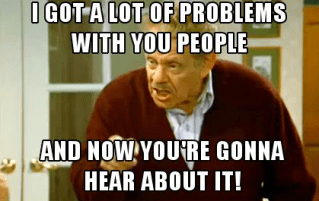
Well 2016 here we come. But first, the Airing of the Grievances.hear about it

Kidding. Been watching too many Seinfeld reruns while wrapping gifts.

First, the Airing of the Gratefulness. This year has made me thankful for:

  • Perseverance. Because agents don’t come looking for you. Instead, they wait for you to submit to many, many of them before they kindly but decidedly turn you down. Which leads to:
  • Indie publishers. Because sometimes they actually like your book and will take a chance on it. Like the awesome Samantha March of Marching Ink. Because publication. Finally!
  • And, like Karen said, an army of early readers and supporters:
    • Karen Guzman. Yes, I’m returning the love. She read it twice and that’s more than anyone should have to. Thank you, Karen, for your sharp eye, spot-on advice, and constant yammering that I could do better.
    • Kirsten Lopresti—same thing. Two reads and boatloads of advice and encouragement. Many, many thanks.
    • Tess Allen, Jill Williams, Adrienne Arrage, Colleen Kearney Rich, Ruth Boggs, Pat Devlin, and probably several others I’m forgetting, who read and gave feedback. Thank you all so much.
    • My husband (another beta reader!), son, daughter, and niece who ate more takeout and amused themselves on evenings and weekends much more than they should have (and still are, while I’m in the final editing stage). Love you all too much.
    • Our Write Despite followers! Just knowing you’re out there is motivation to keep going. Thank you for your interest, and best to all of you.
  • Finally, I’m grateful for friends who all published books this year. Could not be happier for:

You all keep me on my toes and make me jealous and proud and inspired, not always in that order.

So it’s with love and exhaustion and eagerness for the new year that I’ll end this. Wishing all of you a year full of great reads, inspired writings, and pals and printings and publications.

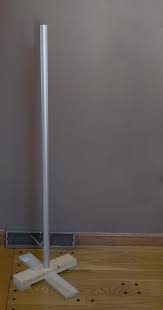
Happy Festivus! May your pole remain bare and your Feats of Strength miraculous.

—Cathy

Pole


The Next Big Thing

From Cathy

Well, it’s been quite a month.

So again, please bear with me while I gloat—just a wee bit.

In addition to the short story in American Fiction Volume 14, I recently found out that…drumroll please…

My book is getting published!

A Hundred Weddings will be released in early 2016 through Marching Ink, an independent company run by publisher Samantha March. I could not be more excited, and can’t wait to hold this novel, at last, in my sweaty little hands.

And it should only take about four months. Well, four months and about eight years to write and edit and at least a couple of years and many attempts to locate an agent or publisher. But hey, who’s counting?

I have a brand new website up (although it’s kind of pared down at the moment) and an author page on Facebook. Please stop by and “Like” if you would. I can use all the word of mouth I can get.

I have to say that both of these pieces weren’t written—but were very much worked on—during our Write Despite year-long challenge. If I hadn’t been trying (and very often succeeding) to meet that 20-minute-a-day goal, these and other manuscripts would be far less publication-ready.

So keep at it, everybody. I wish you much success with your writing goals and hope you’ll let us know what you’ve been able to accomplish!

And by the way, Karen’s Fall for the Book reading at George Mason University was a blast. We had time to catch up and roam around campus in the rain. Here’s the proof:

IMG_0587

Write well everybody!

―Cathy

Shameless Publication Plug!

American Fiction 14From Cathy

Hi everyone!

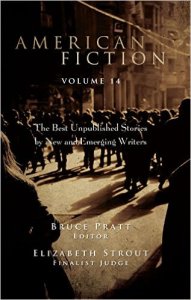
A quick note to announce that American Fiction Volume 14—edited by Bruce Pratt and Pulitzer Freakin’ Prize winner Elizabeth Strout—was released today. I’m thrilled a story of mine, which took second prize in their contest, is included.

The publisher, New Rivers Press, describes it this way:

“Twenty-one new authors evoke the painful and beautiful realities of life. Whether the struggles of a recent immigrant to support his family, a young daughter dealing with her mother’s mental health issues, or the slow decay of a once- sharp mind, this volume showcases the lives of these diverse American writers and characters.”

(Mine is the young daughter dealing with her wack mom—nothing to do with my own mom, by the way. She’s very sensible and almost never goes off her meds.)

Can’t wait to get my hands on a copy and see what worlds my fellow contributors came up with. Sure to be amazing.

Orders are happening now through Amazon, and through www.newriverspress.com.

Write well, everyone!

Fall for the Book Festival

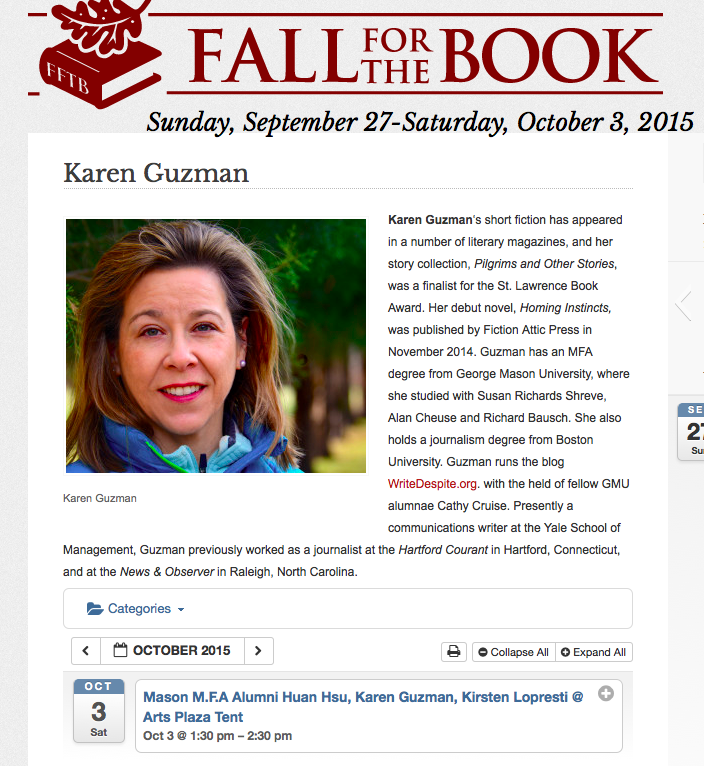
If you find yourself in the metro D.C. area next weekend, please stop by for my reading at the Fall for the Book Festival. It’s a week-long fest hosted by my MFA alma mater, George Mason University. I’m reading at 1:30 on Saturday, Oct. 3, with two fellow alumni. All details on the Festival’s site.

Screen Shot 2015-09-21 at 5.49.16 PM

Cathy, also a GMU alum, will be on hand. We were roommates for two-and-a-half years, and now we’re both hoping to reconnect with old friends and meet some new ones.

Check out this stellar lineup of participants.

Hope to see you there!

— Karen

Multiple Points of What-Am-I-Doing

images-1

Okay, so who told me to write a novel with multiple, third-person points of view? Three, to be exact. I’ve never attempted multiple viewpoints. It’s a whole new narrative world.

While I’m enjoying the separate viewpoints, I’m not so sure I’m merging them in a very, um, skillful way. But that’s what revision is for, right?

I’d forgotten what it’s like to be smack in the middle of a first draft—when the thing is unfolding, but you don’t know where it’s taking you. First drafts are a hot mess—as the current lingo goes—an untamed rush of great flailing promise, over abundance and poor judgment. I’ll worry about reigning it in later.

When I’m feeling especially lost, though, I recall the great novelist E.L. Doctorow’s words on first drafts. Doctorow passed away this month at the age of 84. R.I.P.

“Writing a novel is like driving a car at night. You can only see as far as your headlights, but you can make the whole trip that way.”

–Keep the faith, friends,

Karen

Retro Writing: Hello Pen & Paper

Technology is your friend. Except, of course, when it isn’t. Who among us hasn’t succumbed to the seductive whisper of Facebook or Twitter when we’re supposed to be writing? The Internet is an incalculably valuable resource in all sorts of ways, but it can also be a hugely wasteful time-suck.

Author Alex M. Pruteanu ran into a different problem when he was writing his early books. Now working on a new novel, Alex has sworn off technology and reverted to pen-and-paper while he cranks out the first draft. The benefits have been surprising.

Please welcome Alex to Write Despite.

PruteanuProfileWhy have you opted for a low-tech approach in writing your new novel?

My new book (which is being read currently by—my unscientific count here—12 publishers, with at least 30+ rejections already in the bag) is called The Sun Eaters, and it would be considered “literary fiction.” It’s not a big book at all—only about 60K words—but I wrote it around my day job and life in general (dad, husband, cook, mixologist, part-time jazz drummer, thief, liar, etc.), so it took nearly two years of fairly consistent work. It’s been making the rounds (read: rejected) with both literary agents and publishers (indie and “biggies”) since June of 2014.

The Sun Eaters is a simple story set just-post WW II in an Eastern European country. The story follows two brothers (14 and 9) as they struggle to survive shortages of food, the brutal winter, and a new politically repressive ideology (communism.) It’s a happy-go-lucky book, as you can tell. But it does have a happy ending. Well, sort of.

After having written and published a novella and a collection of published short stories using all available technology at those times, I thought I’d do the same with The Sun Eaters. By the time I started writing it in 2012, “the cloud” was available as a storage option, so I decided to take advantage of it. Unfortunately, between constantly saving my in-progress manuscript in the cloud, on various laptops, thumb drives, and on a regular ol’ desktop, all to ensure the security of not losing my work, the novel became an additionally huge pain (outside of the regular ol’ pain of just writing it.)

Many times I’d forget to save the newest version on some device or other, so I’d end up with outdated versions on some devices and up-to-date versions on others. Keeping track of things like that cut into my available brainpower, all of which I needed to write my book. When I finished in 2014, I swore I would never ever use a computer for my writing, even short stories or flash.

I am now in the process of writing my second novel, which is tentatively called The Long, Oil-Stained Life of Rosetti. For this go-round, I’ve opted to write it all out by hand, with a #2 pencil, on lined legal pads. Writing by hand slows me down enough to allow me to truly cogitate about the material I’m committing to the paper and not just dump ideas that will later be cut. Now I don’t have to save ongoing manuscript drafts every day onto a dozen different devices. And what I also like about the “old-school” method of writing is that there exists a natural extra editing step when transfer the work, typing it onto a laptop.

How is the process of writing a second novel different than writing a debut?

I think every novel has its own life, its own path, and its own destiny. I think each book dictates to a writer how it should be written. My approach to writing the second one is much different from the first. Besides the whole paper-pencil thing, I’m more loose about working on it and don’t beat myself up at all if I don’t write for sometimes long periods (days or weeks even).

Also for this second book I’m doing something I’ve never done before: I’m writing down notes when I’m not working on it. Because the scope of this one is much greater than the first, I’m finding that I need to jot down on sticky notes ideas as they occur to me throughout the day. I’ve got a folder full of stickies that I often consult before sitting down at a writing session.

I’ve also learned a ton from having written a first novel. The most important thing has been: how to be in the thick of it, as I’m writing it, and still keep a general, subjective eye on the scope of the book. It’s hard for me to convey that—I’m not a teacher or professor and never have wanted to be one—but it’s just something that I can feel. I can feel myself being buried in the minutia of the words and individual ideas, yet somehow able to act like a deity of sorts—a god, really—and keep focus on the scope of the overall novel, as it’s coming together… as I’m weaving it. Does any of this make sense? If it doesn’t just know it’s not you, it’s me. But also know that I know what I’m doing, so buy the damn thing when (if it ever?) comes out. Ha.

Finally, something else that I’m doing differently on the second one: I am reading literature concurrently. With The Sun Eaters, I basically stopped reading anything literary or any type of fiction whatsoever. I found that I didn’t have the time or energy to devote to anything other than my daily life duties and writing the book (usually during very early mornings.)

But now with Rosetti, I’m not just finding that I’m inspired by reading fiction concurrent with my writing, I’m finding that I need to indeed read “big books” with “big themes.” So I’ve been gorging on novels like Bolano’s 2666 and Mailer’s Harlot’s Ghost and Melville’s Moby Dick and Dostoevsky’s Demons and Pynchon’s Gravity’s Rainbow and Cervantes’s Don Quixote.

There is something truly inspiring to me about books such as these. They are all huge projects with huge scope and huge reputations, and I find that comforting to my own work. These books offer different worlds for me to enter and spend time in, and when I come out of them, I’m ready to create my own, in my own novel. It’s quite inspiring to read this sort of work.

How long had you been writing before you published a piece?

 I started writing around age 14 (horribly) and the first thing I ever had published was a very short prose piece called Center St. 2B. It was published in a literary journal (now defunct) out of California, Penn., called Peer-Amid. I was 26 years old. Since then, I’ve been lucky to have some pretty decent success. I’ve published short stories in literary journals such as [PANK], Guernica Magazine, The Stockholm Literary Review of Literature, The Prague Revue, and many others.

Any advice for writers still working for their first “breakthroughs?”

Yes: work. Work, work, work. Don’t get online and say you’re working (#amwriting is the most preposterous hashtag, imo; the epitome of cognitive dissonance for a writer on Twitter using it), or lament you’re not working. Don’t surf through Facebook photos or Twitter feeds because you’re “blocked.” Work. (I don’t believe in “writer’s block.” That’s the biggest load of garbage.)

And stay persistent and focused. Looking at my overall acceptance-to-rejection numbers throughout my career, I’d say about 7% of my stories have been accepted by magazines or journals. That is HUGE. I am lucky. I’d be happy with 2%. I believe 2% is the “standard” acceptance rate for a writer. I’ve been very lucky.

As of now, The Sun Eaters has received at least two dozen literary agents’ rejections and at least 30+ publishers’ rejections. I will never give up trying to find a home for it. Every time a rejection comes in, my mission the next day is to research and find at least two potential publishers to send the book to. Currently I’m looking at foreign houses that tend to publish in the English language. The research is exhausting, but I have no other choice.

Learn more about Alex on Amazon.
Q & A with Writer Art Taylor

“Art Taylor”

From Cathy—

Author Art Taylor will publish his first book—On the Road with Del & Louise: A Novel in Stories—on September 15 of this year from Henery Press. His short stories have won many of the mystery world’s major honors, including two Agatha Awards, the Macavity Award, and three consecutive Derringer Awards, in addition to twice making the short-list for the Anthony Award. A native of Richlands, NC, Art now lives in Northern Virginia, where he is a professor of English at George Mason University and writes frequently on crime fiction for The Washington Post, Mystery Scene, and other publications.

Please welcome Art to Write Despite.

How and why did you start writing?

Reading and writing were always directly related for me, even as a child. Books fed both my interest in stories and then my interest in storytelling. I remember telling my first grade teacher sometime before Christmas that I was writing a book and that it would be released sometime after Christmas. I think it was about mice (and wish I still had it now). Needless to say, it’s been a long time until now, when I’m actually (finally!) on the verge of having my first book out. But I think the connection is still the same. I love to read, and I just hope that my writing might give some reader out there the same kinds and ranges of experience that I’ve gotten from books I’ve loved.Del & Louise cover

What’s the best writing advice you’ve ever received?

I always go back to Anne Lamott and Bird by Bird and that chapter on “Shitty First Drafts.” When the internal editor starts nagging at me that what I’m writing is terrible (and often it is), I have to remind myself that most writers go through that stage and that it’ll all get better (hopefully!) with revision. And when the journey ahead seems daunting, I have to tell myself that I’ll only finish it one step at a time.

Favorite three authors?

That’s such a tough question—only three? I like different writers for different things, of course. Mario Vargas Llosa has always been a favorite (since long before he won the Nobel Prize, I should add), particularly because of the texture of his prose and his attention to structuring narrative, intertwining stories, and juxtaposing points of view (among other things). I’d say I admire Ian McEwan as well, for many of the same reasons. In my own genre, I don’t know a writer stronger than Tana French. What’s interesting about all that is that I’m a short story writer, and each of these writers are novelists often working on much, much bigger canvases: complex, intricate story lines.

What was your first published piece?

Back in elementary school, I had a poem published called “If I Were An Ace”—third grade? fourth? I probably have it stuffed away in a box somewhere, but more than the poem itself, I remember sitting on the couch in my parents’ house late at night (late for me) and writing, writing, writing it and just being so thrilled at the way it was coming together. I couldn’t have been prouder—and wish now that the act of creating was always so much fun, so driven.

Could you talk about not having an agent, and how that’s affected, or not affected, your being published?

In today’s swiftly, swiftly shifting publishing landscape, I don’t think that having an agent is as necessary a step in the process as it may have once been. I don’t have an agent now, though I did try that route with a previous manuscript and earned some interest but never an actual rep. With the growth of small presses who are willing to take a chance with unagented authors and with programs like #pitmad on Twitter (where you pitch your manuscript to agents and publishers both) and with the rise of different publishing models, including various degrees of self-publishing… well, it’s a new world, as I said. I was very lucky in my own case for two reasons. First, my success in the short story market helped to give me some visibility for both publishers and agents; at Malice Domestic two years ago, when I won my first Agatha Award, I had agents hand me their cards and then had Henery Press approach me even more directly about when I was submitting a manuscript to them; the latter was an invitation I couldn’t refuse. Second, and related, I’ve been fortunate to develop a lot of strong relationships in the mystery community, with other writers, with editors, and with publishers—and being part of the fabric of all that does, I think, expose you to possibilities. By that last, I’m not saying that it’s all about networking or about who you know—that’s hardly the case at all. But being an active part of the literary community can go hand in hand with honing your craft, doing your best work. Marketing yourself without developing your craft—that’s a poor move. But toiling on your craft and not being attuned somehow to the community and the marketplace…that might prove a poor move as well.

Advice for those now on the road to publication? 

The previous response probably includes some implicit advice, but I want to focus back more explicitly on craft issues here.

First bit of advice: Whether you write every day or not, touch base with your writing somehow every day. In the past, I’ve tried various ways to keep on a writing schedule: writing for a certain amount of time every day, for example, and at the same times each day, or maybe writing for a certain number of words each day. While I know those systems work for others, they have ultimately seemed artificial for me—and really it became increasingly tough to adhere to any sort of set schedule or word count in the midst of juggling work and parenting and household chores and errands and… and in the end, I more regularly felt guilt about falling short of my goals than elation about meeting them. I won’t say I’ve lowered my standards but instead that I’ve readjusted my sense of pacing. If I sketch out a full scene or revise a scene, that’s great. If I make notes about what to do next, that’s great. If an idea pops into my head for a plot complication or a way to amplify a character, and if that’s the only thing I jot down in my notebook for the day, then that’s great too—because it’s keeping my mind going on the project, and a lot can happen when your mind is working, working, working on ideas, even if you’re not pushing up the word count on the page, even if you’re not at the computer at all. Maybe all of that goes back to the bird by bird advice above. Some days have more birds than others.

Second bit of advice: Ignore what I just wrote—if some other approach works better for you. The worst advice I’ve ever gotten is that we writers have to do certain things in certain ways to be a success. Each writer has his or her own approach; success can be reached through many different paths. Just check out the chart here.

What are you working on now? If you’re taking a break, what are you reading now?

Right now, I’m drafting the second of three intertwined novellas that may become my second book. Beyond that, I don’t want to say too much more—else I jinx the small progress I’ve made on it so far!

As for reading, I’m at various points in several books: Charlotte Armstrong’s Night Call and Other Stories of Suspense, Patricia Highsmith’s The Boy Who Followed Ripley, and Rules of Thumb: 73 Authors Reveal Their Fiction Writing Fixations. Beyond that, I’m always browsing stories in several anthologies that I have at home and in the office, including the most recent several that I picked up at the latest Malice Domestic convention—Fish or Cut Bait from the Guppy Chapter of Sisters in Crime, Murder on Wheels: 11 Tales of Crime on the Move from the Austin Mystery Writers, and two volumes of The Whole She-Bang from Sisters in Crime Canada—and the Black Lizard Big Book of Locked-Room Mysteries, which has become a regular bedside companion.

You can pre-order your copy of Art Taylor’s On the Road with Del & Louise here.