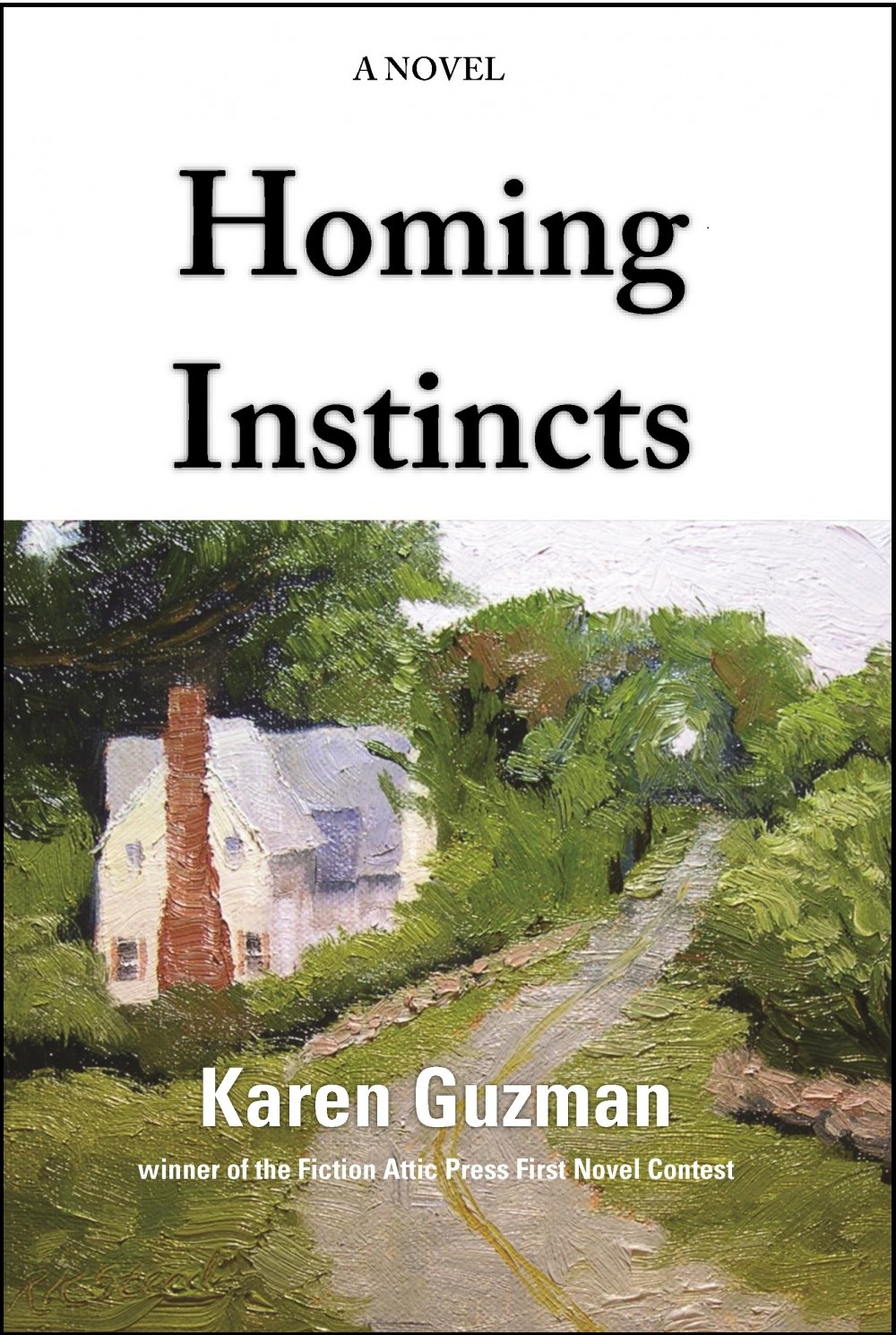
Well, my novel is up on Goodreads. You can order it, review it, “add” it, so this must really being happening, after all.
And as if that weren’t enough, I also have a couple of readings and book signings scheduled at Connecticut bookshops in mid-November:
Breakwater Books — November 15 81 Whitfield Street Guilford, CT 2 pm reading/signing
Bank Square Books — November 22 53 West Main Street Mystic, CT 1 pm reading/signing
Local folks, please come out! Non-local folks, please find me online. I can’t tell you how much I appreciate your support, and all the kind wishes I’ve received.
Have you heard of MOOCs? The term stands for massive open online course, and the writing program at the University of Iowa is currently hosting one.
Iowa’s Writing University Open Courses website is offering a six-week FREE course, for beginners to experienced-level writers, called How Writers Write Fiction. Once you register for the class, you simply watch a weekly video or two and complete a writing assignment. Then you’re asked to read other people’s work and post your comments while they read and critique your pieces. Some big-name writers are running the show, including one of my personal faves, Mona Simpson, and I believe they will comment on a few assignments as well.
If you’re too busy to sign up, or aren’t sure about it yet, I’ll give you a recap of the first video I watched. This one featured author Michelle Huneven, who offered some great tips for fitting writing into your life:
Turn your soul around. Make writing the priority in your life and everything else will fall into place.
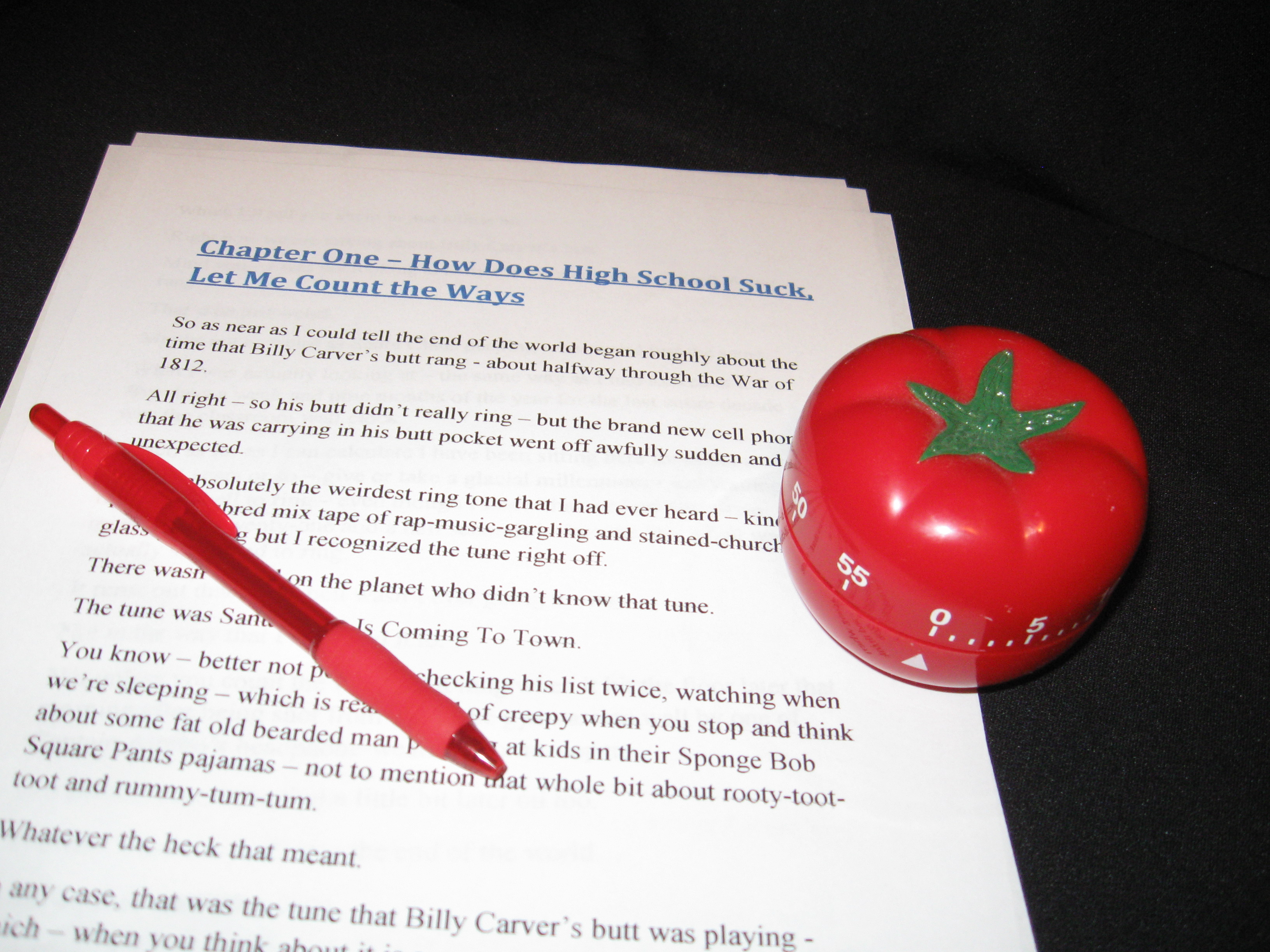
Get a good timer. Or use your phone. Decide how many minutes you can stand to write: 7 minutes, 12 minutes, 1 hour, 3 hours…and begin.
Join a writing group. It just helps.
Find a writer you deeply admire who’s maybe a little better than you are, and make a deal to swap writing on a regular basis. Saves you lots of time and makes writing a lot less lonely.
Get plenty of exercise. Very important. No flabby mind, no flabby body, and they’re connected. Walk.
Do something else creative. Cook, garden, play music, make pots, paint. Do something that’s not word-based. It gives the psyche time to range about, and it will sort things out for you that you can’t do with a direct assault.
Bang out a really crappy rough draft of a story, chapter, scene, or article. Give the part of the mind that structures something the chance to organize.
If you’re a novelist, write something short once in a while: an essay, a short story, an article. This is essential so you don’t forget how to finish something. A novel is a really long act of faith. Shorter pieces remind you of the pleasure of endings and keep you in practice to finish.
Remember writing is a form of play. Get into flow. Remember you will get stuck, but you can’t force things. Solving difficult problems is the form of writing. It’s infinite. But remember to give yourself a little room. You have to work your way into flow. If you’re too stuck or going at it too hard, back off. Take a walk, cook a meal, play some music. If it’s still not working, try something else.
Great advice, right? I’m giving this course a try to see where it takes me. If you plan to sign up too, please drop us a line and let us know how it’s going. The second discussion is up now, and focuses on crafting beginning lines. I SO need help with this. I posted my assignment and within an hour had three comments on it. Fun, and hopefully very useful.
And hey, did I mention it’s Iowa for pete’s sake? And free???
New writer Karen Baker recently stumbled upon the Write Despite challenge. Wrestling with a short story she needed to get down on paper, Karen says 20 minutes a day have made all the difference.
Please welcome Karen Baker to Write Despite.
I found Write Despite through a very dear friend of mine, who gave me the delightful news that her daughter-in-law, Karen Guzman, was having her first novel published. When I was Googling around one day, I decided to look Karen up and I discovered the wonderful treasure tool, Write Despite. It was the perfect nudge for me because it featured the 20-minute challenge right there in the first line on the front page of the website.
I have to say that Write Despite has come along at just the right time for me. I have had a story going on in my mind for some time. It is with me all the time like an invisible friend. One day I finally started to write it down. I thought if I could get it out of me, then my mind would have some space to be calm, and start a new story. I always feel like I am trying to help this character, as if she is a real person. The story is about Angie, a middle-aged married woman who is very unhappy and has a few health issues that she is consumed with—so much so that they are interfering with all of her relationships. They aren’t even life threatening, but she relies heavily on her pain medication and has forgotten the joy of living.
When a “health nut” outsider arrives one day, a new spirit of fun begins as one very interesting fact about who she is and why she is there is revealed.
The 20-minute-a-day challenge has really made a huge difference in my dedication to writing, because it keeps it simple and fun. The time is perfect because with the busy schedules that everyone seems to have, 20 minutes of writing is manageable and feels like a huge accomplishment. Why, after 20 minutes, it leaves me wanting to write a little more. It’s similar to the feeling of when you’re reading a really good book, and keep telling yourself you’re going to read just one more chapter before returning to the dishes.
Thanks to Karen and Cathy for making writing fun and for demonstrating the possibility that dreams can come true.
There is something to be said for that stubborn streak your parents always complained about. “Muleheaded” was, as I recall, my parents’ fave term. That trait has gotten me into more than a few fights and through plenty of standoffs with my kids, and into a fair amount of trouble. It’s also gotten me published a few times. Here’s the thing with stubbornness: You can fall back on it when you really, truly believe you’ve got a winner. I wrote a story I loved way back in 1993. Yes, I’m old, okay? Let’s move on. In its early days, it went through workshops, incarnations, edits, and reviews by trusted friends. It tentatively made its way into the world and got rejected plenty. Then it sat in a drawer for about a decade and a half until I rediscovered it one day and decided it was worth another try. Back to editing and begging friends to read it. And cutting! This story is still nearly 6,500 words, but it used to be a whopping 8,000, until a writer friend gently suggested “You have got to CUT some of this bullshit.” So I did. In the last four years I’ve sent it out pretty regularly to more than 50 different magazines and journals. This month…drumroll here… It worked! I’m a finalist in New Rives Press’s American Fiction series! (Yes, that’s my big ol’ face right there at the top—so embarrassing.) All the finalists get published in the latest issue, along with three top prize winners judged by…drumroll again… Elizabeth Strout.Elizabeth Strout! Pulitzer Prize winner! Olive Kitteridge creator! Reading MY story! I’m a wee bit excited about this one if you can’t tell. So my point is, stubbornness. And a real willingness to listen to what others have to say and make the hard changes you have to make. The American Fiction prize winners will be announced by late September. And I was thrilled to see the publication date is October…a mere three months away! Then I realized it is actually October…2015. Ah well. After 21 years, what’s one more? Write well everyone―keep submitting! ―Cathy
Sorry for the lateness in posting.Remember when summers used to mean long, lazy days with nothing to do but read, run, play, hang by the pool?
Yeah, we barely recall that either. And even if we did, it’s a far cry from what we’re doing now, right? Here at Write Despite, we’ve been a wee bit busy. Karen is working on securing final changes and cover art (fun!) for her novel, which comes out this fall. I’m submitting, submitting the same story again and again and drumming up a very slow start to a new short story. Oh, and using every ounce of my energy to ignore my novel rewrite number 580,026. Hopefully we’ll have more on both of those later.
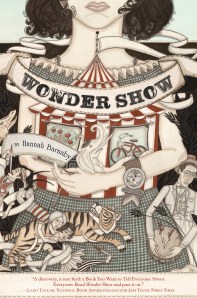
In other news, we’d like to announce the winner of the Hannah Barnaby book! Writingfamily is the winner of Wonder Show and will be receiving her copy shortly. Thanks to everyone who chimed in with comments.
Hope you’ve all been able to write up a storm this summer despite the kids being home, the sun calling you outdoors and vacations giving you a well-deserved break from the routine. If you’re struggling to fit writing into your days, remember our mantra here at WD:
It’s only 20 minutes!
Yeah, we know. But still, write well everyone, and enjoy your summer!
Hannah Barnaby is author of Wonder Show, anovel set in 1939 that tells the tale of 13-year-old Portia Remini, who flees a Home for Wayward Girls and winds up with a traveling sideshow. As if the freakish world of the carnival and its sideshow “misfits” aren’t enough to deal with, Portia’s also searching for the father who abandoned her, and keeping a constant watch for Mister, her old headmaster, whom she’s certain will someday find her.
Wonder Show was a 2013 William C. Morris YA Debut Award Finalist and a Children’s Book of the Month Club pick. It was also named to the YALSA Best Fiction for Young Adults List, the Bank Street College’s Best Books List, and the School Library Journal’s Best Books List, and it was an IndieBound New Voices Selection.
Hannah Barnaby
Intrigued? Offer up a comment to Hannah’s interview with Write Despite, below, and you could win a free, signed copy of Wonder Show.
This is your first book, correct? Why did you choose to write YA and is it the genre you plan to continue with?
Wonder Show is my first published novel, but not the first that I wrote. I have a middle-grade story that I wrote during my MFA program at Vermont College, that novel-in-the-drawer that most writers have. I’m not sure if it will ever be resurrected, but it taught me about the building blocks of a novel and about my own process.
As for choosing to write YA, I actually work pretty hard not to think about genre while I’m writing. Some genres—picture books, for instance—are obvious designations and have their own rules, but the lines between others—like middle-grade and YA—are not as clear. When Wonder Show was first published, it was named to the middle-grade summer reading list for the Children’s Book of the Month Club. Then it was nominated for the William C. Morris Award for debut young adult novels. So there was no hard and fast label for the book, which I appreciated because it reflected the fact that the audience for Wonder Show could be wider than one group of readers.
Your website says you came up with the character of Portia Remini in a dream, but what drew you to write about the circus, and its sideshow “misfits” in particular?
When I set out to write Wonder Show, all I had was the image of a girl riding a bicycle on a dirt road, and the sense that she was running away from somewhere. I didn’t know where she was going or who she was running from or anything else, really. Then a friend told me about a grant offered by the Boston Public Library, the winner of which would get financial support as well as being named the Children’s Writer-in-Residence. I decided to apply, and in researching the library’s Special Collections, I found that they had an archive of circus materials and quite a few books on circus and carnival history. A few months later, I won the grant! And then I was faced with actually writing the project that I’d proposed, which became Wonder Show.
The shifting POV among your characters comes later in the book, and gives it an unexpected twist. Was it fun to switch gears this way, and what made you decide to use this technique?
I wrote the first draft of Wonder Show very much by instinct. When I sat down to write each day, I took a few minutes to think about Portia and where she was and who she was with, and then I started to fashion a scene that built that atmosphere. It wasn’t plot-driven writing at all, but it was very much character-driven, and so I needed to get to know the supporting cast better. Writing pieces of narrative from each different point-of-view gave each character a turn to speak to me and let me know who they were and how their stories intersected with Portia’s. I wasn’t sure about keeping these pieces in the final manuscript, but I came to love them and what they revealed about the sideshow family. (I will say, however, that writing without regard for plot or chronology made the revision process *extremely* challenging. I don’t recommend this method.)
Can you talk a bit about your road to publication?
My path to publication is very different than that of most other writers, because prior to becoming a writer I worked as a children’s book editor at Houghton Mifflin, and winning the grant from the BPL also put me in contact with some valuable allies. One of the judges who awarded me the grant was Melanie Kroupa, who then had her own imprint at FSG. A couple of years after I finished my residency, Melanie wrote to ask, “What ever happened with your novel? Can I read it?” I asked for some time to do a quick revision (six weeks!) and I sent it off. Melanie didn’t end up acquiring the project, but her request got me working on the manuscript again and eventually Kate O’Sullivan, a friend and former colleague at Houghton, offered me a contract.
Do you write every day?
I aspire to write every day, but I rarely do. The reality is that I have three kids, only two of them are in school full-time, and life is unpredictable. So most of all, I try to be flexible. I might steal 20 minutes of writing time while my daughter’s in ballet class or while I’m supposed to be folding laundry. When I can plan for larger blocks of writing time, I always plan ahead so I know what to work on as soon as I sit down. I always, always have a notebook and pen with me because you never know when an new idea will come or the solution to a problem will make itself clear. (And my kids are always saying the most hilarious things, so I can capture those, too.)
What advice do you have for other writers still struggling to create or publish?
Writing is HARD WORK. And the fact that it’s hard doesn’t mean you’re doing it wrong—it means that it’s important and complex and full of emotion, as all good writing should be. Take the time to find the process that works for you, and know that your process will adapt and change from project to project. When I started writing Wonder Show, I was a single, working professional living in Boston. By the time I finished the novel for publication, I was married with children and living in the Connecticut suburbs. My perspective had evolved, and it deepened my writing and my understanding of the creative process.
What are you working on now?
I’ve just completed a contemporary YA novel that’s going out for submission soon (wish me luck!). This summer, I plan to work on a younger chapter book and a few picture book manuscripts—I’m giving myself permission to loosen up my schedule and play with writing more than I usually do. I’ll let you know how it goes!
And by the way, if you’re anywhere near Richmond, Virginia, on Wednesday, June 18, 2014, Hannah will be reading at the Girls of Summer Reading Party at 7 pm at the main branch of the Richmond Public Library, 101 East Franklin Street, Richmond, VA. She will be reading with Meg Medina and also author Gigi Amateau, another ‘Q&A Book Giveaway’ author previously featured on Write Despite. Go if you can!
AND DON’T FORGET: YOU COULD OWN A FREE COPY OF WONDER SHOW. JUST TELL US WHY YOU’D LIKE TO OWN THIS BOOK BY POSTING YOUR COMMENT HERE.
C. Michael Curtis, a senior editor and longtime revered fiction editor at the Atlantic Monthly, published an essay called “Publishers and Publishing,” in On Writing Short Stories, a collection of essays, edited by Tom Bailey. It’s a pretty enlightening, amusing reflection on the fiction submissions he receives. Our fave part:
“Much of the writing that pours onto the desks of literary editors at both the serious-minded but commercial general magazines and the smallest, most fiercely independent quarterlies is inept, undeveloped, amateurish, crazed, obscene, unintelligible, or some combination of the above.”
Kinda makes you feel better about the stuff you submit, right?
At least, that’s what we thought. I mean, we’ve received rejection letters with comments like “uninteresting” and “meandering” and “seems to have no larger point.”
But “crazed?” “Obscene?” Just what the hell are people doing out there?
Here are some other amusing rejections we ran across:
“I haven’t the foggiest idea about what the man is trying to say. Apparently the author intends it to be funny.” (Written about Joseph Heller’s Catch-22—believed to have been given this title because it was the 22nd publisher, Simon and Schuster, who agreed to take it on.)
“The American public is not interested in China.” (Seriously, what could be interesting about Pearl S. Buck’s The Good Earth?)
“This will set publishing back 25 years.” (Wonder why? Anyone read Norman Mailer’s The Deer Park?)
“Good God, I can’t publish this.” (Said about William Faulkner’s Sanctuary.)
“An absurd story as romance, melodrama or record of New York high life.” (Gasp! Blasphemy uttered about F.Scott Fitzgerald’s The Great Gatsby.)
“Stick to teaching.” (Louisa May Alcott was urged to keep her day job after submitting Little Women.)
“I recommend that it be buried under a stone for a thousand years.” (We get your point. But Vladimir Nabokov’s Lolita was still a masterpiece.)
“An absurd and uninteresting fantasy which was rubbish and dull.” (Maybe depressing and gory and violent, but William Golding’s Lord of the Flies was dull?)
“We are not interested in science fiction which deals with negative utopias. They do not sell.” (Wonder what this visionary thinks of The Hunger Games. He rejected Carrie, by Stephen King)
“It is impossible to sell animal stories in the USA.” (Give it up, Garth Stein. Even George Orwell’s Animal Farm can’t cut it.)
This is an awesome essay of Curtis’s by the way, and you can check it out here:
If you don’t have time to read the whole thing, let us recap a bit. He gives a great rundown of what editors are, and aren’t, looking for in submissions, including cover letters. He says only two things included in your letter might cause an editor to be more interested in your story than the average one:
Citations of stories published elsewhere, particularly in periodicals of comparable size and reputation; and
Mention of the fact that you’ve been enrolled in a reputable MFA program (or residence at Bread Loaf or Sewanee, etc.).
Other take-aways? Same as you’ve always heard:
Don’t recap your story—let it speak for itself.
Don’t talk about other magazines that have rejected it already.
Don’t single space.
Don’t send anything with typos or grammatical errors.
Don’t try to dazzle them with your wit or sound hostile or desperate.
In short, just make your writing as fab as possible, keep your cover letter simple and direct, and send it out.
Taking a break from the book for a while because … well, because I’m stuck. Discouraged. Not feeling it . But you don’t want to hear my problems. Neither does Karen. She told me to shut up and quit whining and go write a short story. Okay, she was much nicer than that, but I got the message.
A short story!!??
This may seem like no big deal to you, but I haven’t written a story in years. How sad is that? I’ve been so caught up in the novel thing that the idea of shorter fiction hasn’t even been on my radar. If you want to switch gears and get a new outlook and rev up the energy again, though, I guess you really should consider going back to the basics.
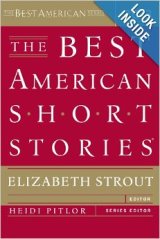
I plan to start by reading stories, of course. I used to read short fiction all the time. Best American Short Stories is always on my Christmas list (thank you in-laws for making sure this is under the tree each year), but I confess I haven’t read a whole one in years. I’ll look through them now, though, since I’m one of those people who pulls inspiration from others (okay steals, if you like—I’m not too proud to admit it).
Any other suggestions for where to find great stories? Do you read literary journals? The New Yorker? Alice Munro anthologies?
Anyone want to write along with me?
When we’re done, here’s a GREAT listing of pubs to submit to:
Most writers remember their first publication: the magical acceptance letter (usually after a raft of rejections,) reading the galleys, seeing the finished thing alive in the world. We thought it would be fun to launch an occasional series featuring authors talking about their breakthroughs. Sometimes the story behind the story is the best part.
Please join us in welcoming Vanessa Hua to Write Despite.
Vanessa is a Steinbeck Fellow in Creative Writing. An award-winning writer and journalist, her work has appeared or is forthcoming in The Atlantic, ZYZZVA, Crab Orchard Review, New York Times, New Yorker, Salon, and elsewhere. A former staff writer for the San Francisco Chronicle, she has reported from China, South Korea, and Panama. She blogs at threeunderone.blogspot.com and can be found at www.vanessahua.com
Late in 2005, I won the Cream City Review fiction contest – my first short story in print. When I received the e-mail, I stood up in the newsroom and shouted with joy and excitement, struck by the heady, dangerous feeling of affirmation. I’d been judged worthy! By then, I’d also reported from China, launched an award-winning campaign finance investigation, and had married. When I won the contest, it felt all parts of my life were coming together – professionally, personally, and creatively.
I’d been writing fiction since I was a child, won writing contests in high school, and had studied creative writing at Stanford University. After graduation, I focused on my journalism career. In my spare time, I wrote scenes, sketches, starts of stories that went nowhere. When I re-read pieces I’d written in college, I felt conflicted: proud that the stories had merit, yet it felt like a stranger had penned them. I didn’t remember how to write a story.
Eventually, I signed up for a fiction workshop where I produced the story that won the Cream City Review contest. I’d learned about the journal after reading the publishing bio of another student in the class whose work I admired. That success helped keep me going as I started writing more fiction, submitting to journals, taking workshops, joining writer’s groups, and going to writing conferences. Of course, if you spend too much time chasing validation, you might succumb to the despair of rejection – and I’ve been rejected many times since then. And you have to spend more hours writing than talking about writing.
In 2007, I decided I wanted to learn how to write a novel, and I headed to UC Riverside, where I earned my MFA. Five years later, I had the pleasure of being asked to judge the Cream City Review fiction contest. I hope that the prize helped encourage the winner in her career, too.
In deciding where to submit, I continue sending to places that publish writing I admire. I also seek out paying journals, those with interesting business models, such as DailyLit, and strongly promote the work of their authors, such as At Length. I also enter contests, such as The Atlantic’s student fiction prize, which I won in 2008. Your chances might be slim, but if you don’t enter, you have no chance at all.
Scott Garson is the author of IS THAT YOU, JOHN WAYNE?—a collection of stories—and AMERICAN GYMNOPEDIES, a book of microfictions. His fiction has won awards from Playboy, The Mary Roberts Rinehart Foundation and Dzanc Books, and he has work in or coming from Kenyon Review, American Short Fiction, Hobart, Conjunctions, New York Tyrant and others. He edits the Pushcart-Prize-winning journal of very short fiction, Wigleaf.
What was your first real publication and how did it come about?
If I tell you that, how can I keep it buried?
Kidding.
My first publication was back in the ’90s—in the ‘Before’ era, as I see it now. Before the internet. Before indie mags had more than local reach. Then, as now, we were all sending our stuff to the Paris Review and receiving form slips in return. If we wanted a more realistic chance, we had to get creative. I looked through the addresses in the back of the Best American Short Stories and saw an Illinois journal (now defunct) called Black Dirt. They accepted and published a story of mine called “Aloha.” It was okay. My Mom liked it, I think.
You’ve just published your second book, Is That You, John Wayne?, another amazing collection of short stories. What makes you gravitate to short fiction? Do you ever plan to write longer-—say, a novel?
Well, I do! There are a couple of novel manuscripts in my past… Does that sound depressing? Novels are like short stories, I think: it takes a while to learn how to do it. But while apprentice short stories are easily enough forgotten, novels take longer. There’s such an investment. It’s like you’re not allowed to let them go.
I’ve let those manuscripts go. Goodbye to you, unpublished novels. Good luck!
As to the attraction of short fiction, that’s easy: I loved reading before I discovered short fiction, but I probably wouldn’t ever have thought to become a writer if it weren’t for reading short fiction. That’s to say, fiction seduced me via the short story. It’s where I first saw how sense, sentence and story could come together as a kind of magic. I wanted to do that, to make that kind of thing.
We just had our sixth birthday. Birthday #5 was fun because my wife, Becky, made Wigleaf a birthday cake. A real birthday cake for a virtual magazine. My kids approved because the magazine, unlike them, could not bring a mouth to the party.
Again, this is a journal dedicated to short-short fiction. Why and how did you create it and what were you trying to do differently from other literary journals?
I suppose I was getting a little dejected as a writer when I got the idea for Wigleaf. That might be too strong a word, but my excitement was for sure not at a high. This was in 2007, I guess. I was publishing stories fairly regularly, which should have been spiriting, but there wasn’t a lot of response, and if I got a contributor’s copy and didn’t particulary enjoy some of the other fiction, I was liable to feel that the whole process was kind of useless.
Around this time I sent out a short-short for the first time, a 500-word story called “Lucky.” It was accepted by a journal that published only work of that length, Jennifer and Adam Pieroni’s late great Quick Fiction. Maybe you know where this is going. Reading that contributor’s copy of Quick Fiction was a great and amazing experience. All the writers were doing such careful, interesting work. With each piece, it seemed like the whole sense of what a story could be was invented all over again.
Not long after that I taught myself basic html. Online lit mags and short-short fiction were both sort of new, as I saw it. I thought they were a good fit for each other. (Some other early online mags had paved the way here: SmokeLong Quarterly, elimae, Hobart,Juked, and FRiGG, to name a few.)
What are you working on now?
Only a handful of people know this, so I guess it qualifies as a secret. Ready? I’m writing a novel for young readers which I’ll probably try to publish under a pseudonym. My two kids—ages 8 and 11—are responsible. They’ve challenged me to write something “not boring,” and my 8-year old has all sorts of advice for me as to how to do that (for example, “People like books that have chapters with titles.”). As a writing project, it’s certainly a switch-up. I’m enjoying it.
Any new publications forthcoming?
I have a draft of a short novel that I feel good about. Just now I can’t stand the idea of publishing it. A writer who’s got a book out is a writer whose mindlife is somewhat compromised….. Maybe in another couple years.
Do you write every day?
In some seasons, yes. When I’m teaching, no. This semester, I write on Tuesdays, Thursdays, and weekends.
Maybe when my kids are grown I’ll be able to write every day again. (Not that I’m looking forward to that… This is a good time!)
Advice for aspiring writers?
#1. Read a lot.
There’s the duh advice.
#2. Understand that for most readers, the pleasure of fiction is the pleasure of interiority. This is not saying too much, in the sense that there are so many different ways to take readers inside a life. But it’s a good thing to remember, all the same. Better that the mind of your fiction move from the inside out rather than vice versa.





 Write Despite
