Go ahead, distract me

distraction2

Distraction is the enemy of the writing process, and it’s a wily enemy.

Because we do a lot of our writing at home, we are subject to a particular virulent strain known as Domestic Distraction (DD.) When we sit down to write (often hiding from our children and other family members) we can pretty much predict the ambush.

Actually, Cathy just sent me this email describing a recent writing session at her home:

“Well, right now I’m trying to work, and I have four kids running in and asking for popcorn and drinks. And one of them is 14! And the phone keeps ringing. And the dog is barking. I had a dentist appointment this morning, and now the renovators are coming in half an hour and I have to get the whole kitchen cleaned before they get here. How much writing do you think I’ve actually done today? Slightly less than tweet-length.”

Sounds about right. Sometimes it really is best to get out of the house to write. Go to a coffee shop. Try the library. Anywhere that the people won’t mean anything to you, and the surroundings will mean even less.

But if you can’t slip away, you might as well laugh. Here, in no certain order, are some of the recent issues that have had the temerity to disturb us at our writing desks.

  • The house is too cold. It’s winter. It’s New England, but seriously my fingers hurt.
  • The dog wants out. Now he wants in. Now he wants back out.
  • The neighbors’ kids are really into screaming. In their backyard. At full volume.
  • My 5-year-old has been too quiet for too long.
  • My 5-year-old has been unbearably noisy for too long.
  • Ah, the always inspiring: “Mommy, can you come wipe my bum?”
  • I need coffee.
  • I’ve had too much coffee.
  • Man, a turkey sandwich sounds good right now.
  • I’ll just check Facebook for a second

Care to share your own DD?

—  Karen

distraction

Write Despite Book Giveaway Winner

winner9

The comments are all in, and Author Hardy Jones has chosen the winner who will receive a free, signed copy of his novel, Every Bitter Thing.

From Hardy:

All of the responses to the “Perseverance and the Writing Life” were strong, which made my selecting only one for the book giveaway difficult. In the end, I choose T.D. The comment was well written, thoughtful, and clearly expressed T.D.’s desire to persevere. For all who left comments, best of luck with your writing and your submitting!

Congratulations, T.D.
Now come out from behind those initials and claim your prize.
Hardy is popping your book in the mail today.

And thanks to everyone who participated.

Structure: The Lost Art?

I started college as an art major. I lived in a small town and began a long educational stint at a small college, which had exactly two art professors. One was the 3D instructor—pottery and sculpture, which I was not so into. I wanted to draw and paint. So I spent most of my time with the 2D art teacher—a gruff, critical guy who seemed to never be able to explain exactly what was wrong with a piece, just that you hadn’t put enough of your “soul” into it, or you needed to “color outside the lines” more. He was also into trash. “Found objects” were his medium, and he could often be spotted rooting through the bins outside the art building scavenging treasures to incorporate into his “art.”Found Art
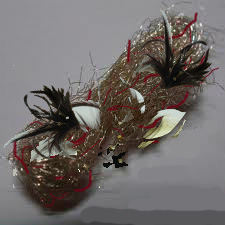
I say “art” in quotes, yes, because I could not tell exactly what his art was. One creation he displayed proudly in his office was a board nailed on the wall holding a tangle of red wires, some prickly stuff that looked like steel wool, and clumps of brown feathers. His students dubbed it (behind his back) “Road Kill in Mixed Media.”


One day, when we were reading about Picasso and how he’d progressed from realism to abstraction during his career, I came across a line that went something like, “Realism provides the foundation for mastery which then allows artists to expand in whatever direction they choose.”

There. That’s what I’d been sensing all along. I pointed this out to my professor and said, “I feel like I need to know how to paint something realistic first, before I try to weird it up.”

He was, to put it mildly, offended. More like defensive. Actually horrified. He blurted out that this was a bourgeoisie concept that had been around for centuries and it was, essentially, crap. Learning the basics, he said, would only enable you to produce cookie-cutter, formulaic art. Then he fell back on his favorite dada-ist phrase: “Anything the artist spits is art.”

Okay, really? Not only is this gross, but come on. Whatever you throw out into the world is golden just because you proclaim yourself gifted? That’s crap.

I ended up changing towns and colleges and majors until I finally got a degree in creative writing. I took countless workshops, all of which were eye-opening and useful. Yet in all the talk of novel writing (and there wasn’t much—we concentrated mainly on short stories) there was still very little teaching of structure.

I still feel kind of bitter—okay, plenty bitter—about that. Because to this day I’m still struggling with it. I get that people don’t want to teach something considered too conventional. But I’ll take formula over floundering any day. Like Picasso said, I’d rather come to learn something so well that I can then break apart its underlying foundation and have it still support all the crazy cube-like heads and feet above.

The book I’m reading now (Save the Cat!, which I’ve mentioned previously) gives such strict guidance on structure it tells you on what page a key element in your story should take place.

Actually, your script—this is a screenwriting book. I wish this guy would write a how-to on novel structure and tell me on exactly what page my main character should make a life-altering decision, or bottom out, or find enlightenment.
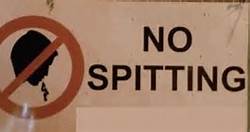
No spitting

My old art professor would spit his artistic saliva at me for that one. But I’d rather have the tools to create what will stand upright and endure, not what’s become a mass of wires and feathers that I have to now go back and try to pry up from the roadside.

It’s so much easier if you build the foundation from the start. Structure, I’m starting to think, is EVERYTHING.

What do you think?

–Cathy
Persevere and Win a Free Book!

Heading into a new year, we here at Write Despite have been thinking a lot about perseverance. Lately it seems that this quality, more than any other, is responsible for whatever good fortune we’ve had. We consulted Merriam-Webster for an exact definition.

Perseverance:  continued effort to do or achieve something despite difficulties, failure, or opposition.

That’s about as accurate a description of the writing life as we’ve ever heard. But we thought we’d ask our old writer friend Hardy Jones, author of “Every Bitter Thing” (still love that title), to weigh in.

Please post a comment on Write Despite about an instance in your own writing life when perseverance has paid off—whether it’s an acceptance letter or nailing the perfect sentence. Hardy will select one respondent to receive a free copy of “Every Bitter Thing.”

FullCover copy

“Perseverance and the Writing Life”

Why write and continue to do so when one’s attempts have been met with rejection? Early in one’s writing life, perseverance—it could be argued—is one’s greatest trait. Writing can always be improved, but not if a burgeoning author throws in the towel before that writing has blossomed.

Gustave Flaubert said, “Writing is a lonely life, but the only life worth living.” Writing is lonely; it is you, your ideas, and (most commonly) a computer. The daily grind of writing can be lonely, but this is why it imperative that an author love his or her profession. Remember: No one forced you to be a writer. You can walk away at any moment. While the act of writing can be lonely, the life of a writer does not have to be lonely. Teachers, mentors, friends (authors and non-authors), and family can provide a support network. One must remember that, in the end, it is you and your ideas sitting alone that will create your story, poem, and eventually your book. If one perseveres.

Alfred Kazin said, “In every real sense, the writer writes in order to teach himself, to understand himself, to satisfy himself; the publishing of his ideas is a curious anticlimax.”  Presumably we all write to publish, to see our work in print, and to have an audience. But keep in mind that even the most prolific authors write more than they publish. Therefore, it is the act of writing that must sustain us, not seeing our name and work in a journal or on a bookshelf. As long as you enjoy your work (enjoy does not mean you are always happy with it, but the process is not deflating), are learning about yourself, then you are growing as a writer.

While the world tells us we cannot write, while the world tells us to focus on more realistic goals, while we tell ourselves we cannot do it…remember that perseverance will get us through those angst-filled moments.

Social Skills

Social media is all-pervasive. It’s all about the platform these days, and most agents and publishers will expect you to have one. But sailing the social media seas isn’t always a smooth ride. For starters, there are just so many options. Which ones matter? And what’s the etiquette?

social-media-marketing

My good friend Bridgette Lacy, an ever-savvy writer/publicist based in Raleigh, N.C., was kind enough to pass on these tips from an NPR piece by Guy Kawasaki. Bridgette recently used them in a class she taught called From Books to Buzz: How to Promote Your Work.

According to his bio,  Kawasaki has 3,821,000 million Google+ followers, 286,000 Facebook subscribers, and 1,240,000 Twitter followers. He’s also the co-author of APE: Author, Publisher, Entrepreneur-How to Publish a Book, which explains self-publishing, and he’s written eleven other books, including the New York Times and Wall Street Journal bestseller Enchantment.

Please share the ways you promote your work? It’s an icy day in New England, so send a little warmth our way!

– Karen

Cats and Characters

I’m reading two books on writing right now, both of which were recommended to me by other writers, and both of which are technically geared toward…movies? Well, acting and scripts anyway.

They are:

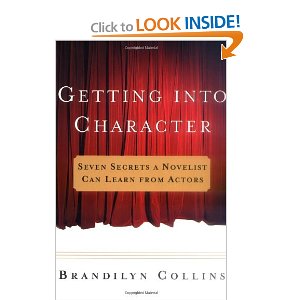
Getting into CharacterGetting into Character: Seven Secrets a Novelist Can Learn from Actors, by Brandilyn Collins

and


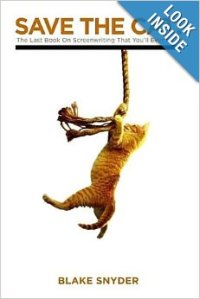
Save the Cat! The Last Book on Screenwriting You’ll Ever Need
by Blake Snyder

The first one was suggested by one of the comments here on Write Despite (thank you, anonymous tipster), and it actually gave me a real breakthrough. Of course I realized all along, while working on my novel, that I need to know my character’s motivation. As Vonnegut said: “Every character should want something, even if it is only a glass of water.” In my book, my character didn’t seem to want much. She wants to be happy. And kind of to be left alone. And sometimes water. Hey, just like me.

But that’s of course not enough to draw a reader in or sustain them through 300 pages. Getting into Character’s chapter on “Coloring Passsions” broke down the process into manageable bites—a character’s conscious motivation, subconscious motivation, etc. so I was able to see that what my character really wants is to figure out why she is the way she is. What happened in her life that brought her to this point? Luckily, she’s returning home to her family and now, knowing this is her motivation, I should be able to open up whole areas of discovery as she digs and prods and questions her past. Best of all, she should no longer passive. Stronger characters make stronger books.

Save the catSave the Cat!, is written by a true Hollywood insider, and this guy has lots of energy. He loves exclamation points! (See title.) And chapters like “Give Me the Same Thing, Only Different!” and “Let’s Beat it Out!” and he’s heavy into pitches and loglines. Know what a logline is? It’s one sentence—ONE—that sums up a whole movie. See if you can guess these famous ones:

“Adventuring archaeologist races about the globe to prevent Nazis from turning the greatest archeological relic of all time into a weapon of world conquest.”

Too easy, right? How about this one?

“When she falls in love with a sweet, but WASPy guy, Toula struggles to get her family to accept her fiancée, while she comes to terms with her own heritage.”

And this?

“A businessman falls in love with a hooker he hires to be his date for the weekend.”

Snyder says if you have no logline, you have no script. Or in my case, no book. After some tinkering, I did come up with a logline for my novel and I think it suits it. And forcing myself to do so made me zoom in on the two or three BIG ideas of the book, which in turn made me think about whether those 300 pages that come after it can, or should, live up to it. Pretty good for one sentence.

If you’re looking for some guidance, I recommend both. If you have your own faves, tell us! What writing books do you turn to? Which ones have been duds?

–Cathy

Journalist Jane Dee: WW I Veteran’s Heroic Story Resonates Today

Struggling with her own grief, Connecticut journalist Jane Dee found a sense of healing and connection as she wrote about a young solider from New Haven, who served valiantly in World War I and paid a dear price. Check out Jane’s piece here:

http://www.courant.com/news/connecticut/hc-nhl-soldiers-story-20131111,0,2195034.story

Please contact Jane, if you have–or know about–a veteran’s story to share. And say thanks to any veteran you come across this week, or whenever the spirit moves you. These folks give so much and ask so little in return.

Please welcome Jane Dee to Write Despite.

Screen Shot 2013-11-12 at 9.36.02 AM

My father was a veteran and an Irish lad, as was Timothy Ahearn, the subject of A Soldier’s Story in New Haven Living’s November magazine. A slightly shorter version of the story appeared in the Hartford Courant and on courant.com on Veterans Day.

My father and Timothy also shared the middle name Francis. I found these similarities to be meaningful when I stumbled upon a picture of Timothy’s memorial shortly after my father died this past March. Timothy’s life-like statue stopped me in my tracks and his story soon became a mystery for me to solve, as I tried to piece together how he had died. Immersing myself in his story felt like writing about my father by proxy, and was a way for me to honor my father’s war service. It also put my mind elsewhere, which helped me to cope with my grief, as I had lost my mother to breast cancer 22 months before my father died.

Writing this story took a lot of detective work, as Timothy’s story had never been written before. His descendants had moved away from the area, and the veterans he fought with had died years ago. Although his story was profoundly meaningful to the veterans who raised the memorial to him, his story had been lost to time.

Timothy has been gone a long time, but his story is a story about veterans, for whom I have a much deeper appreciation. In many ways we are becoming a nation of veterans, and Timothy’s story speaks to the struggles veterans still encounter today.

I spent six months researching A Soldier’s Story at the New Haven Public Library, including its local history room, the Connecticut State Library, and the New Haven Museum. I also spoke to veterans and visited the West Haven Veterans Museum & Learning Center, which has a wonderful collection of Yankee Division memorabilia. I obtained copies of Ahearn’s service record from the Connecticut National Guard and corresponded with two members of his family who were very generous with their time and memories. I also read many books on the “Great War.” Two histories written just after the war ended were particularly helpful.

I would be very happy to hear from any of Ahearn’s descendants. I am also very interested in telling other veteran’s stories. I would welcome your suggestions and comments and can be reached at janedee04@gmail.com.

A Matter of Perspective

So we’ve all got different tastes in fiction, but I want to share a new novel that I’ve just finished, The Burgess Boys by Elizabeth Strout. So many aspects of this story are moving, but I was particularly impressed with how skillfully and effectively Strout handles multiple perspectives through a third-person narrator. Take a look, if you’re struggling with the same.

— Karen

burgess

Scary Spaces

Happy Halloween, everyone! I was wondering what would be the scariest picture I could post today—maybe a spider or a blood-covered vampire or Miley Cyrus’ tongue (okay, I can’t help posting that one):

miley cyrus

Yee-ikes. I’ve seen this thing more times lately than I’ve seen my own tongue, and yet it never fails to make me gag.

Anyway, here’s the actual scariest picture I could find:

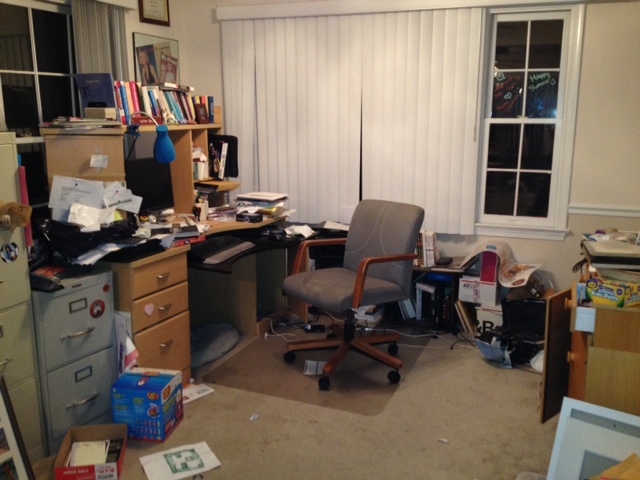
Messy Office

Yep. That’s my office. That’s where I write, think, research, edit, blog, dream. And I think it’s why I’m having such trouble organizing my thoughts lately.

You think????

Can you say Professional Organizer? Life Coach? Get your shit together?

Just looking at this photo makes me want to weep. You too? Hey, try actually sitting here and working in this garbage heap. What kinds of spaces do real writers work in, I wondered. Hmm. Here’s a sampling.

Stephen King’s office:

Stephen King Office

E.B. White’s office:

EB White's Office

(I guess when you have that view you don’t need much else?)

Virginia Woolf’s office:

Virginia Woolf's Office

None of these, though, exactly evoke the kind of space I have in mind. I’ve decided I need only about four things: a desk, a window, a chair, and some walls where I can tack up ideas and inspirational posters, like that cat hanging on a tree branch (Hang in There, Baby—Friday’s Coming!). No, not that one.

Here’s more what I have in mind:

Writing Desk Photo

Sweet, right? I feel this would be very do-able.

Tomorrow is November 1, which means we have only two months left of the Write Despite challenge. I am vowing to not only keep writing for the next two months, but to have an AFTER picture of my office by then too.

Where do you work? Describe, or post a pic for us! I’d love to know, and to get some ideas.

Write well, everyone!

—Cathy