Structure: The Lost Art?

I started college as an art major. I lived in a small town and began a long educational stint at a small college, which had exactly two art professors. One was the 3D instructor—pottery and sculpture, which I was not so into. I wanted to draw and paint. So I spent most of my time with the 2D art teacher—a gruff, critical guy who seemed to never be able to explain exactly what was wrong with a piece, just that you hadn’t put enough of your “soul” into it, or you needed to “color outside the lines” more. He was also into trash. “Found objects” were his medium, and he could often be spotted rooting through the bins outside the art building scavenging treasures to incorporate into his “art.”Found Art

I say “art” in quotes, yes, because I could not tell exactly what his art was. One creation he displayed proudly in his office was a board nailed on the wall holding a tangle of red wires, some prickly stuff that looked like steel wool, and clumps of brown feathers. His students dubbed it (behind his back) “Road Kill in Mixed Media.”


One day, when we were reading about Picasso and how he’d progressed from realism to abstraction during his career, I came across a line that went something like, “Realism provides the foundation for mastery which then allows artists to expand in whatever direction they choose.”

There. That’s what I’d been sensing all along. I pointed this out to my professor and said, “I feel like I need to know how to paint something realistic first, before I try to weird it up.”

He was, to put it mildly, offended. More like defensive. Actually horrified. He blurted out that this was a bourgeoisie concept that had been around for centuries and it was, essentially, crap. Learning the basics, he said, would only enable you to produce cookie-cutter, formulaic art. Then he fell back on his favorite dada-ist phrase: “Anything the artist spits is art.”

Okay, really? Not only is this gross, but come on. Whatever you throw out into the world is golden just because you proclaim yourself gifted? That’s crap.

I ended up changing towns and colleges and majors until I finally got a degree in creative writing. I took countless workshops, all of which were eye-opening and useful. Yet in all the talk of novel writing (and there wasn’t much—we concentrated mainly on short stories) there was still very little teaching of structure.

I still feel kind of bitter—okay, plenty bitter—about that. Because to this day I’m still struggling with it. I get that people don’t want to teach something considered too conventional. But I’ll take formula over floundering any day. Like Picasso said, I’d rather come to learn something so well that I can then break apart its underlying foundation and have it still support all the crazy cube-like heads and feet above.

The book I’m reading now (Save the Cat!, which I’ve mentioned previously) gives such strict guidance on structure it tells you on what page a key element in your story should take place.

Actually, your script—this is a screenwriting book. I wish this guy would write a how-to on novel structure and tell me on exactly what page my main character should make a life-altering decision, or bottom out, or find enlightenment.
No spitting

My old art professor would spit his artistic saliva at me for that one. But I’d rather have the tools to create what will stand upright and endure, not what’s become a mass of wires and feathers that I have to now go back and try to pry up from the roadside.

It’s so much easier if you build the foundation from the start. Structure, I’m starting to think, is EVERYTHING.

What do you think?

–Cathy

2013 Parting Advice

I’ve been following this fantastic series of writer interviews in The Atlantic.

As an end-of-year treat, they’ve bundled them all together. Dip in when you get a chance. Great writers, great insights.

advice

Enjoy the holiday season and the final days of the Write Despite challenge. Stay tuned for our plans for the new year.

–Karen


Social Skills

Social media is all-pervasive. It’s all about the platform these days, and most agents and publishers will expect you to have one. But sailing the social media seas isn’t always a smooth ride. For starters, there are just so many options. Which ones matter? And what’s the etiquette?

social-media-marketing

My good friend Bridgette Lacy, an ever-savvy writer/publicist based in Raleigh, N.C., was kind enough to pass on these tips from an NPR piece by Guy Kawasaki. Bridgette recently used them in a class she taught called From Books to Buzz: How to Promote Your Work.

According to his bio,  Kawasaki has 3,821,000 million Google+ followers, 286,000 Facebook subscribers, and 1,240,000 Twitter followers. He’s also the co-author of APE: Author, Publisher, Entrepreneur-How to Publish a Book, which explains self-publishing, and he’s written eleven other books, including the New York Times and Wall Street Journal bestseller Enchantment.

Please share the ways you promote your work? It’s an icy day in New England, so send a little warmth our way!

– Karen

Journalist Jane Dee: WW I Veteran’s Heroic Story Resonates Today

Struggling with her own grief, Connecticut journalist Jane Dee found a sense of healing and connection as she wrote about a young solider from New Haven, who served valiantly in World War I and paid a dear price. Check out Jane’s piece here:

http://www.courant.com/news/connecticut/hc-nhl-soldiers-story-20131111,0,2195034.story

Please contact Jane, if you have–or know about–a veteran’s story to share. And say thanks to any veteran you come across this week, or whenever the spirit moves you. These folks give so much and ask so little in return.

Please welcome Jane Dee to Write Despite.

Screen Shot 2013-11-12 at 9.36.02 AM

My father was a veteran and an Irish lad, as was Timothy Ahearn, the subject of A Soldier’s Story in New Haven Living’s November magazine. A slightly shorter version of the story appeared in the Hartford Courant and on courant.com on Veterans Day.

My father and Timothy also shared the middle name Francis. I found these similarities to be meaningful when I stumbled upon a picture of Timothy’s memorial shortly after my father died this past March. Timothy’s life-like statue stopped me in my tracks and his story soon became a mystery for me to solve, as I tried to piece together how he had died. Immersing myself in his story felt like writing about my father by proxy, and was a way for me to honor my father’s war service. It also put my mind elsewhere, which helped me to cope with my grief, as I had lost my mother to breast cancer 22 months before my father died.

Writing this story took a lot of detective work, as Timothy’s story had never been written before. His descendants had moved away from the area, and the veterans he fought with had died years ago. Although his story was profoundly meaningful to the veterans who raised the memorial to him, his story had been lost to time.

Timothy has been gone a long time, but his story is a story about veterans, for whom I have a much deeper appreciation. In many ways we are becoming a nation of veterans, and Timothy’s story speaks to the struggles veterans still encounter today.

I spent six months researching A Soldier’s Story at the New Haven Public Library, including its local history room, the Connecticut State Library, and the New Haven Museum. I also spoke to veterans and visited the West Haven Veterans Museum & Learning Center, which has a wonderful collection of Yankee Division memorabilia. I obtained copies of Ahearn’s service record from the Connecticut National Guard and corresponded with two members of his family who were very generous with their time and memories. I also read many books on the “Great War.” Two histories written just after the war ended were particularly helpful.

I would be very happy to hear from any of Ahearn’s descendants. I am also very interested in telling other veteran’s stories. I would welcome your suggestions and comments and can be reached at janedee04@gmail.com.

Welcome Author Gigi Amateau–And Win a Copy of Her New Book!

gigi-amateauGigi Amateau’s first book for young adults, Claiming Georgia Tate, was published by Candlewick Press in 2005. That title was selected as a New York Public Library Book for the Teen Age and hailed by author Judy Blume: “It’s rare and exciting to discover a talented new writer like Gigi Amateau.” The Wall Street Journal called the book “an ambitious push into the young adult market.”

She is also the author of A Certain Strain of Peculiar, a Bank Street College Best Children’s Book of the Year, and Chancey of the Maury River, A William Allen White Masters list title for grades 3-5. Come August, Come Freedom, her first work of historical fiction, was selected by the Southern Independent Booksellers Alliance as a Fall 2012 Okra Pick, chosen by Bank Street College as a Best Children’s Book of the Year, and by the Virginia Library Association as a Jefferson Cup Honor book. In 2012, Gigi received a Theresa Pollak Prize for Excellence in the Arts from Richmond magazine.

Her fifth novel, Macadoo of the Maury River, macadoo-coverwas released by Candlewick Press in August 2013. A copy of it can be yours by posting a comment here on Write Despite.

Gigi was raised in Mechanicsville, Virginia, and lives with her husband and daughter in Richmond. Here is a brief Q&A.

1. Best writing advice you’ve ever received?

Judy Blume gave me two great pieces of advice:

1. Read your work aloud when revising.

2. Banish the thought that you will run out of ideas.

2. Favorite three authors?

Issa. And, right now, I’m catching up on all of my Edward P. Jones and am also fairly obsessed with Susann Cokal’s new YA novel, The Kingdom of Little Wounds. I’ve loved everything ever written by Silas House. And, Jacqueline Woodson, Edwidge Danticat, Belle Boggs, Meg Medina. And, see above, I’ve loved Judy Blume for about forty years. Oh, and Eudora Welty. Can’t forget her.

3. Journey to publication? (How were you first published and how has that led to where you are now?)

When I “finished” (or so I thought!) my YA novel, Claiming Georgia Tate, (it was actually called something different) I was pretty content that I had a beginning, middle, and an end and characters that I enjoyed writing. I didn’t really have the constitution to send the manuscript out, but I did share with a close friend. I had ZERO publishing contacts but it turns out my friend did. So, folks started sharing the manuscript, which eventually led to representation by Leigh Feldman and publication by Candlewick Press. Since then, I’ve learned a lot and grown a lot. Best of all, I’ve met many kind and generous people along the way and made some great, lifelong friends!

4. How and why did you decide to write YA books–what do you love about it?

I didn’t know a lot about YA when I started writing Claiming Georgia Tate in 1996. I just wrote the story that was swirling around in there, which is still how I write. I have a bunch of stories that may or may not be for children. I don’t really worry about an age group or market until revision is well underway, and until after I’ve gotten a handle on what I’m trying to say. Of my published books, I’d say two are YA and three are middle grade. What I enjoy about writing for young readers is placing a kid at the center of the story and giving those characters power and voice in their own lives.

5. What’s up with the horses, and how did they make their way into your writing?

I just love horses, that’s all. Everything about them. Their big eyes that reflect a better you. How fuzzy they get in the winter time. The way the smell. How brave they are. How aware they are of every motion and emotion. I don’t know. How does the sky or my grammy or a kiss make it into my writing? How do birds and trees and mountains? Just. Well, there they all are making me feel alive and not alone.

6. Advice for those on the road to publication (i.e., tips on snagging an agent)? 

The advice that I try to follow for myself regarding craft is to give myself intentional periods of pause and reflection to look around inside my mind and my body (yes!) because there are LOTS of stories that remain hidden when I’m so distracted with running around doing things.

My advice for becoming published is to identify one or two writing communities or professional associations that feel welcoming toward you and resonant with your work. Join up. Learn. Meet people. Take advantage of opportunities to connect with publishing professionals. For example, I belong to the Authors Guild, AWP, James River Writers, the Society of Children’s Book Writers & Illustrators, Southern Independent Booksellers Alliance, and WriterHouse.

7.  Do you write every day?

I do. I don’t always work on the same manuscript every day. I hop around to different projects.

8. What are you working on now?

Lots of fun stuff! I just released an app for iPad based on my book, Chancey of the Maury River – a totally a fun project with a brand new horse story and a barn dress-up game. I’m finishing up the third installment of the Horses of the Maury River middle grade series (the second, Macadoo of the Maury River is just out). I’m about seventy pages in to a historical novel. I’m researching two other books and writing little pieces of those. Revising a retelling of a colonial folk tale. And, working on an essay about Atlantic Sturgeons and Milwaukee Bucks’ star Larry Sanders.  I know, right? I don’t quite get that one yet myself. Just going with it for now.

YOU COULD WIN A FREE COPY OF GIGI’S BOOK, MACADOO OF THE MAURY RIVER. JUST TELL  HER WHY YOU’D LIKE TO OWN IT BY POSTING YOUR COMMENT HERE. GIGI WILL PICK A WINNER BY OCTOBER 1!

Welcome Author Patricia Henley

The diverse and accomplished Patricia Henley joins us today to share her thoughts on lucky breaks, practice-practice-practice, and how starting a novel feels like falling in love.

Patricia is the author of two chapbooks of poetry, four short story collections, two novels, a stage play, and numerous essays. Her first book of stories, Friday Night at Silver Star (Graywolf, 1986) was the winner of the Montana First Book Award. Her first novel, Hummingbird House (MacMurray & Beck, 1999) was a finalist for the National Book Award and the New Yorker Fiction Prize. Pantheon published her second novel, In the River Sweet, and it was widely praised in newspapers and magazines. In the River Sweet was a Border’s Original Voices selection and was translated into Polish and published in Poland in 2004. Engine Books published Patricia’s fourth collection of stories – Other Heartbreaks – in 2011.

Here’s what Oprah magazine had to say about Other Heartbreaks:

O Magazine Review

Learn more about Patricia and her work at www.patriciahenley.org or at www.enginebooks.org

Please welcome Patricia to Write Despite.

1. What’s the best writing advice you’ve ever received?

Here are two bits of advice. Pay yourself first — that is, write first thing in the morning. After that, everything feels easy. Pursue wordless recreation. This is even more important now than it was when I first read it thirty years ago because we are bombarded with so many more words now than ever.

2. Please tell us your favorite three authors

Hilary Mantel
Alice Munro
William Trevor

3. Briefly describe your journey to publication. (How were you first published and how has that led to where you are now?)

I first published poetry in journals around Baltimore in the 1970’s. I started writing fiction in 1979 when I was living in the Pacific Northwest. I submitted a short story manuscript to a contest – the Montana First Book Award. I won, and, as a result, Graywolf Press published my first book of stories in 1986. They made sure it was reviewed nationally and that was my lucky break.

4. Advice for those now on the road to publication?

Don’t stop writing. There are plenty of gifted or talented writers who can’t stick with it. They allow themselves to get distracted when it’s not easy. Getting published is about practice, practice, practice.

5. Do you write every day?

When I’m working on a project, yes, I write every day. Once in a while I take some time off. But a week or two without writing and I begin to feel as if I’m living in a black and white movie. I have to write.

6. What are you writing now? (If nothing, what are you reading now?)

I recently finished a memoir – You Will Be Taught To Fly — I do not have a publisher for it yet. I’m writing a YA novel with Elizabeth Stuckey-French. It’s titled Where Wicked Starts. Engine Books will publish it in 2014. I recently started what I hope will be a novel set in Cincinnati. I haven’t made a firm commitment to it yet, but it’s fun. The first 100 pages of a novel feel like falling in love.

Oxford, 2012

Author Angela Belcher Epps: Telling Your Truth

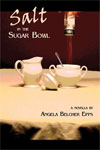
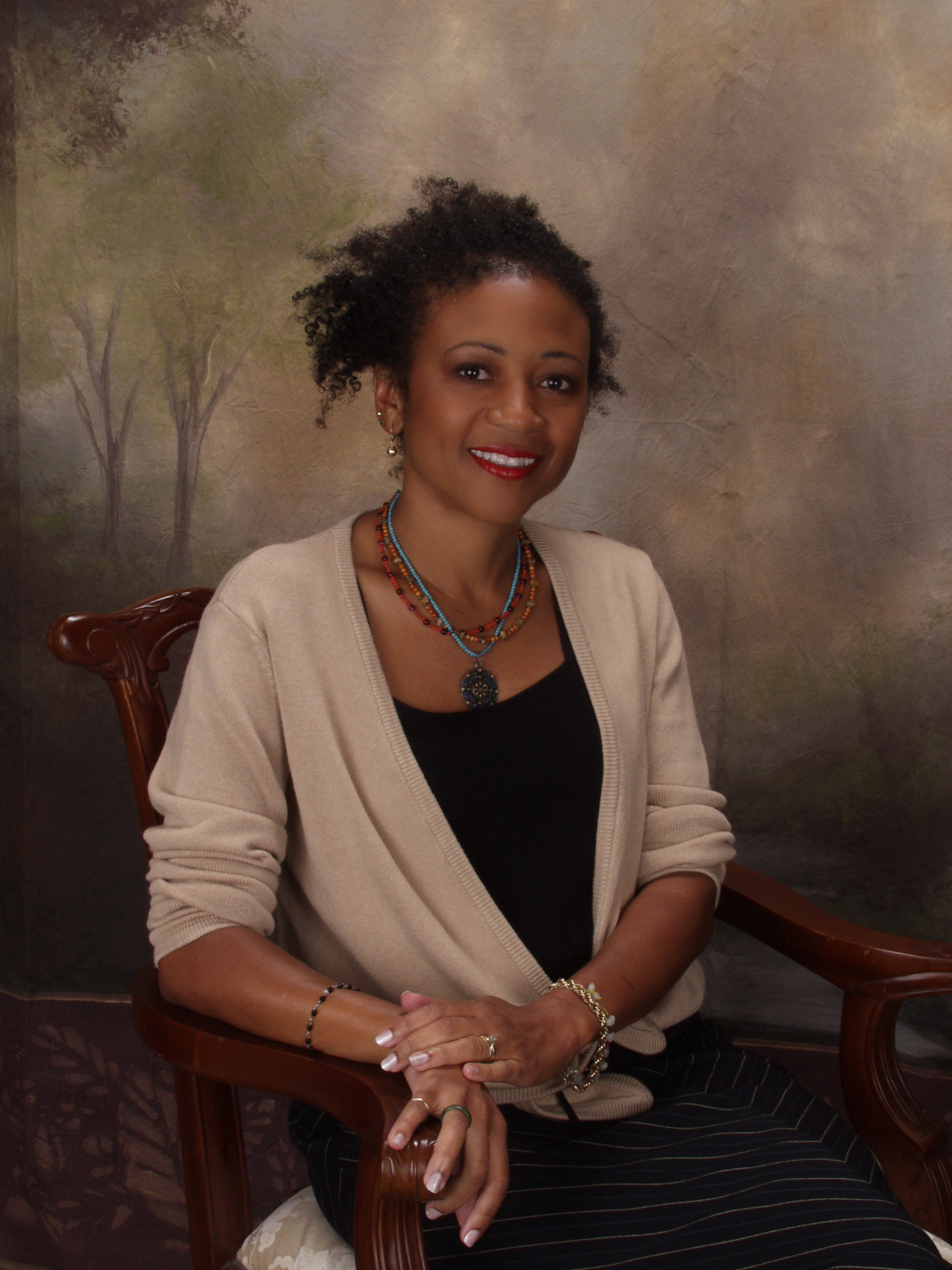
Author Angela Belcher Epps explores what happens when a mother walks out on her children in her compelling novella, Salt in the Sugar Bowl. (Main Street Rag, $10) Epps, an English teacher at an alternative high school, explores the complexities of life— including love, family relationships, loss and abandonment in her work. See her website and her blog to learn more about her writing adventures http://www.thewritingclinic.com/

Please welcome Angela to Write Despite.

NovellaSaltNSugar_Thumb (3)

1) What’s the best writing advice you’ve ever received?

I took workshops with Zelda Lockhart who said I have to be willing to work as hard for my writing job as I do for my supervised job. This was a milestone in my writing life because a part of me was always waiting for some break to happen to give me more time. So I started to push myself harder to have a complete writing career while juggling the job and life I had.

2) Please tell me your favorite three authors.

J. California Cooper, Amy Bloom, and (at this moment) Junot Diaz. But Raymond Carver always comes to mind whenever I’m asked.

3) Briefly describe your journey to publication.

I have written since I was in third grade and wrote for school papers and such. Then I majored in creative writing in undergrad, but I cared nothing about publishing. I only wanted to write. I finally started submitting stories to small literary journals when I attended NYU’s graduate creative writing program and became a more disciplined writer. E. L. Doctorow was my thesis advisor, and he told me he laughed out loud when he read one of my stories, so I gained confidence and submitted to NYU’s literary journal. That was my first real publication. Since then, I generally take a long time writing and revising until a piece feels complete. Salt in the Sugar Bowl, my new novella, features many fictional characters that I have been in relationship with for a long while. An editor heard me read an excerpt about one of these characters at an open mic and invited me to submit my novella; they accepted it. Also from time to time I am inspired to write a nonfiction article, and it usually comes from a deep place that is rather emotional. I usually have successes with such pieces.

4)  Advice for those on the road to publication?

Don’t be self-conscious. That was always my personal demon because it caused me to rethink and censor myself. Write for yourself, and forget about the people who could be looking over your shoulders and chastising you for telling your truth. Get lost in your own voice, and forget about being safe. Your readers aren’t your family, so grow all the way up and be yourself. Then be diligent about rereading and revising your work. Be ruthless in self-editing. Be honest.

5) Do you write every day?

I don’t work on my projects every day, but writing grounds me, so I journal or write something every day—even if it’s a log of what I did, an elaborate “To Do” list, or goals I plan to meet. Tonight I was talking to my husband in a restaurant, and I’d had a glass of wine and was feeling pretty self-righteous and gloating about my sense of integrity. I said that public figures that fall from grace should have to “figure it out or get the fuck out.” I fell in love with the line as it slid through my lips, and I wrote it down when he went to the toilet. Trust me; some character will be expressing that sentiment very soon. Writing is always going on in my head.

6) What are you writing now?

I’m writing a sequel to my Salt in the Sugar Bowl novella because whenever someone has read it, they ALWAYS say, “I need to know what happened to …….” And that is extremely motivating. It is tentatively called Out for a Ride. I don’t know exactly where it’s going, and sometimes that’s a good thing.

OLYMPUS DIGITAL CAMERA

Welcome Author Marjorie Hudson

First, a big thanks to everyone who chimed in on last week’s blog, and congratulations to author Gigi Amateau, winner of our first-ever Write Despite book giveaway! Gigi was randomly selected to win a free copy of Tara Laskowski’s Modern Manners for Your Inner Demons. Gigi has quite a body of work of her own, and has graciously agreed to do an interview and book giveaway on Write Despite as well. Look for her post in the coming weeks.

- by Brent Clark (3)
(Photo courtesy of Brent Clark)

Now please welcome author Marjorie Hudson to Write Despite. Marjorie’s fiction and creative nonfiction explore the worlds of outsiders and newcomers, misfits and strangers, in the contemporary and historical South. See her website and her blog about her writing adventures: http://www.marjoriehudson.com

Thanks, Marjorie, for taking the time to chat with us.

   1)    What’s the best writing advice you’ve ever received?

“Do it your way.” – Emily Herring Wilson.  Emily was my editor and mentor for my first book, Searching for Virginia Dare, which was a strange amalgam of history, interview, road trip, memoir, and fiction scene. When I wondered if that kind of strange combination was even allowed, she encouraged me to play. It’s been the best advice, and used it when compiling my story collection too, which includes both contemporary stories and historical fiction.

 2)    Please tell us your favorite three authors.

I read everybody I can get my hands on, and my favorites change from time to time. But some standbys: Henry James, Alice Munro, and Anne Lamott. I know it’s a strange list.

 3)    Briefly describe your journey to publication.

I was a shy writer for many years, hiding behind my job as an editor at National Parks Magazine. One day I got up my courage to ask for an assignment, and after that started writing features. When I moved to North Carolina, it was with the goal of doing more creative writing—it was cheaper to live here and I knew I could experiment more while freelancing. I worked at Algonquin books as a copyeditor for a number of years, soaking in the lessons of fiction writing, then started writing my own stories and sending them out. My first story won a small award. I was overly encouraged by that and started sending everywhere. A lucky break got me my first book contract—Emily Wilson called me out of the blue and asked me to write for her, and it turned into a book, Searching for Virginia Dare, now out in a new edition. Meanwhile, I was writing and publishing short stories. I finally collected some stories on the theme of outsiders in the South, that became Accidental Birds of the Carolinas. It took 20 years for me to refine those stories till they were ready, but it was worth the wait, because the collection got national recognition as a Pen Hemingway Honorable Mention.

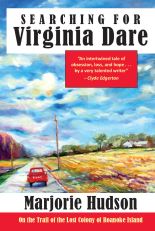
SFVD Cover - 2013 (3) Just this summer my first book came out in a new edition,  Searching for Virginia Dare: On the Trail of the Lost Colony of Roanoke Island, and I got to have a dream come true—keeping a book in print for more than ten years, and adding some exciting new material from my continued adventures. I remain obsessed with the mystery of the Lost Colony, and the legends and stories that continue to emerge from that moment in history, and have sought out new clues while traveling to Rome, London, and the Outer Banks in search of deeper understanding of the story of America’s first English child, part of the Lost Colony of Roanoke Island.

4)    Advice for those now on the road to publication?

Find a writing community, a great teacher, a mentor. Keep the faith. You are the only one who can tell the story your way. You’ll need that writing community while you struggle, and creative work is a struggle, and you’ll want them around too to celebrate with when you publish! No one understands the sweetness of publishing better than another writer.

 5)    Do you write every day?

I schedule writing in. Some weeks I do other things. My favorite method is to take a month or more and write the same time every day. For longer projects, you must fit them around your life, and your job, to sustain them.

6)    What are you writing now?

I’m working on a novel draft. It continues the stories of some of the characters in Accidental Birds.

 7)    What are you reading now?

I read several books at a time. I’m reading Little Raw Souls, a new story collection by my old writing teacher Steven Schwartz. I’m re-reading The Disobedience of Water, by Sena Jeter Naslund, also a story collection. I just finished In the Garden of Beasts, about the American ambassador in Berlin during Hitler’s rise, by Erik Larson. And I’m reading three incredible novel manuscripts by friends, for my writing group.