Writing Through Grief

Much has been written about the therapeutic effects of writing, about its ability to help you sort out the noise in your head and push on. For Sarah Kilch Gaffney, the act of putting pen to paper, or fingers to keyboard, has become a “lifeline.”

As a young widow and single mom, Gaffney turned to writing to help her process her grief and to forge a new life with her toddler daughter. She writes beautifully of the experience in a recent Washington Post essay.

Please welcome Sarah to Write Despite.
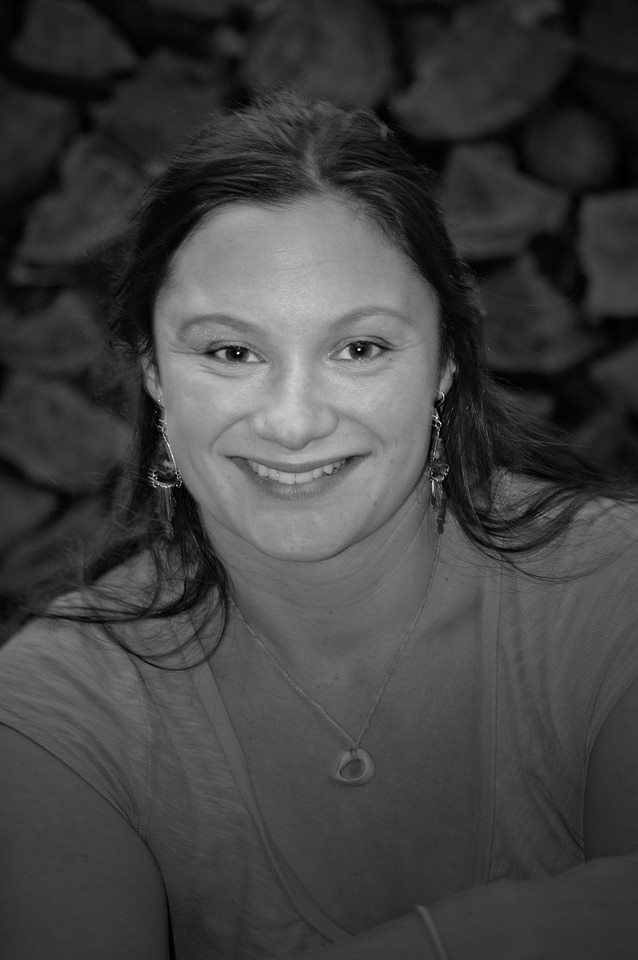
SarahKilchGaffneyBW

I have always been a creative type, and I started writing in my late teens. I studied creative writing and environmental studies in college and went on to work in the conservation field for a number of years. I never stopped writing, but I also found it challenging to write with any sort of consistency. A poem here or there. A fiction story started but rarely finished.

Fast forward several years and I found myself in starkly different circumstances. My young husband was dying from a brain tumor and I was caring for him and our toddler daughter.

And I felt compelled to write about what was happening to us, like there was somehow no possible way that I could not write it all down and get it all out. During the last weeks of his life, I wrote an essay about our decision to have our daughter despite his terminal diagnosis. I remember desperately wanting to get it submitted before he died, having no idea if anyone would even want to publish it. In a surreal series of events, I sent the essay out on a Tuesday and the following day my husband’s hospice nurse told me we were looking at hours to days. He died that Saturday night, and Sunday morning the essay was accepted for publication.

I’ve continued to send essays into the world ever since.

Writing about my husband’s illness and death, and the challenges of raising a child as a young widow, has helped me work through my grief more effectively than bereavement groups, grief therapy, and anything else I have encountered. Everything has helped, but writing through it all has been the most fruitful. Knowing that there are others in the world finding comfort in my words, realizing that perhaps they are not alone in their suffering, has also given me a deeper purpose. That my grief might help others with their grief was an astonishing revelation.

Right now I am in a state of great flux in my life. My daughter and I just marked one year since losing my husband and her father. I recently left nursing school, which was one of the hardest decisions I have ever made, but which has also brought me great relief and closure. I started nursing school to take care of my husband, to save him in the only way I could think of. I returned to school after he died, but my heart was no longer in it. Though I was succeeding in every aspect of the program, it became clear that I was succeeding despite myself and that I was not happy. I have learned the hard way that life’s far too short for that sort of thing.

As I start the process of rebuilding my life with my daughter, of figuring out what I want to do and what direction I want to take, my writing remains a constant source of grounding, problem-solving, and emotional expression. For me, writing is both an escape and a way to face my grief head-on, with all of the rawness, beauty, and love that I can manage. Writing allows me to focus and reflect on the small moments in life that are so, so important: reading with my little one, going for walks in the woods with her, acknowledging all of the good things in my life. It also gives me a chance to spend time with myself and to work through my grief on my own terms. It is a crucial and tangible lifeline, and I’m holding on for dear life.

The Camera Doesn’t Lie

From Karen:

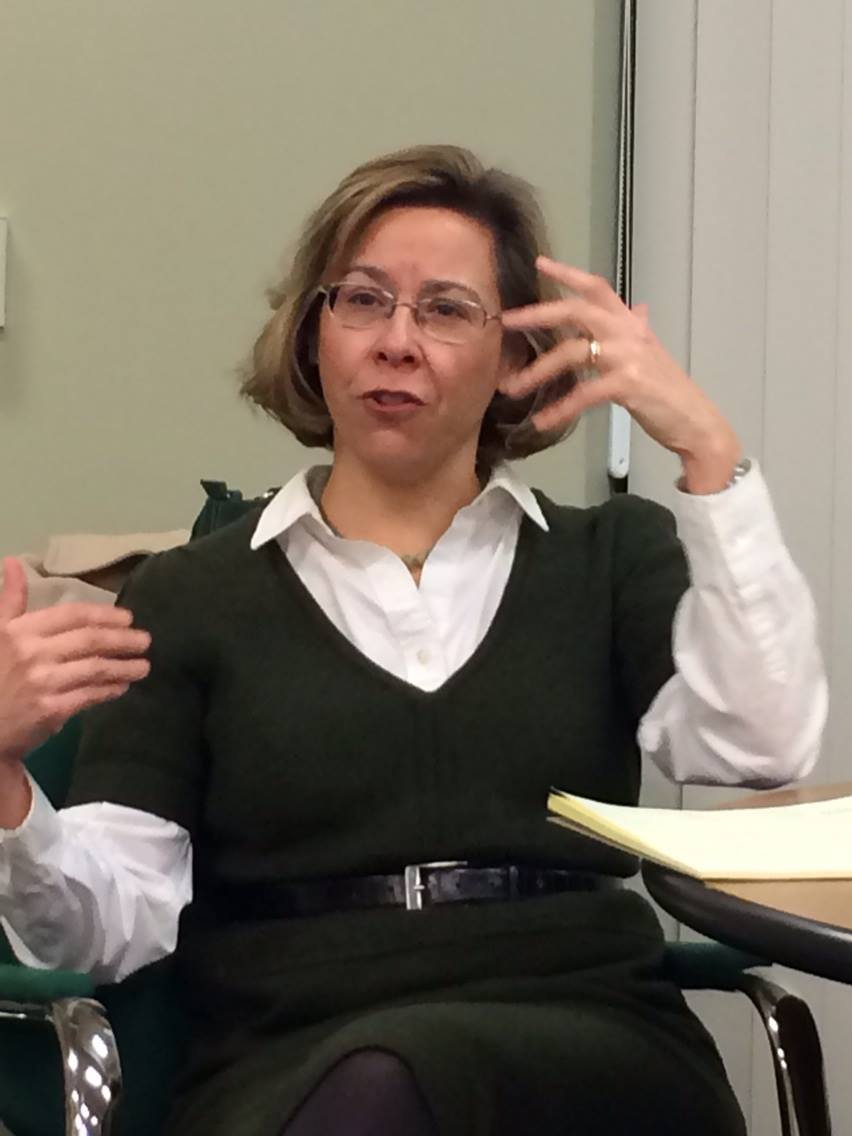
Okay, so these aren’t the most flattering photos, but they are pretty darn funny.

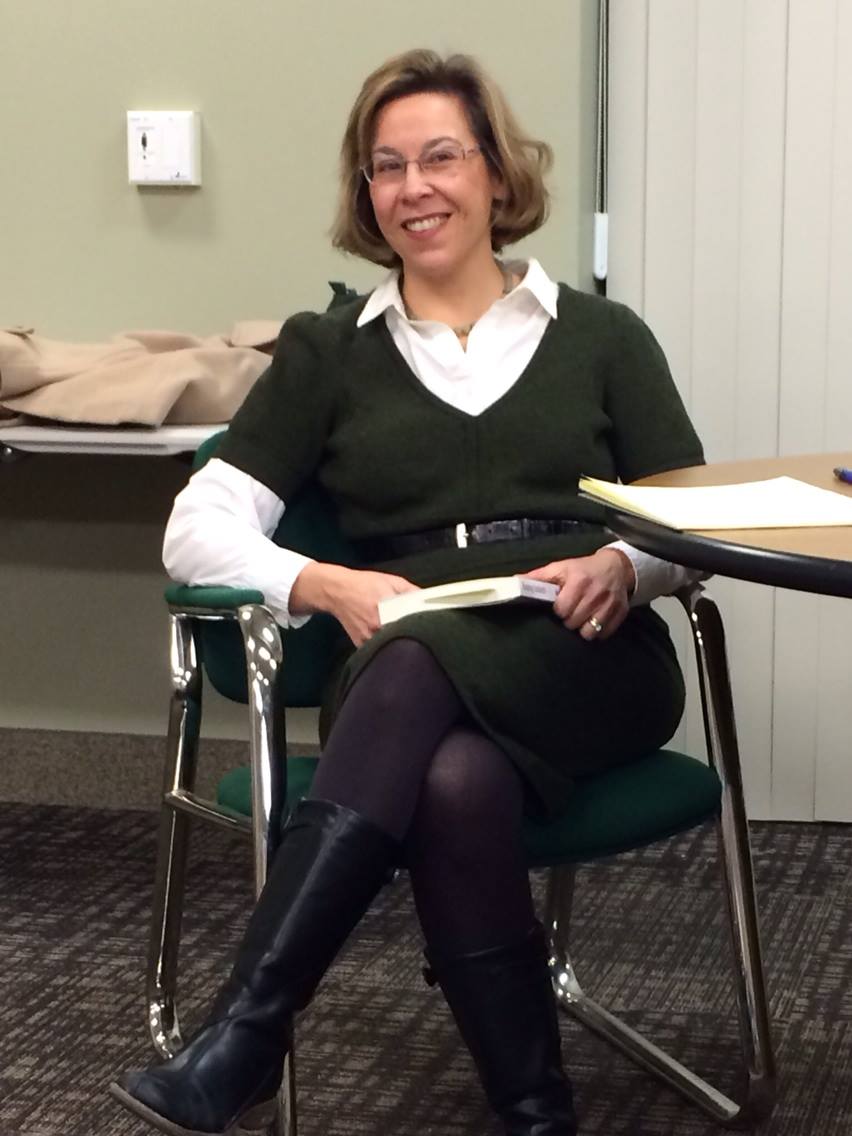
They were shot during my reading and signing at Tolland Public Library in Connecticut last week.  Many thanks to Kate Farrish for organizing.

It was a lovely event, lots of nice readers (phew) and a lively discussion. Those of you contemplating your first reading/signing events should know this: People are really nice at these things. No kidding. They’re there because they’re interested in writing and stories…and in your work! Many know how difficult the process is and admire your persistence and dedication.

The audience also seems to know when you’re bluffing and when you’re speaking from the heart. I received a few comments afterwards on how much audience members appreciated my warm and candid comments. THAT was nice to hear.

Questions I received touched on my writing process, how I got the idea for this book, what I’m working on now (a new novel) and how tough it is to break into publishing today. I answered as best I could, no whitewashing, just telling it like is. And that was the most fun of all.

I’ve added captions to these photos, illustrating a little—just a little—of what was running through my mind…

Will anyone show up?
Hope the hands make me look like I know what I'm talking about.
Hope the hands make me look like I know what I’m talking about.
They're nodding and smiling. Maybe I should say that again.
They’re nodding and smiling. Maybe I should say that again.
You're going to give me money?
You’re going to give me money?

New year, new goals

dreamCall me crazy, but I’m planning to sort of do double-duty in 2015. From a writing perspective, that is. I’m pushing ahead on my second novel, while also working on a short story collection that’s just really calling to me right now.

Biting off more than I can chew? Maybe. It’s all up to the gods of time and energy in the end. But I’m going to see how much progress I can make.

I’m also continuing to promote my debut, Homing Instincts. Please pick up a copy if you haven’t, and honor me with a review on Amazon or Goodreads?

What are your writing goals in the new year? Drop us a line. And if you’re looking for some inspiration, check out this story wherein a nice writer gets a big, and much deserved, break!

–Karen

Guest Blog: Writing Tips from Author Kirsten Lopresti

Transparent_Christmas_Mistletoe_ClipartKirsten Lopresti, having just released her fab-tastic debut novel, Bright Coin Moon, offers up some tips for fitting writing into your holiday craziness. Please check out her website, and order a copy of Bright Coin Moon for yourself or any YA readers on your gift list. It’s a smart, funny, moving tale of a teenager caught up in her mother’s fake fortunetelling business, and her plan to become a Hollywood “Psychic to the Stars.”

Happy holidays, everyone!

How to Find Time to Write This Holiday Season

Kirsten Lopresti
Kirsten Lopresti

The holiday season is upon us, and if you are like me, your to-do list is sky high. So how do you find time to write? Here are five suggestions that might help you squeeze in a little more time.

  1. Make a plan. If you leave it up to chance that you will find some time to write each day, you probably won’t. Take a close look at your schedule. Can you write after dinner? During your lunch break? At your daughter’s dance class while you are waiting for her to come out? How do mornings work for you? Evenings? How do you realistically function with less sleep? Decide how much time you can give to your writing and exactly when you will do it. Try to stick to the same time each day if you can. If you make it a habit, it will become easier to sit down and begin.
  2. Give yourself permission to cut some corners with your holiday preparations. Shop online. Buy some cookies from the grocery store and attempt to pass them off as homemade. Splurge for a house cleaner if you have company coming. Do whatever it takes. You deserve some time to enjoy the season, too.
  3. Cut corners with your writing, too. It’s not an all or nothing thing. If you usually have an hour to devote to writing, during the holiday season you may only have half an hour. Accept this and go on.
  4. writing_letter_1207Don’t compete with others. This goes for your writing as well as for your holiday preparations. If your neighbor’s Elf on the Shelf gives surprise presents and bakes cookies and yours can’t manage to hang upside down from a new place each morning, try not to think too much about it. There are no set rules for holiday preparations. Make a priority list and write at the top, “Priority number 1: keeping my sanity.” All other priorities from two on down should bow to that one.
  5. If you’ve made a plan and a priority list and you still can’t find time to write right now, don’t beat yourself up. If you’ve seen the movie The Secret Life of Walter Mitty, you may remember the scene where Walter meets the photographer. He’s sitting on the hill, waiting for his opportunity to film the snow leopard, but when it finally appears, he doesn’t take the shot. When Walter asks him why, he replies, “Sometimes I don’t.” He then goes on to explain that he’d rather be in the moment sometimes, even if it means missing a really great picture. So if you need a few weeks off, take it. It could be that enjoying the holiday season is exactly what you need to be doing right now.

It’s Pub Day!

Dear Friends,

My novel “Homing Instincts” is officially in the world today!

Please check it out and order a copy via one of the many venues carrying the book.

www.karenguzman.com can point you to a few.

I want to thank the entire Write Despite community for your enthusiasm and support. Reach out and let me know how you like the book and if there’s anything I can do to help you along your writing journey!

XO

Karen

20 Minutes of Inspiration

meme-1
Karen Baker

New writer Karen Baker recently stumbled upon the Write Despite challenge. Wrestling with a short story she needed to get down on paper, Karen says 20 minutes a day have made all the difference.

Please welcome Karen Baker to Write Despite.


I found Write Despite through a very dear friend of mine, who gave me the delightful news that her daughter-in-law, Karen Guzman, was having her first novel published. When I was Googling around one day, I decided to look Karen up and I discovered the wonderful treasure tool, Write Despite. It was the perfect nudge for me because it featured the 20-minute challenge right there in the first line on the front page of the website.

I have to say that Write Despite has come along at just the right time for me. I have had a story going on in my mind for some time. It is with me all the time like an invisible friend. One day I finally started to write it down. I thought if I could get it out of me, then my mind would have some space to be calm, and start a new story. I always feel like I am trying to help this character, as if she is a real person. The story is about Angie, a middle-aged married woman who is very unhappy and has a few health issues that she is consumed with—so much so that they are interfering with all of her relationships. They aren’t even life threatening, but she relies heavily on her pain medication and has forgotten the joy of living.

When a “health nut” outsider arrives one day, a new spirit of fun begins as one very interesting fact about who she is and why she is there is revealed.

The 20-minute-a-day challenge has really made a huge difference in my dedication to writing, because it keeps it simple and fun.  The time is perfect because with the busy schedules that everyone seems to have, 20 minutes of writing is manageable and feels like a huge accomplishment. Why, after 20 minutes, it leaves me wanting to write a little more. It’s similar to the feeling of when you’re reading a really good book, and keep telling yourself you’re going to read just one more chapter before returning to the dishes.

Thanks to Karen and Cathy for making writing fun and for demonstrating the possibility that dreams can come true.


Q & A with ‘Wonder Show’ Author, Hannah Barnaby

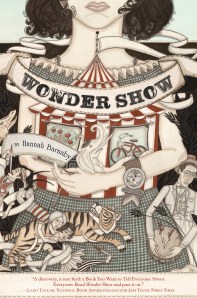
Hannah Barnaby is author of Wonder Show, a novel set in 1939 that  tells the tale of 13-year-old Portia Remini, who flees a Home for Wayward Girls and winds up with a traveling sideshow. As if the freakish world of the carnival and its sideshow “misfits” aren’t enough to deal with, Portia’s also searching for the father who abandoned her, and keeping a constant watch for Mister, her old headmaster, whom she’s certain will someday find her.

Wonder Show was a 2013 William C. Morris YA Debut Award Finalist and a Children’s Book of the Month Club pick. It was also named to the YALSA Best Fiction for Young Adults List, the Bank Street College’s Best Books List, and the School Library Journal’s Best Books List, and it was an IndieBound New Voices Selection.

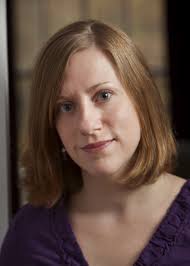
Hannah Barnaby
Hannah Barnaby

Intrigued? Offer up a comment to Hannah’s interview with Write Despite, below, and you could win a free, signed copy of Wonder Show.


This is your first book, correct? Why did you choose to write YA and is it the genre you plan to continue with?

Wonder Show is my first published novel, but not the first that I wrote. I have a middle-grade story that I wrote during my MFA program at Vermont College, that novel-in-the-drawer that most writers have. I’m not sure if it will ever be resurrected, but it taught me about the building blocks of a novel and about my own process.

As for choosing to write YA, I actually work pretty hard not to think about genre while I’m writing. Some genres—picture books, for instance—are obvious designations and have their own rules, but the lines between others—like middle-grade and YA—are not as clear. When Wonder Show was first published, it was named to the middle-grade summer reading list for the Children’s Book of the Month Club. Then it was nominated for the William C. Morris Award for debut young adult novels. So there was no hard and fast label for the book, which I appreciated because it reflected the fact that the audience for Wonder Show could be wider than one group of readers.

Your website says you came up with the character of Portia Remini in a dream, but what drew you to write about the circus, and its sideshow “misfits” in particular?

When I set out to write Wonder Show, all I had was the image of a girl riding a bicycle on a dirt road, and the sense that she was running away from somewhere. I didn’t know where she was going or who she was running from or anything else, really. Then a friend told me about a grant offered by the Boston Public Library, the winner of which would get financial support as well as being named the Children’s Writer-in-Residence. I decided to apply, and in researching the library’s Special Collections, I found that they had an archive of circus materials and quite a few books on circus and carnival history. A few months later, I won the grant! And then I was faced with actually writing the project that I’d proposed, which became Wonder Show.Wonder Show

The shifting POV among your characters comes later in the book, and gives it an unexpected twist. Was it fun to switch gears this way, and what made you decide to use this technique?

I wrote the first draft of Wonder Show very much by instinct. When I sat down to write each day, I took a few minutes to think about Portia and where she was and who she was with, and then I started to fashion a scene that built that atmosphere. It wasn’t plot-driven writing at all, but it was very much character-driven, and so I needed to get to know the supporting cast better. Writing pieces of narrative from each different point-of-view gave each character a turn to speak to me and let me know who they were and how their stories intersected with Portia’s. I wasn’t sure about keeping these pieces in the final manuscript, but I came to love them and what they revealed about the sideshow family. (I will say, however, that writing without regard for plot or chronology made the revision process *extremely* challenging. I don’t recommend this method.)

Can you talk a bit about your road to publication?

My path to publication is very different than that of most other writers, because prior to becoming a writer I worked as a children’s book editor at Houghton Mifflin, and winning the grant from the BPL also put me in contact with some valuable allies. One of the judges who awarded me the grant was Melanie Kroupa, who then had her own imprint at FSG. A couple of years after I finished my residency, Melanie wrote to ask, “What ever happened with your novel? Can I read it?” I asked for some time to do a quick revision (six weeks!) and I sent it off. Melanie didn’t end up acquiring the project, but her request got me working on the manuscript again and eventually Kate O’Sullivan, a friend and former colleague at Houghton, offered me a contract.

Do you write every day?

I aspire to write every day, but I rarely do. The reality is that I have three kids, only two of them are in school full-time, and life is unpredictable. So most of all, I try to be flexible. I might steal 20 minutes of writing time while my daughter’s in ballet class or while I’m supposed to be folding laundry. When I can plan for larger blocks of writing time, I always plan ahead so I know what to work on as soon as I sit down. I always, always have a notebook and pen with me because you never know when an new idea will come or the solution to a problem will make itself clear. (And my kids are always saying the most hilarious things, so I can capture those, too.)

What advice do you have for other writers still struggling to create or publish?

Writing is HARD WORK. And the fact that it’s hard doesn’t mean you’re doing it wrong—it means that it’s important and complex and full of emotion, as all good writing should be. Take the time to find the process that works for you, and know that your process will adapt and change from project to project. When I started writing Wonder Show, I was a single, working professional living in Boston. By the time I finished the novel for publication, I was married with children and living in the Connecticut suburbs. My perspective had evolved, and it deepened my writing and my understanding of the creative process.

What are you working on now?

I’ve just completed a contemporary YA novel that’s going out for submission soon (wish me luck!). This summer, I plan to work on a younger chapter book and a few picture book manuscripts—I’m giving myself permission to loosen up my schedule and play with writing more than I usually do. I’ll let you know how it goes!


And by the way, if you’re anywhere near Richmond, Virginia, on Wednesday, June 18, 2014,  Hannah will be reading at the Girls of Summer Reading Party at 7 pm at the main branch of the Richmond Public Library,  101 East Franklin Street, Richmond, VA. She will be reading with Meg Medina and also author Gigi Amateau, another ‘Q&A Book Giveaway’ author previously featured on Write Despite. Go if you can!

AND DON’T FORGET: YOU COULD OWN A FREE COPY OF WONDER SHOW. JUST TELL US WHY YOU’D LIKE TO OWN THIS BOOK BY POSTING YOUR COMMENT HERE

Rejections Revisited

C. Michael Curtis, a senior editor and longtime revered fiction editor at the Atlantic Monthly, published an essay called “Publishers and Publishing,” in On Writing Short Stories, a collection of essays, edited by Tom Bailey. It’s a pretty enlightening, amusing reflection on the fiction submissions he receives. Our fave part:

“Much of the writing that pours onto the desks of literary editors at both the serious-minded but commercial general magazines and the smallest, most fiercely independent quarterlies is inept, undeveloped, amateurish, crazed, obscene, unintelligible, or some combination of the above.”

Kinda makes you feel better about the stuff you submit, right?Syliva-Plath-on-Rejection

At least, that’s what we thought. I mean, we’ve received rejection letters with comments like “uninteresting” and “meandering” and “seems to have no larger point.”

But “crazed?” “Obscene?” Just what the hell are people doing out there?

Here are some other amusing rejections we ran across:

“I haven’t the foggiest idea about what the man is trying to say. Apparently the author intends it to be funny.” (Written about Joseph Heller’s Catch-22—believed to have been given this title because it was the 22nd publisher, Simon and Schuster, who agreed to take it on.)

“The American public is not interested in China.” (Seriously, what could be interesting about Pearl S. Buck’s The Good Earth?)

“This will set publishing back 25 years.” (Wonder why? Anyone read Norman Mailer’s The Deer Park?)

“Good God, I can’t publish this.” (Said about William Faulkner’s Sanctuary.)

“An absurd story as romance, melodrama or record of New York high life.” (Gasp! Blasphemy uttered about F.Scott Fitzgerald’s The Great Gatsby.)

“Stick to teaching.” (Louisa May Alcott was urged to keep her day job after submitting Little Women.)

“I recommend that it be buried under a stone for a thousand years.” (We get your point. But Vladimir Nabokov’s Lolita was still a masterpiece.)

“An absurd and uninteresting fantasy which was rubbish and dull.” (Maybe depressing and gory and violent, but William Golding’s Lord of the Flies was dull?)

“We are not interested in science fiction which deals with negative utopias. They do not sell.” (Wonder what this visionary thinks of The Hunger Games. He rejected Carrie, by Stephen King)

“It is impossible to sell animal stories in the USA.” (Give it up, Garth Stein. Even George Orwell’s Animal Farm can’t cut it.)

This is an awesome essay of Curtis’s by the way, and you can check it out here:

http://www.public.iastate.edu/~yikes/mag_editors_and_fiction.html

If you don’t have time to read the whole thing, let us recap a bit. He gives a great rundown of what editors are, and aren’t, looking for in submissions, including cover letters. He says only two things included in your letter might cause an editor to be more interested in your story than the average one:

  1. Citations of stories published elsewhere, particularly in periodicals of comparable size and reputation; and
  2. Mention of the fact that you’ve been enrolled in a reputable MFA program (or residence at Bread Loaf or Sewanee, etc.).

Other take-aways? Same as you’ve always heard:

  • Don’t recap your story—let it speak for itself.
  • Don’t talk about other magazines that have rejected it already.
  • Don’t single space.
  • Don’t send anything with typos or grammatical errors.
  • Don’t try to dazzle them with your wit or sound hostile or desperate.

In short, just make your writing as fab as possible, keep your cover letter simple and direct, and send it out.

Everywhere.submit button

Spray and pray, people. Spray and pray.

The Long and Short of It

Taking a break from the book for a while because … well, because I’m stuck. Discouraged. Not feeling it . But you don’t want to hear my problems. Neither does Karen. She told me to shut up and quit whining and go write a short story. Okay, she was much nicer than that, but I got the message.

A short story!!??

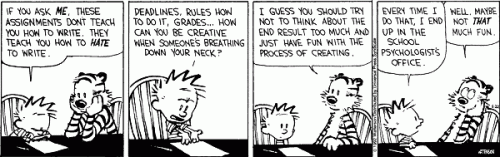
CalvinandHobbesStory03-e1331337028749

This may seem like no big deal to you, but I haven’t written a story in years. How sad is that? I’ve been so caught up in the novel thing that the idea of shorter fiction hasn’t even been on my radar. If you want to switch gears and get a new outlook and rev up the energy again, though, I guess you really should consider going back to the basics.

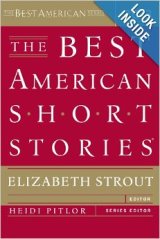
I plan to start by reading stories, of course. I used to read short fiction all the time. Best American Short Stories is always on my Christmas list (thank you in-laws for making sure this is under the tree each year), but I confess I haven’t read a whole one in years. I’ll look through them now, though, since I’m one of those people who pulls inspiration from others (okay steals, if you like—I’m not too proud to admit it).

Best American Cover

Any other suggestions for where to find great stories? Do you read literary journals? The New Yorker? Alice Munro anthologies?

Anyone want to write along with me?

When we’re done, here’s a GREAT listing of pubs to submit to:

http://www.newpages.com/literary-magazines/complete.htm

So switch it up, hunker down, carry on, write it short–or long. Whatever moves you. As always, just write.

Oh, and I saw an amazing quote the other day. I’m not much for such things, but this one stuck with me:

“Imagine what you would do if you knew you could not fail.”

I know, right?

—Cathy

Go ahead, distract me

distraction2

Distraction is the enemy of the writing process, and it’s a wily enemy.

Because we do a lot of our writing at home, we are subject to a particular virulent strain known as Domestic Distraction (DD.) When we sit down to write (often hiding from our children and other family members) we can pretty much predict the ambush.

Actually, Cathy just sent me this email describing a recent writing session at her home:

“Well, right now I’m trying to work, and I have four kids running in and asking for popcorn and drinks. And one of them is 14! And the phone keeps ringing. And the dog is barking. I had a dentist appointment this morning, and now the renovators are coming in half an hour and I have to get the whole kitchen cleaned before they get here. How much writing do you think I’ve actually done today? Slightly less than tweet-length.”

Sounds about right. Sometimes it really is best to get out of the house to write. Go to a coffee shop. Try the library. Anywhere that the people won’t mean anything to you, and the surroundings will mean even less.

But if you can’t slip away, you might as well laugh. Here, in no certain order, are some of the recent issues that have had the temerity to disturb us at our writing desks.

  • The house is too cold. It’s winter. It’s New England, but seriously my fingers hurt.
  • The dog wants out. Now he wants in. Now he wants back out.
  • The neighbors’ kids are really into screaming. In their backyard. At full volume.
  • My 5-year-old has been too quiet for too long.
  • My 5-year-old has been unbearably noisy for too long.
  • Ah, the always inspiring: “Mommy, can you come wipe my bum?”
  • I need coffee.
  • I’ve had too much coffee.
  • Man, a turkey sandwich sounds good right now.
  • I’ll just check Facebook for a second

Care to share your own DD?

—  Karen

distraction