Summer Daze

summerHi all,

Sorry for the lateness in posting.Remember when summers used to mean long, lazy days with nothing to do but read, run, play, hang by the pool?

Yeah, we barely recall that either. And even if we did, it’s a far cry from what we’re doing now, right? Here at Write Despite, we’ve been a wee bit busy. Karen is working on securing final changes and cover art (fun!) for her novel, which comes out this fall. I’m submitting, submitting the same story again and again and drumming up a very slow start to a new short story. Oh, and using every ounce of my energy to ignore my novel rewrite number 580,026. Hopefully we’ll have more on both of those later.

In other news, we’d like to announce the winner of the Hannah Barnaby book! Writingfamily is the winner of Wonder Show and will be receiving her copy shortly. Thanks to everyone who chimed in with comments.typewriter outdoors

Hope you’ve all been able to write up a storm this summer despite the kids being home, the sun calling you outdoors and vacations giving you a well-deserved break from the routine. If you’re struggling to fit writing into your days, remember our mantra here at WD:

It’s only 20 minutes!

Yeah, we know. But still, write well everyone, and enjoy your summer!

–Cathy

Just had to share

I just read this amazing essay by author Rupert Thompson on The Atlantic website. He covers  a lot of ground, and it’s all so important.

A taste:

“To me, a first draft feels like a journey in two directions. On the one hand, it’s like driving along a motorway at night with no headlights: you can crash, you take wrong turns, it’s dangerous, you don’t know where you’re going to end up. At the same time, it’s like going down a mineshaft into yourself, as deep as you possibly can. Those things—covering ground and diving deeper—seem to happen simultaneously when you write a first draft.

It’s a frightening process—I seem to go through a place with every book where I wonder if I’ve wasted all my time, if the idea is totally flawed, and I’ll never bring it off. But the same way that “love entertains its own discriminations,” creativity does, too: You have to trust your instinct and your intuition. If you don’t, then every decision that you ever make is going to have to be rational. That’s impossible. Every page of a book has a million decisions on it, so if you don’t trust your intuition, you’re lost, you’re hamstrung.”

Invest 10 minutes and read the whole thing. You’ll be glad you did.

Author Mark Lowery: A Novel is a Leap of Faith

Novelist Mark Lowery, a man of talent and faith, shares his journey to publication with us today. Mark’s debut novel, He Promisd Nvr 2 Leav Me, was published by Lion’s Roar Press, a new Ohio-based independent press. Please check it out and pick up copy.

Born in the Bronx, New York, Mark is an award-winning journalist. He’s reported and edited for national magazines and major newspapers, including Newsday, the Detroit Free Press, and The Plain Dealer. He lives near Cleveland, Ohio.

He PromisD Nvr 2 LeaV Me tells the story of Taran Johnson, a writer whose serene lifestyle is derailed when he tries to honor a pledge made years earlier. His past and present collide, taking him back to a town he’d tried to forget, reintroducing him to a people and a culture he no longer recognizes. Can his growing faith save him?

Please welcome Mark to Write Despite.

cover_pdfTell us about your “breakthrough” publication—that first publication that felt really significant to you.
Although not my first publication, March 2014’s release of He Promisd Nvr 2 Leav Me (Lion’s Roar Press) is the one that has felt most significant. My byline and work have appeared in many newspapers and magazines, but that always seemed more work than pleasure; a man has to eat. With the release of my debut novel, I’ve experienced a control over the writing that, up until now, had largely escaped me. It definitely is a catch-22: You decide the beginning, the middle, and the end, what’s important, and how it needs to be expressed. But many others have to believe in the vision to make the project a reality. A novel is a leap of faith that readers will follow you to the end.

How long had you been writing before you published a piece?

I’d been writing journalism pieces for about eight years before I had a first-person piece published in the Sunday magazine of Newsday. That was well received and led to some similar assignments. That gave me the confidence to begin sharing my short stories. The fiction work provided a voice that I craved. Taking nothing away from journalism, the fiction was more artistic and liberating for me.

What was your reaction upon learning your piece was accepted? Disbelief? Joy?

My first reaction was fear when Newsday gave the go-ahead for the first-person piece. I wasn’t sure what would be enough information and what would be too much. I wasn’t sure that I wanted to put myself out there like that, share my innermost feelings. It’s impossible to present your work without being vulnerable, inviting criticism. The great thing about fiction is that parts of you can be displayed in many characters. In a first-person piece, there is nowhere to hide.

How do you go about trying to place your work? How do you choose markets?

My process is the opposite of what it should be. I create the work and then look for a landing spot. I keep telling myself that a better way would be finding specific needs, then tailoring projects to fit those needs. But even if I did it the more logical way, placing the work would still require making the contacts that you need to make to get the work read. And read in a timely fashion. If only it were as simple as forwarding the work to an editor!

Any advice for writers still working for their “breakthroughs?”

The dedication in my novel reads: “To all who try and try again.” Years ago, I was part of a reading and writing group. I had those folks in mind when I came up with the dedication. We would meet, usually once every two weeks or so, and we’d critique each other’s work and share resources. This was useful for many reasons. First, it’s always good to take advantage of different sets or eyes and ears. Secondly, there was so much valuable information that we shared, ranging from agent information to outlets for our writing. We worked in various fields, but we all shared a love for writing. The group also provided the encouragement I needed to force myself to make time for writing because I knew at each meeting someone would ask: “What have you worked on since we last met?” It wasn’t so much about any specific breakthrough. Rather, it was about what are you doing to create a breakthrough?

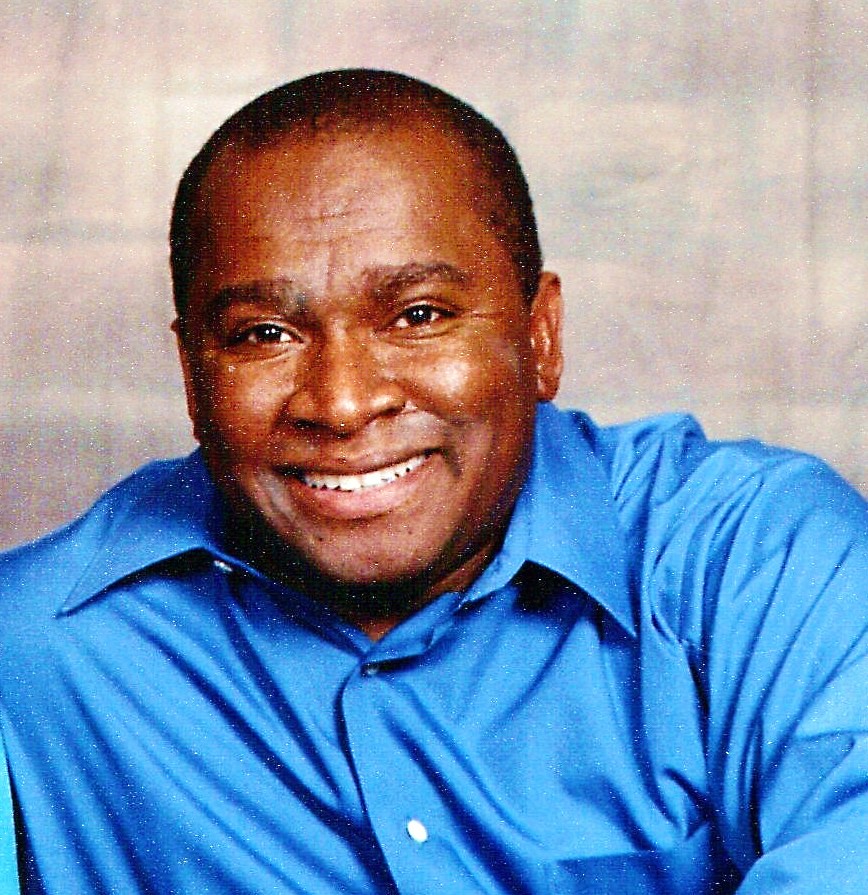
mark lowery headshot


Ponder this…

I was lucky enough to attend the annual Writer’s Conference at the Mark Twain House in Hartford, Conn., a couple of weeks back. The Twain house is a fabulous resource for writers—and a pretty cool museum—if you’re ever in the area.

mark twain house


The conference featured workshops and discussions about aspects of writing from the creative process to marketing your book. I took part in two workshops led by Connecticut author Susan Schoenberger, whose new book is scheduled to appear this summer. Susan’s first novel, A Watershed Year, is a lyrical tour de force. Pick it up, if you haven’t.

Unknown


I want to share some spot-on tips from Susan. Now, stay with me. They’re all over the map—little fortune cookie notes on the writing process—but I think they’ll speak to you if you’re in the fiction trenches.

  1. Every scene in a novel or short story should contain three elements, or at least echo them: Desire, Action, Obstacle
  2. Write in scenes-between-characters, not chapters as “chunks.”
  3. If you find yourself writing a lot of “backstory” into your early drafts (like me) realize you’ve got some more drafts ahead of you. The goal is to internalize the backstory, so that you can deftly eye-dropper it in as you go along, not vomit “all the stuff the reader needs to know” in your first chapter. *I FOUND THIS ESPECIALLY HELPFUL!
  4. The subconscious mind is a treasure trove for writers. Tap into it. Dreams can be very instructive, as can the quiet voice that bubbles up when you turn down the volume on all the other crap in your life and de-clutter your mind.
  5. Good fiction is a window into a character’s interior world, where readers can also see themselves reflected. You want readers to say, “I’ve been there. I get that, but I’ve never heard it in that way.”
  6. If you’re publishing, balancing writing time with social media/website maintenance/agent querying, etc. is a huge challenge. Don’t get lost in the business end of things. Write. About 75 percent of your “writing time” should be spent doing just that: writing. The remaining 25 percent goes to hawking your work…or you won’t have any work to hawk.

Agent Revisited

I recently sat in on a panel with Jeff Kleinman—again. He’s the agent from Folio Literary Management I wrote about last year. If you missed that post, here it is. He gives lots of great information for submitting novels to agents, especially literary fiction, and had a few new insights this year. But even what I got from the panel last year bears repeating.


mistakesOn Biggest Mistakes

Kleinman has four must-haves for writers who submit to his agency:

1) Premise – You MUST have a logline, even if you don’t use it in your submissions. You have to know it in your head because it will help you hone in on your book. Too many good writers don’t have a real sense of what their book is about. A logline, as he explains it, is much like the statement you see on a movie poster. For Splash it was: “Boy meets girl. She’s a fish.”

2) Characters – You get rejected mainly because agents DON’T FALL IN LOVE with anyone in your book. That means you didn’t do a good enough job of bringing your characters to life. Go deeper! Interview your character with crazy questions and keep asking him or her why.

3) Momentum – Make sure words serve to turn pages. Understand what your reader wants to know next.

4) VOICE. This can’t be stressed enough. In commercial fiction it’s what’s most important and it’s a huge problem for many writers. Ask yourself how you can focus and drill down to get something that’s distinctive. Establish voice in the first three to four sentences. There has to be an authority in the voice that the reader buys into.

Also, there’s this. People read for three things: Character, voice and plot. Kleinman suggested reading The Goldfinch as a great current example of all three. The painting in this book, he says, is the plot device that carries the story forward.


On Rejection Lettersrejection cartoon

If you’re getting:

All form rejections—Then your premise needs work. It doesn’t sound at all interesting.

“Minimal” rejections, as in “Hey, it’s not right for me”—Then your writing is stronger but you still don’t have a great premise.

Personalized rejections—Then clearly something is starting to work. They want to engage with you more. Now you’re likely done with your query letter—it’s probably good enough.

Requests for the first 50 pages—This is the basic minimal amount that gauges their interest in you and it means you have a strong premise. They’re willing to go further.

Requests for the full manuscript and they still reject it—Then it’s always, always CHARACTER. You didn’t engage the agent enough with your characters, especially the main one.


On Queries

query envelopeYour query letter should state:

– Why you’re writing to that particular agent.

– Who you are, and how you met the agent, if you did.

– Your contact info.

– What your book’s about—one to two sentences only. Your synopsis will provide the rest.

And hey, get this: He says not to sweat the synopsis too much: “We usually only ask for a synopsis to ensure you’ve written the whole thing.” We suspected as much, didn’t we?


Notable QuotesQuotation-Mark


“All agents can do is point out that you’re bleeding. We don’t necessarily know where you’re bleeding from. You have to know how to fix it.”

“Agents want to help you improve your book, but only when you’ve taken it as far as you can. Make sure it’s as ready as you can make it.”


Key Recommendation

Paperlet, an online writer community, not only allows readers to comment on and edit each other’s work, but actually helps you “build” your story by walking you through the basic structural steps. Check it out at www.paperlet.com.

Hope you find this stuff as useful as I did, everyone. Write well!

–Cathy


Making the space

Yeah, right
Yeah, right

Author Susan Straight kicks off a series of essays in the Los Angeles Times about writers and career turning points. Straight writes movingly and honestly about….drum roll…fitting writing into real life.

First paragraph: I wrote the stories in my first book by hand, in these places: at the counter of the Mobil station where I worked in 1979, between customers, eating beef jerky and stale cashews out of the nut mix no one ever bought from the cloudy glass compartments beneath my notebook; sitting on a huge rock at the beach in Rosarito, Mexico, in 1983 after my husband fell asleep in the tiny hotel where we spent our two-night honeymoon, writing in my notebook; sitting at a card table in married student housing in 1984 in Amherst with the small blue Smith-Corona my mother had given me for high school graduation; in a pale green 1980-something Fiat with brakes that went out all the time, upon which occasion my husband would have me sit in the driver’s seat and pump the brakes while he was underneath the car in the gravel driveway of our house back in Riverside in 1988, and I held a notebook and pen, writing.

A wonderful essay that we’ll all relate to. Enjoy!

–Karen

Rejections Revisited

C. Michael Curtis, a senior editor and longtime revered fiction editor at the Atlantic Monthly, published an essay called “Publishers and Publishing,” in On Writing Short Stories, a collection of essays, edited by Tom Bailey. It’s a pretty enlightening, amusing reflection on the fiction submissions he receives. Our fave part:

“Much of the writing that pours onto the desks of literary editors at both the serious-minded but commercial general magazines and the smallest, most fiercely independent quarterlies is inept, undeveloped, amateurish, crazed, obscene, unintelligible, or some combination of the above.”

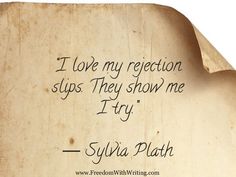
Kinda makes you feel better about the stuff you submit, right?Syliva-Plath-on-Rejection

At least, that’s what we thought. I mean, we’ve received rejection letters with comments like “uninteresting” and “meandering” and “seems to have no larger point.”

But “crazed?” “Obscene?” Just what the hell are people doing out there?

Here are some other amusing rejections we ran across:

“I haven’t the foggiest idea about what the man is trying to say. Apparently the author intends it to be funny.” (Written about Joseph Heller’s Catch-22—believed to have been given this title because it was the 22nd publisher, Simon and Schuster, who agreed to take it on.)

“The American public is not interested in China.” (Seriously, what could be interesting about Pearl S. Buck’s The Good Earth?)

“This will set publishing back 25 years.” (Wonder why? Anyone read Norman Mailer’s The Deer Park?)

“Good God, I can’t publish this.” (Said about William Faulkner’s Sanctuary.)

“An absurd story as romance, melodrama or record of New York high life.” (Gasp! Blasphemy uttered about F.Scott Fitzgerald’s The Great Gatsby.)

“Stick to teaching.” (Louisa May Alcott was urged to keep her day job after submitting Little Women.)

“I recommend that it be buried under a stone for a thousand years.” (We get your point. But Vladimir Nabokov’s Lolita was still a masterpiece.)

“An absurd and uninteresting fantasy which was rubbish and dull.” (Maybe depressing and gory and violent, but William Golding’s Lord of the Flies was dull?)

“We are not interested in science fiction which deals with negative utopias. They do not sell.” (Wonder what this visionary thinks of The Hunger Games. He rejected Carrie, by Stephen King)

“It is impossible to sell animal stories in the USA.” (Give it up, Garth Stein. Even George Orwell’s Animal Farm can’t cut it.)

This is an awesome essay of Curtis’s by the way, and you can check it out here:

http://www.public.iastate.edu/~yikes/mag_editors_and_fiction.html

If you don’t have time to read the whole thing, let us recap a bit. He gives a great rundown of what editors are, and aren’t, looking for in submissions, including cover letters. He says only two things included in your letter might cause an editor to be more interested in your story than the average one:

  1. Citations of stories published elsewhere, particularly in periodicals of comparable size and reputation; and
  2. Mention of the fact that you’ve been enrolled in a reputable MFA program (or residence at Bread Loaf or Sewanee, etc.).

Other take-aways? Same as you’ve always heard:

  • Don’t recap your story—let it speak for itself.
  • Don’t talk about other magazines that have rejected it already.
  • Don’t single space.
  • Don’t send anything with typos or grammatical errors.
  • Don’t try to dazzle them with your wit or sound hostile or desperate.

In short, just make your writing as fab as possible, keep your cover letter simple and direct, and send it out.

Everywhere.submit button

Spray and pray, people. Spray and pray.

New Author Angie Chuang: Holding On and Letting Go

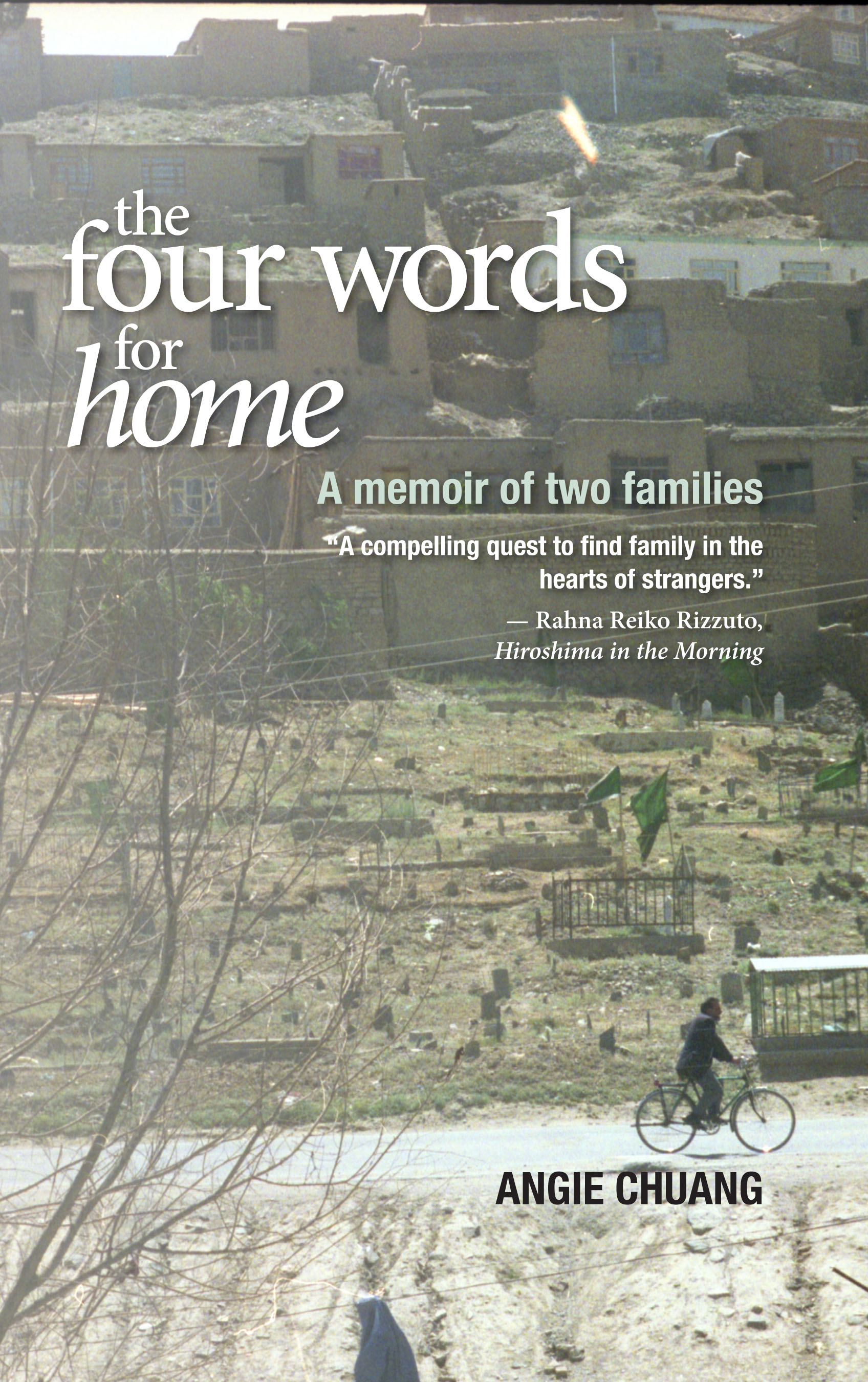
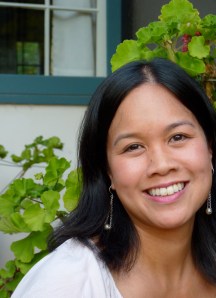
Angie Chuang didn’t know what she was getting into when she began writing essays drawn from her experiences as a journalist in Afghanistan. With the publication of her debut book, The Four Words for Home, later this week, we’ll all get to share in her amazing journey.

The publication marks the end of an 8-year odyssey. Angie’s challenges, outlined so honestly below, will sound familiar to many of us. Her  journey is an inspiring reminder that the writing process taps into our deepest reserves of  faith and determination. We’re thrilled to feature another nonfiction writer, someone who has taken journalism to its highest literary calling.

Please welcome Angie Chuang, my old colleague from the Hartford Courant, to Write Despite.

–Karen

COVER - TFWFH(2)

We writers endure so much rejection that every publication, every “yes,” feels like a breakthrough. I remember well my first-ever literary-journal publication, my first paid publication, my first anthology publication, and my first publication in what I regarded as a well-known journal. Each of these felt like stair steps – often with very long plateaus in between – toward the ultimate goal of someday publishing a book.

Starting in late 2004, after I returned from a life-changing reporting trip to Afghanistan, I spent a year in denial that I was writing a book based on that experience (“Essays! I am writing a series of essays!”); four years drafting what I begrudgingly admitted really was a book; one year drastically revising the mess of a “book” I came up with (evident in agent responses akin to, “Love the idea, love the writing, but it’s just not ready yet”); nearly one more year in an even more drastic revision based on the detailed notes of an agent who left her job before I finished. Granted, I had worked full-time as a journalist and then a tenure-track university professor during this time, so all this writing, revising, agent-querying was happening amid a whole lot of reporting, career-changing, teaching, and scholarly research.

But suffice to say that by 2012, the start of year eight of working on my book The Four Words for Home and seeking an agent or publisher for it, I was beginning to wonder if I should shelve it. My book’s focus had shifted from Afghanistan to an interwoven memoir about two immigrant families, the Afghan-American family that had brought me to their homeland and my own. Even so, I knew the reading public’s interest in Afghanistan had faded – the market for my book had shrunk with every year I had spent on it. I loved and believed in the story I had obsessed over for so long. But I was tired.

I promised myself I would send the manuscript out to one more round of small-press contests, casting a wider net to include more independent publishers. Early in 2013, I learned I was a finalist for the Willow Books Literature Awards and was invited to a festival and awards ceremony, where the winners of cash prizes and two book contracts (poetry and prose) would be announced.

When my name was announced as the prose winner, I was so ready to weather another near miss, I thought another finalist’s name had been read. I finally made it up to the stage, but months passed before reality sunk in and I started talking about a book and not a book manuscript. Since then, I have ridden the roller coaster of panic (that I had to stop revising and submit a final version), euphoria (I’m actually going to have a book!), fear (Everyone can actually read it!), and realism (I’ll be lucky if 0.0000001 percent of “everyone” reads it).

As I write this, I’m a couple days from holding the very first copies in my hand, and about to fly across the country for my first book appearances (not a bankrolled “book tour,” mind you, something about as quaint and rare in today’s literary publishing world as a free, real meal in domestic coach class). I know intellectually this publication represents a breakthrough, but I don’t quite feel it in my heart yet. Other authors tell me it takes some time to sink in and really enjoy it, to get past the “cringe,” as one put it, of other people reading and reacting to something you’ve worked on in isolation for so long.

So my advice to those who are in the long and murky middle between committing to writing a book and getting said book published: Don’t give up – and enjoy it.

Not giving up is obvious. Only your mule-headed, obsessive belief in your story will see you past the fatigue, the rejections, the self-doubt, the doubt from others, the 2,000th stupid question like, “Oh, are you still working on that book?”

Enjoying it may be less so. But I already miss a time when the story was mine and only mine, and we were engaged in a dialogue, and often an epic-seeming battle, over what it would become. The countless hours I spent alone with my manuscript – creating, changing, and wrestling with it – gave me enough belief in the story to release it into the world.
12

More information about The Four Words for Home and Angie Chuang is available at www.angiechuang.com. The book is available for order via Willow Books or Amazon.
The Long and Short of It

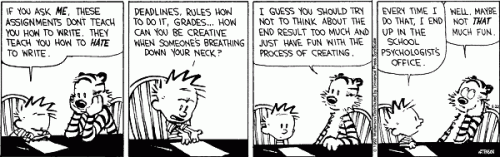
Taking a break from the book for a while because … well, because I’m stuck. Discouraged. Not feeling it . But you don’t want to hear my problems. Neither does Karen. She told me to shut up and quit whining and go write a short story. Okay, she was much nicer than that, but I got the message.

A short story!!??

CalvinandHobbesStory03-e1331337028749

This may seem like no big deal to you, but I haven’t written a story in years. How sad is that? I’ve been so caught up in the novel thing that the idea of shorter fiction hasn’t even been on my radar. If you want to switch gears and get a new outlook and rev up the energy again, though, I guess you really should consider going back to the basics.

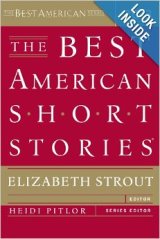
I plan to start by reading stories, of course. I used to read short fiction all the time. Best American Short Stories is always on my Christmas list (thank you in-laws for making sure this is under the tree each year), but I confess I haven’t read a whole one in years. I’ll look through them now, though, since I’m one of those people who pulls inspiration from others (okay steals, if you like—I’m not too proud to admit it).

Best American Cover

Any other suggestions for where to find great stories? Do you read literary journals? The New Yorker? Alice Munro anthologies?

Anyone want to write along with me?

When we’re done, here’s a GREAT listing of pubs to submit to:

http://www.newpages.com/literary-magazines/complete.htm

So switch it up, hunker down, carry on, write it short–or long. Whatever moves you. As always, just write.

Oh, and I saw an amazing quote the other day. I’m not much for such things, but this one stuck with me:

“Imagine what you would do if you knew you could not fail.”

I know, right?

—Cathy