Ponder this…

I was lucky enough to attend the annual Writer’s Conference at the Mark Twain House in Hartford, Conn., a couple of weeks back. The Twain house is a fabulous resource for writers—and a pretty cool museum—if you’re ever in the area.

mark twain house


The conference featured workshops and discussions about aspects of writing from the creative process to marketing your book. I took part in two workshops led by Connecticut author Susan Schoenberger, whose new book is scheduled to appear this summer. Susan’s first novel, A Watershed Year, is a lyrical tour de force. Pick it up, if you haven’t.

Unknown


I want to share some spot-on tips from Susan. Now, stay with me. They’re all over the map—little fortune cookie notes on the writing process—but I think they’ll speak to you if you’re in the fiction trenches.

  1. Every scene in a novel or short story should contain three elements, or at least echo them: Desire, Action, Obstacle
  2. Write in scenes-between-characters, not chapters as “chunks.”
  3. If you find yourself writing a lot of “backstory” into your early drafts (like me) realize you’ve got some more drafts ahead of you. The goal is to internalize the backstory, so that you can deftly eye-dropper it in as you go along, not vomit “all the stuff the reader needs to know” in your first chapter. *I FOUND THIS ESPECIALLY HELPFUL!
  4. The subconscious mind is a treasure trove for writers. Tap into it. Dreams can be very instructive, as can the quiet voice that bubbles up when you turn down the volume on all the other crap in your life and de-clutter your mind.
  5. Good fiction is a window into a character’s interior world, where readers can also see themselves reflected. You want readers to say, “I’ve been there. I get that, but I’ve never heard it in that way.”
  6. If you’re publishing, balancing writing time with social media/website maintenance/agent querying, etc. is a huge challenge. Don’t get lost in the business end of things. Write. About 75 percent of your “writing time” should be spent doing just that: writing. The remaining 25 percent goes to hawking your work…or you won’t have any work to hawk.

Agent Revisited

I recently sat in on a panel with Jeff Kleinman—again. He’s the agent from Folio Literary Management I wrote about last year. If you missed that post, here it is. He gives lots of great information for submitting novels to agents, especially literary fiction, and had a few new insights this year. But even what I got from the panel last year bears repeating.


mistakesOn Biggest Mistakes

Kleinman has four must-haves for writers who submit to his agency:

1) Premise – You MUST have a logline, even if you don’t use it in your submissions. You have to know it in your head because it will help you hone in on your book. Too many good writers don’t have a real sense of what their book is about. A logline, as he explains it, is much like the statement you see on a movie poster. For Splash it was: “Boy meets girl. She’s a fish.”

2) Characters – You get rejected mainly because agents DON’T FALL IN LOVE with anyone in your book. That means you didn’t do a good enough job of bringing your characters to life. Go deeper! Interview your character with crazy questions and keep asking him or her why.

3) Momentum – Make sure words serve to turn pages. Understand what your reader wants to know next.

4) VOICE. This can’t be stressed enough. In commercial fiction it’s what’s most important and it’s a huge problem for many writers. Ask yourself how you can focus and drill down to get something that’s distinctive. Establish voice in the first three to four sentences. There has to be an authority in the voice that the reader buys into.

Also, there’s this. People read for three things: Character, voice and plot. Kleinman suggested reading The Goldfinch as a great current example of all three. The painting in this book, he says, is the plot device that carries the story forward.


On Rejection Lettersrejection cartoon

If you’re getting:

All form rejections—Then your premise needs work. It doesn’t sound at all interesting.

“Minimal” rejections, as in “Hey, it’s not right for me”—Then your writing is stronger but you still don’t have a great premise.

Personalized rejections—Then clearly something is starting to work. They want to engage with you more. Now you’re likely done with your query letter—it’s probably good enough.

Requests for the first 50 pages—This is the basic minimal amount that gauges their interest in you and it means you have a strong premise. They’re willing to go further.

Requests for the full manuscript and they still reject it—Then it’s always, always CHARACTER. You didn’t engage the agent enough with your characters, especially the main one.


On Queries

query envelopeYour query letter should state:

– Why you’re writing to that particular agent.

– Who you are, and how you met the agent, if you did.

– Your contact info.

– What your book’s about—one to two sentences only. Your synopsis will provide the rest.

And hey, get this: He says not to sweat the synopsis too much: “We usually only ask for a synopsis to ensure you’ve written the whole thing.” We suspected as much, didn’t we?


Notable QuotesQuotation-Mark


“All agents can do is point out that you’re bleeding. We don’t necessarily know where you’re bleeding from. You have to know how to fix it.”

“Agents want to help you improve your book, but only when you’ve taken it as far as you can. Make sure it’s as ready as you can make it.”


Key Recommendation

Paperlet, an online writer community, not only allows readers to comment on and edit each other’s work, but actually helps you “build” your story by walking you through the basic structural steps. Check it out at www.paperlet.com.

Hope you find this stuff as useful as I did, everyone. Write well!

–Cathy


Making the space

Yeah, right
Yeah, right

Author Susan Straight kicks off a series of essays in the Los Angeles Times about writers and career turning points. Straight writes movingly and honestly about….drum roll…fitting writing into real life.

First paragraph: I wrote the stories in my first book by hand, in these places: at the counter of the Mobil station where I worked in 1979, between customers, eating beef jerky and stale cashews out of the nut mix no one ever bought from the cloudy glass compartments beneath my notebook; sitting on a huge rock at the beach in Rosarito, Mexico, in 1983 after my husband fell asleep in the tiny hotel where we spent our two-night honeymoon, writing in my notebook; sitting at a card table in married student housing in 1984 in Amherst with the small blue Smith-Corona my mother had given me for high school graduation; in a pale green 1980-something Fiat with brakes that went out all the time, upon which occasion my husband would have me sit in the driver’s seat and pump the brakes while he was underneath the car in the gravel driveway of our house back in Riverside in 1988, and I held a notebook and pen, writing.

A wonderful essay that we’ll all relate to. Enjoy!

–Karen

Rejections Revisited

C. Michael Curtis, a senior editor and longtime revered fiction editor at the Atlantic Monthly, published an essay called “Publishers and Publishing,” in On Writing Short Stories, a collection of essays, edited by Tom Bailey. It’s a pretty enlightening, amusing reflection on the fiction submissions he receives. Our fave part:

“Much of the writing that pours onto the desks of literary editors at both the serious-minded but commercial general magazines and the smallest, most fiercely independent quarterlies is inept, undeveloped, amateurish, crazed, obscene, unintelligible, or some combination of the above.”

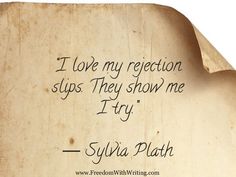
Kinda makes you feel better about the stuff you submit, right?Syliva-Plath-on-Rejection

At least, that’s what we thought. I mean, we’ve received rejection letters with comments like “uninteresting” and “meandering” and “seems to have no larger point.”

But “crazed?” “Obscene?” Just what the hell are people doing out there?

Here are some other amusing rejections we ran across:

“I haven’t the foggiest idea about what the man is trying to say. Apparently the author intends it to be funny.” (Written about Joseph Heller’s Catch-22—believed to have been given this title because it was the 22nd publisher, Simon and Schuster, who agreed to take it on.)

“The American public is not interested in China.” (Seriously, what could be interesting about Pearl S. Buck’s The Good Earth?)

“This will set publishing back 25 years.” (Wonder why? Anyone read Norman Mailer’s The Deer Park?)

“Good God, I can’t publish this.” (Said about William Faulkner’s Sanctuary.)

“An absurd story as romance, melodrama or record of New York high life.” (Gasp! Blasphemy uttered about F.Scott Fitzgerald’s The Great Gatsby.)

“Stick to teaching.” (Louisa May Alcott was urged to keep her day job after submitting Little Women.)

“I recommend that it be buried under a stone for a thousand years.” (We get your point. But Vladimir Nabokov’s Lolita was still a masterpiece.)

“An absurd and uninteresting fantasy which was rubbish and dull.” (Maybe depressing and gory and violent, but William Golding’s Lord of the Flies was dull?)

“We are not interested in science fiction which deals with negative utopias. They do not sell.” (Wonder what this visionary thinks of The Hunger Games. He rejected Carrie, by Stephen King)

“It is impossible to sell animal stories in the USA.” (Give it up, Garth Stein. Even George Orwell’s Animal Farm can’t cut it.)

This is an awesome essay of Curtis’s by the way, and you can check it out here:

http://www.public.iastate.edu/~yikes/mag_editors_and_fiction.html

If you don’t have time to read the whole thing, let us recap a bit. He gives a great rundown of what editors are, and aren’t, looking for in submissions, including cover letters. He says only two things included in your letter might cause an editor to be more interested in your story than the average one:

  1. Citations of stories published elsewhere, particularly in periodicals of comparable size and reputation; and
  2. Mention of the fact that you’ve been enrolled in a reputable MFA program (or residence at Bread Loaf or Sewanee, etc.).

Other take-aways? Same as you’ve always heard:

  • Don’t recap your story—let it speak for itself.
  • Don’t talk about other magazines that have rejected it already.
  • Don’t single space.
  • Don’t send anything with typos or grammatical errors.
  • Don’t try to dazzle them with your wit or sound hostile or desperate.

In short, just make your writing as fab as possible, keep your cover letter simple and direct, and send it out.

Everywhere.submit button

Spray and pray, people. Spray and pray.

New Author Angie Chuang: Holding On and Letting Go

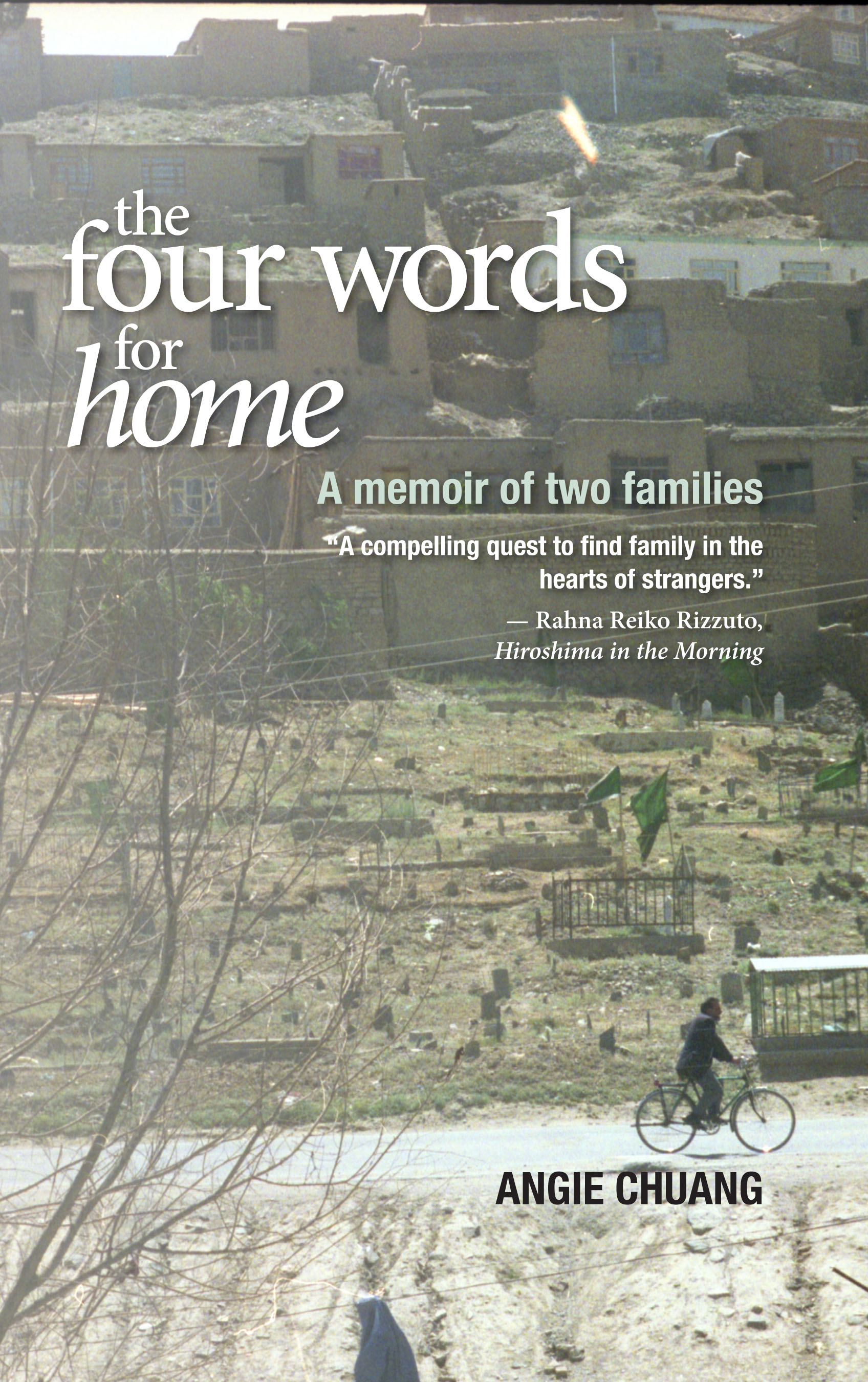
Angie Chuang didn’t know what she was getting into when she began writing essays drawn from her experiences as a journalist in Afghanistan. With the publication of her debut book, The Four Words for Home, later this week, we’ll all get to share in her amazing journey.

The publication marks the end of an 8-year odyssey. Angie’s challenges, outlined so honestly below, will sound familiar to many of us. Her  journey is an inspiring reminder that the writing process taps into our deepest reserves of  faith and determination. We’re thrilled to feature another nonfiction writer, someone who has taken journalism to its highest literary calling.

Please welcome Angie Chuang, my old colleague from the Hartford Courant, to Write Despite.

–Karen

COVER - TFWFH(2)

We writers endure so much rejection that every publication, every “yes,” feels like a breakthrough. I remember well my first-ever literary-journal publication, my first paid publication, my first anthology publication, and my first publication in what I regarded as a well-known journal. Each of these felt like stair steps – often with very long plateaus in between – toward the ultimate goal of someday publishing a book.

Starting in late 2004, after I returned from a life-changing reporting trip to Afghanistan, I spent a year in denial that I was writing a book based on that experience (“Essays! I am writing a series of essays!”); four years drafting what I begrudgingly admitted really was a book; one year drastically revising the mess of a “book” I came up with (evident in agent responses akin to, “Love the idea, love the writing, but it’s just not ready yet”); nearly one more year in an even more drastic revision based on the detailed notes of an agent who left her job before I finished. Granted, I had worked full-time as a journalist and then a tenure-track university professor during this time, so all this writing, revising, agent-querying was happening amid a whole lot of reporting, career-changing, teaching, and scholarly research.

But suffice to say that by 2012, the start of year eight of working on my book The Four Words for Home and seeking an agent or publisher for it, I was beginning to wonder if I should shelve it. My book’s focus had shifted from Afghanistan to an interwoven memoir about two immigrant families, the Afghan-American family that had brought me to their homeland and my own. Even so, I knew the reading public’s interest in Afghanistan had faded – the market for my book had shrunk with every year I had spent on it. I loved and believed in the story I had obsessed over for so long. But I was tired.

I promised myself I would send the manuscript out to one more round of small-press contests, casting a wider net to include more independent publishers. Early in 2013, I learned I was a finalist for the Willow Books Literature Awards and was invited to a festival and awards ceremony, where the winners of cash prizes and two book contracts (poetry and prose) would be announced.

When my name was announced as the prose winner, I was so ready to weather another near miss, I thought another finalist’s name had been read. I finally made it up to the stage, but months passed before reality sunk in and I started talking about a book and not a book manuscript. Since then, I have ridden the roller coaster of panic (that I had to stop revising and submit a final version), euphoria (I’m actually going to have a book!), fear (Everyone can actually read it!), and realism (I’ll be lucky if 0.0000001 percent of “everyone” reads it).

As I write this, I’m a couple days from holding the very first copies in my hand, and about to fly across the country for my first book appearances (not a bankrolled “book tour,” mind you, something about as quaint and rare in today’s literary publishing world as a free, real meal in domestic coach class). I know intellectually this publication represents a breakthrough, but I don’t quite feel it in my heart yet. Other authors tell me it takes some time to sink in and really enjoy it, to get past the “cringe,” as one put it, of other people reading and reacting to something you’ve worked on in isolation for so long.

So my advice to those who are in the long and murky middle between committing to writing a book and getting said book published: Don’t give up – and enjoy it.

Not giving up is obvious. Only your mule-headed, obsessive belief in your story will see you past the fatigue, the rejections, the self-doubt, the doubt from others, the 2,000th stupid question like, “Oh, are you still working on that book?”

Enjoying it may be less so. But I already miss a time when the story was mine and only mine, and we were engaged in a dialogue, and often an epic-seeming battle, over what it would become. The countless hours I spent alone with my manuscript – creating, changing, and wrestling with it – gave me enough belief in the story to release it into the world.

12

More information about The Four Words for Home and Angie Chuang is available at www.angiechuang.com. The book is available for order via Willow Books or Amazon.

The Best $5 You’ll Ever Spend

Friends,

The countdown is on.

We need 15 more folks to sign up today in order to bring Fiction Attic Press, a fantastic platform for both emerging and established writers, to a broader audience.

Fiction Attic is publishing my novel in the fall, and there are plenty of opportunities for other writers to submit to story contests.

If you’re a writer, this could be the best $5 you’ve ever spent, and you can cancel at any time!

http://www.beaconreader.com/projects/fiction-of-wit-and-substance

Thanks,

Karen

The Long and Short of It

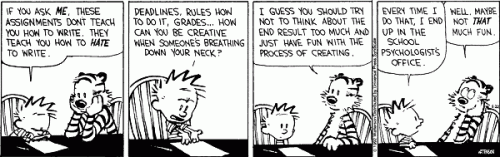
Taking a break from the book for a while because … well, because I’m stuck. Discouraged. Not feeling it . But you don’t want to hear my problems. Neither does Karen. She told me to shut up and quit whining and go write a short story. Okay, she was much nicer than that, but I got the message.

A short story!!??

CalvinandHobbesStory03-e1331337028749

This may seem like no big deal to you, but I haven’t written a story in years. How sad is that? I’ve been so caught up in the novel thing that the idea of shorter fiction hasn’t even been on my radar. If you want to switch gears and get a new outlook and rev up the energy again, though, I guess you really should consider going back to the basics.

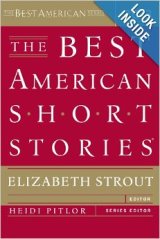
I plan to start by reading stories, of course. I used to read short fiction all the time. Best American Short Stories is always on my Christmas list (thank you in-laws for making sure this is under the tree each year), but I confess I haven’t read a whole one in years. I’ll look through them now, though, since I’m one of those people who pulls inspiration from others (okay steals, if you like—I’m not too proud to admit it).

Best American Cover

Any other suggestions for where to find great stories? Do you read literary journals? The New Yorker? Alice Munro anthologies?

Anyone want to write along with me?

When we’re done, here’s a GREAT listing of pubs to submit to:

http://www.newpages.com/literary-magazines/complete.htm

So switch it up, hunker down, carry on, write it short–or long. Whatever moves you. As always, just write.

Oh, and I saw an amazing quote the other day. I’m not much for such things, but this one stuck with me:

“Imagine what you would do if you knew you could not fail.”

I know, right?

—Cathy

Support Great Fiction and New Writers

Hi All,

Just a quick note to say that Fiction Attic Press is forming a partnership that will allow the press to expand and offer publishing opportunities to more writers. We just need 38 more subscribers to come on board in the next 12 days.

I’m proud to say that Fiction Attic is publishing my novel, Homing Instincts, in the fall. The publisher, Michelle Richmond, is wonderful, a true supporter of  literary fiction and those of us struggling to write it.

Please join Michelle and me in supporting Fiction Attic Press. Join our community. We’d love to have you!

http://www.beaconreader.com/projects/fiction-of-wit-and-substance

–Karen

Author Vanessa Hua’s breakthrough publication

Most writers remember their first publication: the magical acceptance letter (usually after a raft of rejections,) reading the galleys, seeing the finished thing alive in the world. We thought it would be fun to launch an occasional series featuring authors talking about their breakthroughs. Sometimes the story behind the story is the best part.

Please join us in welcoming Vanessa Hua to Write Despite.

Vanessa is a Steinbeck Fellow in Creative Writing. An award-winning writer and journalist, her work has appeared or is forthcoming in The Atlantic, ZYZZVA, Crab Orchard Review, New York Times, New Yorker, Salon, and elsewhere. A former staff writer for the San Francisco Chronicle, she has reported from China, South Korea, and Panama.  She blogs at threeunderone.blogspot.com and can be found at www.vanessahua.com

vanessa hua

Late in 2005, I won the Cream City Review fiction contest – my first short story in print.  When I received the e-mail, I stood up in the newsroom and shouted with joy and excitement, struck by the heady, dangerous feeling of affirmation.  I’d been judged worthy!   By then, I’d also reported from China, launched an award-winning campaign finance investigation, and had married.  When I won the contest, it felt all parts of my life were coming together – professionally, personally, and creatively.

I’d been writing fiction since I was a child, won writing contests in high school, and had studied creative writing at Stanford University. After graduation, I focused on my journalism career.  In my spare time, I wrote scenes, sketches, starts of stories that went nowhere.  When I re-read pieces I’d written in college, I felt conflicted: proud that the stories had merit, yet it felt like a stranger had penned them.  I didn’t remember how to write a story.

Eventually, I signed up for a fiction workshop where I produced the story that won the Cream City Review contest.  I’d learned about the journal after reading the publishing bio of another student in the class whose work I admired.  That success helped keep me going as I started writing more fiction, submitting to journals, taking workshops, joining writer’s groups, and going to writing conferences.  Of course, if you spend too much time chasing validation, you might succumb to the despair of rejection – and I’ve been rejected many times since then.  And you have to spend more hours writing than talking about writing.

In 2007, I decided I wanted to learn how to write a novel, and I headed to UC Riverside, where I earned my MFA.  Five years later, I had the pleasure of being asked to judge the Cream City Review fiction contest.  I hope that the prize helped encourage the winner in her career, too.

In deciding where to submit, I continue sending to places that publish writing I admire.  I also seek out paying journals, those with interesting business models, such as DailyLit, and strongly promote the work of their authors, such as At Length.  I also enter contests, such as The Atlantic’s student fiction prize, which I won in 2008.  Your chances might be slim, but if you don’t enter, you have no chance at all.

To buy Vanessa’s stories, go to

https://dailylit.com/book/262-line-please or

http://www.amazon.com/Deal-short-story-Atlantic-Archives-ebook/dp/B008873WK2/ref=sr_1_2?s=books&ie=UTF8&qid=1391965062&sr=1-2

Q&A with Author and Literary Journal Editor Scott Garson

 
Scott GarsonScott Garson is the author of IS THAT YOU, JOHN WAYNE?—a collection of stories—and AMERICAN GYMNOPEDIES, a book of microfictions. His fiction has won awards from Playboy, The Mary Roberts Rinehart Foundation and Dzanc Books, and he has work in or coming from
Kenyon Review, American Short Fiction, Hobart, Conjunctions, New York Tyrant and others. He edits the Pushcart-Prize-winning journal of very short fiction, Wigleaf.

What was your first real publication and how did it come about?

If I tell you that, how can I keep it buried?

Kidding.

My first publication was back in the ’90s—in the ‘Before’ era, as I see it now. Before the internet. Before indie mags had more than local reach. Then, as now, we were all sending our stuff to the Paris Review and receiving form slips in return. If we wanted a more realistic chance, we had to get creative. I looked through the addresses in the back of the Best American Short Stories and saw an Illinois journal (now defunct) called Black Dirt. They accepted and published a story of mine called “Aloha.” It was okay. My Mom liked it, I think.

You’ve just published your second book, Is That You, John Wayne?, another amazing collection of short stories. What makes you gravitate to short fiction? Do you ever plan to write longer-—say, a novel?
John Wayne book

Well, I do! There are a couple of novel manuscripts in my past… Does that sound depressing? Novels are like short stories, I think: it takes a while to learn how to do it. But while apprentice short stories are easily enough forgotten, novels take longer. There’s such an investment. It’s like you’re not allowed to let them go.

I’ve let those manuscripts go. Goodbye to you, unpublished novels. Good luck!

As to the attraction of short fiction, that’s easy: I loved reading before I discovered short fiction, but I probably wouldn’t ever have thought to become a writer if it weren’t for reading short fiction. That’s to say, fiction seduced me via the short story. It’s where I first saw how sense, sentence and story could come together as a kind of magic. I wanted to do that, to make that kind of thing.

How long has Wigleaf existed? 

We just had our sixth birthday. Birthday #5 was fun because my wife, Becky, made Wigleaf a birthday cake. A real birthday cake for a virtual magazine. My kids approved because the magazine, unlike them, could not bring a mouth to the party.

Again, this is a journal dedicated to short-short fiction. Why and how did you create it and what were you trying to do differently from other literary journals?

I suppose I was getting a little dejected as a writer when I got the idea for Wigleaf. That might be too strong a word, but my excitement was for sure not at a high. This was in 2007, I guess. I was publishing stories fairly regularly, which should have been spiriting, but there wasn’t a lot of response, and if I got a contributor’s copy and didn’t particulary enjoy some of the other fiction, I was liable to feel that the whole process was kind of useless.

Around this time I sent out a short-short for the first time, a 500-word story called “Lucky.” It was accepted by a journal that published only work of that length, Jennifer and Adam Pieroni’s late great Quick Fiction. Maybe you know where this is going. Reading that contributor’s copy of Quick Fiction was a great and amazing experience. All the writers were doing such careful, interesting work. With each piece, it seemed like the whole sense of what a story could be was invented all over again.

Not long after that I taught myself basic html. Online lit mags and short-short fiction were both sort of new, as I saw it. I thought they were a good fit for each other. (Some other early online mags had paved the way here: SmokeLong Quarterly, elimae, Hobart, Juked, and FRiGG, to name a few.)

What are you working on now?

Only a handful of people know this, so I guess it qualifies as a secret. Ready? I’m writing a novel for young readers which I’ll probably try to publish under a pseudonym. My two kids—ages 8 and 11—are responsible. They’ve challenged me to write something “not boring,” and my 8-year old has all sorts of advice for me as to how to do that (for example, “People like books that have chapters with titles.”). As a writing project, it’s certainly a switch-up. I’m enjoying it.

Any new publications forthcoming?

I have a draft of a short novel that I feel good about. Just now I can’t stand the idea of publishing it. A writer who’s got a book out is a writer whose mindlife is somewhat compromised…..  Maybe in another couple years.

Do you write every day?

In some seasons, yes. When I’m teaching, no. This semester, I write on Tuesdays, Thursdays, and weekends.

Maybe when my kids are grown I’ll be able to write every day again. (Not that I’m looking forward to that… This is a good time!)

Advice for aspiring writers?

#1.  Read a lot.

There’s the duh advice.

#2.  Understand that for most readers, the pleasure of fiction is the pleasure of interiority. This is not saying too much, in the sense that there are so many different ways to take readers inside a life. But it’s a good thing to remember, all the same. Better that the mind of your fiction move from the inside out rather than vice versa.