From Karen:
Writer Friends,
In this season of gardening, I think you’ll enjoy this thoughtful essay from Ann Mehl, business coach. Great advice, and very applicable to us!

From Karen:
Writer Friends,
In this season of gardening, I think you’ll enjoy this thoughtful essay from Ann Mehl, business coach. Great advice, and very applicable to us!
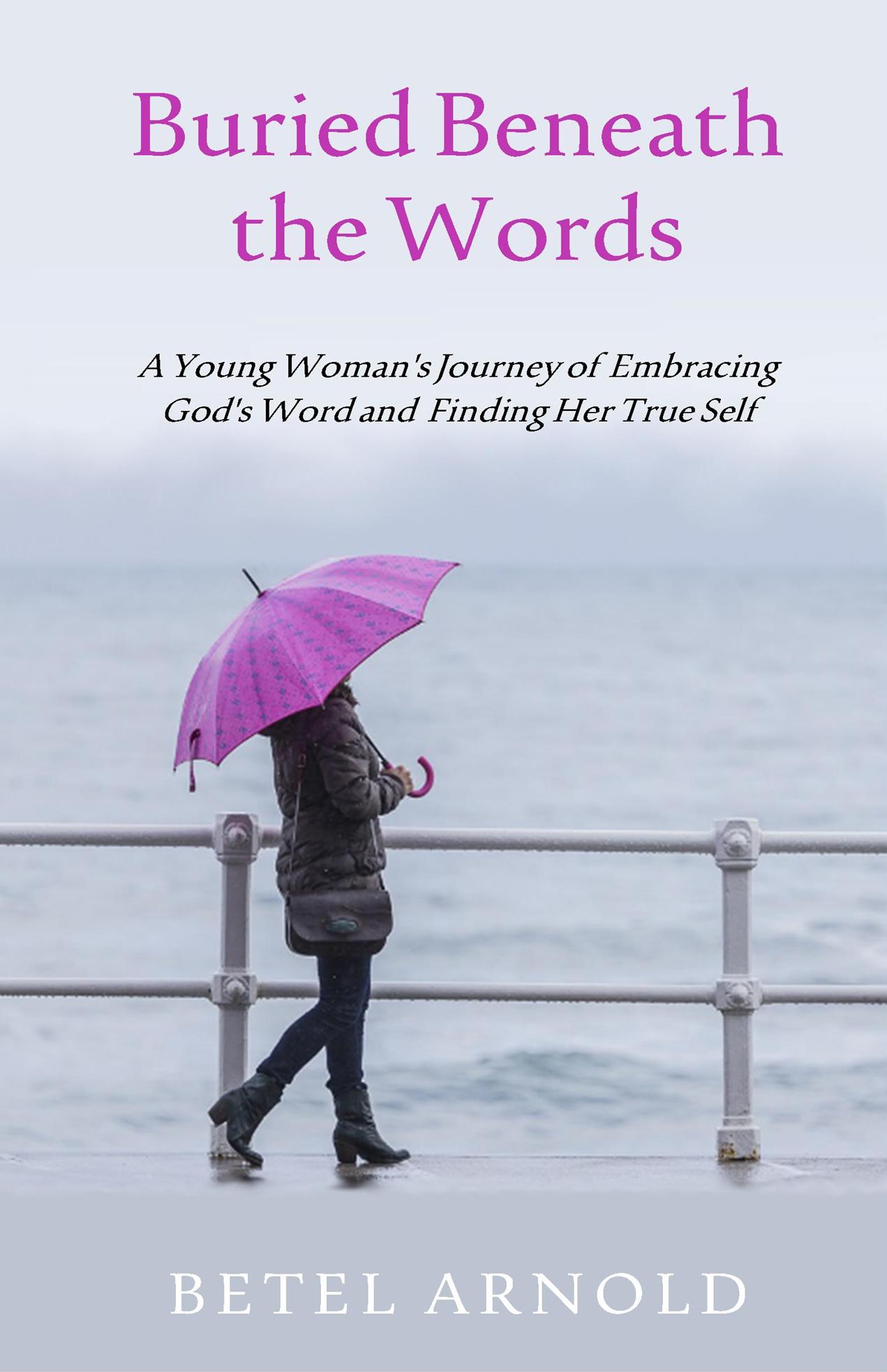
Author Betel Arnold learned through experience that dumping the toxic baggage that damages her writing process (competitive frenemies, a nasty inner critic) is just as important as a regular writing routine. Betel’s inspiring and inspiring spiritual self-help book, Buried Beneath the Words, is available now in English and Spanish.
Please welcome Betel to Write Despite.
 The idea of writing never occurred to me until the day my five-year-old daughter showed me her drawing. “Look mommy,” she said. Purple buildings sat side by side on a hilly street. “Who lives there?” I blurted. She shrugged. As a way to keep her engaged I suggested we write a story about the people who lived in those buildings.
At the computer, I was surprised and a bit ashamed when I tried to control the story. My daughter who is easygoing gave me free reign. Eventually though, she got bored and wanted to stop, I didn’t. I typed until motherly duties called. About five years later, while browsing my documents, I came upon the story and my interest was piqued. Could I finish the story? Also, what is the fate of the characters I created? I had to know.
I joined a writing group. Here, I met people who were serious about writing—it was their life. I felt like a complete fake but I continued to attend. Also, something that happened to me in fifth grade gave me hope.
That year, all students attending P.S. 19, were required to submit a story for a contest. The winner’s story would go in the teacher’s handbook. I remember writing that story. Since, the possibility of winning never crossed my mind; I let myself go and wrote without care. I can’t explain the utter shock and disbelief I felt when my name was announced as the winner. I couldn’t believe it. But this experience is what kept me in my seat when I wanted to run out of that writing circle.
Since then, I’ve published, Buried Beneath the Words, I have co-authored, 13 Lucky Ways to Beat Clutterism Disease—due out in September, and the young adult novel I started years ago, Jordan City, is complete.
Along the way, I’ve learned a few things that I would like to share with you. Things that support my writing.
Today, I view writing as my friend, as a great teacher. The changes I made in my life because of it are priceless. I am so glad—“It is never too late to be what you might have been.” — George Eliot

From Karen:
Think you have trouble squeezing writing into your day? Try throwing five kids into the mix. Tamara Grantham does it, and her debut novel, Dreamthief, will be published on September 1, 2015. It’s a fantasy tale, full of elves, fairies and intrigue.
Tamara says the loving support of family and friends, and her own steadfast faith, have made it possible. Read on and be inspired. Please welcome Tamara to Write Despite!

I started writing on September 1, 2010. I remember the date because it was a beautiful day. The leaves were beginning to change, the summer heat had cooled, and my son had started Kindergarten. I was at home with my two youngest, a 3-year-old girl and 1-year-old boy. I’d overcome the stresses of buying a new home in a new city, and my husband had started his 2nd year of residency. The past year had been pretty brutal. I was a small-town Texas girl transplanted to Tulsa, Oklahoma. I’d never lived so far away from home, and my husband’s 80-hour work weeks were a killer. Luckily, I was blessed to make some friends who were true kindred spirits.
One of these kindred spirits loaned me a book called Princess of the Midnight Ball by Jessica Day George. It was a fun, creative story, not unlike the stories I’d created in my own imagination. In her bio, the author wrote that she’d written the book while raising two young children and one on the way.
I stewed on this information for a few days. How did she do it? I couldn’t even find five minutes to check my email. How had she done it? And if I were to write a book, what would it be about? Would it have magic? Romance? What would my characters look like? Where would the setting be?
I couldn’t leave all the information stuck in my head. I sat down and wrote a 10-page outline about a girl named Ivy who lived on a Texas farm. I called it Forbidden. The story was a mix of Anne of Green Gables meets Tess of the d’Urbevilles, with a little magic and romance thrown into the plot. It never got published, but I still have my hopes up.
After I wrote my outline, I was hooked on writing.
I finished the first draft of Forbidden a month later on October 1, 2010.
Oddly enough, I’ll publish my first book on September 1, 2015, five years to the day that I started writing.
My first published book was actually my fourth novel. Dreamthief started out as a question asked by my brother-in-law. He worked as a military policeman at Fort Sill in Lawton, Oklahoma. Apparently, he’d pulled over quite a few people who were a little off. They also happened to display fairies and unicorns on their car’s bumpers. “Are people who read fantasy books and collect fairy stuff a little weird?” he had asked.
Hmm… Were they? And if they were, then why? These questions evolved into my book’s premise. What if they’ve really been to fairy world and can’t remember it? And what if their lost memories are causing their societal abnormalities and mental disorders? And if so, who would treat them? A half-elf who can remember both earth and fairy world? After that, I had a fresh new book to write. But I didn’t do it alone.
My husband was a huge influence on my writing. Every Christmas he bought me several books on writing. I read them all. Some of them I read twice. He read everything I wrote and gave me critical feedback. And for the most part he loved all my writing.
I queried agents for four years. I got some requests for pages, and even a few full manuscript requests. I attended writing conferences. At one conference I had all three agents request my book, but nothing came of it. After doing some research, I realized that my inability to snag an agent might not entirely be my fault.
The industry was changing.
Self-published and smaller press-released books were gaining steam. These authors were not taking a huge profit pay cut, and they were successful with their sales. I looked into several methods of publishing and found my dream publisher. Clean Teen Publishing did beautiful covers, they had a professional online presence, and most importantly, their authors were selling books.
I submitted Dreamthief, my novel about Olive Kennedy, a Fairy World psychologist, to two publishers. A day later, I had two manuscript requests. And the next day, I had two offers.
I signed with Crimson Tree Publishing, the adult imprint of Clean Teen Publishing, on November 8, 2014. It was one of the happiest days of my life.
I have so much in my life to be thankful for. I have two wonderful parents, two sisters and a brother who support and love me. I’ve been extremely blessed to have five beautiful children who fill my world with laughter.
I have a husband who also happens to be my best friend, who is stronger than me in so many ways, who supports his family and tries his hardest to give us the best life possible. I owe so much to him.
And lastly, I have a loving Heavenly Father. He is my savior and redeemer. He blessed me with the gift to write, but more importantly, the motivation to keep going when I feel like I can’t, and for that I will forever be grateful.
Connect with Tamara on Facebook and Twitter.

(From Karen)
So, yes, I’m once again sharing a post from Women’s Fiction Writers. We should really pay them a royalty.
Like most writers, I struggle to stay organized and keep my lines from getting tangled when I’m working on a long piece of fiction—like my new novel. So many details, so many threads to remember and keep straight.
Outlines and notes help, but author Amy Sue Nathan relies on a handy method to index the issues.
Sometimes it’s the little tips that help a lot.

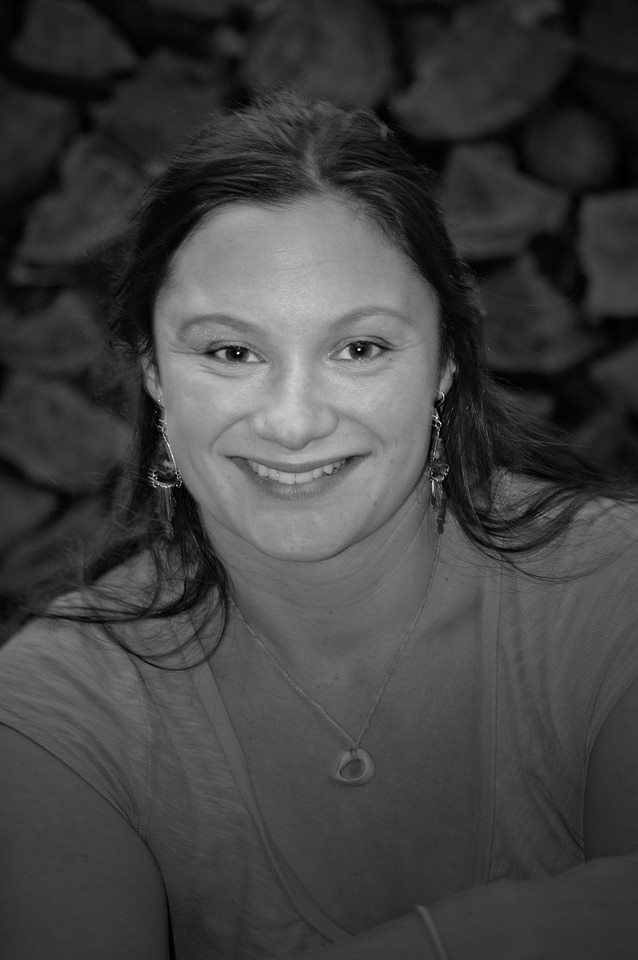
Much has been written about the therapeutic effects of writing, about its ability to help you sort out the noise in your head and push on. For Sarah Kilch Gaffney, the act of putting pen to paper, or fingers to keyboard, has become a “lifeline.”
As a young widow and single mom, Gaffney turned to writing to help her process her grief and to forge a new life with her toddler daughter. She writes beautifully of the experience in a recent Washington Post essay.
Please welcome Sarah to Write Despite.
I have always been a creative type, and I started writing in my late teens. I studied creative writing and environmental studies in college and went on to work in the conservation field for a number of years. I never stopped writing, but I also found it challenging to write with any sort of consistency. A poem here or there. A fiction story started but rarely finished.
Fast forward several years and I found myself in starkly different circumstances. My young husband was dying from a brain tumor and I was caring for him and our toddler daughter.
And I felt compelled to write about what was happening to us, like there was somehow no possible way that I could not write it all down and get it all out. During the last weeks of his life, I wrote an essay about our decision to have our daughter despite his terminal diagnosis. I remember desperately wanting to get it submitted before he died, having no idea if anyone would even want to publish it. In a surreal series of events, I sent the essay out on a Tuesday and the following day my husband’s hospice nurse told me we were looking at hours to days. He died that Saturday night, and Sunday morning the essay was accepted for publication.
I’ve continued to send essays into the world ever since.
Writing about my husband’s illness and death, and the challenges of raising a child as a young widow, has helped me work through my grief more effectively than bereavement groups, grief therapy, and anything else I have encountered. Everything has helped, but writing through it all has been the most fruitful. Knowing that there are others in the world finding comfort in my words, realizing that perhaps they are not alone in their suffering, has also given me a deeper purpose. That my grief might help others with their grief was an astonishing revelation.
Right now I am in a state of great flux in my life. My daughter and I just marked one year since losing my husband and her father. I recently left nursing school, which was one of the hardest decisions I have ever made, but which has also brought me great relief and closure. I started nursing school to take care of my husband, to save him in the only way I could think of. I returned to school after he died, but my heart was no longer in it. Though I was succeeding in every aspect of the program, it became clear that I was succeeding despite myself and that I was not happy. I have learned the hard way that life’s far too short for that sort of thing.
As I start the process of rebuilding my life with my daughter, of figuring out what I want to do and what direction I want to take, my writing remains a constant source of grounding, problem-solving, and emotional expression. For me, writing is both an escape and a way to face my grief head-on, with all of the rawness, beauty, and love that I can manage. Writing allows me to focus and reflect on the small moments in life that are so, so important: reading with my little one, going for walks in the woods with her, acknowledging all of the good things in my life. It also gives me a chance to spend time with myself and to work through my grief on my own terms. It is a crucial and tangible lifeline, and I’m holding on for dear life.
 –From Karen:
Okay, I’m sharing this image just because I love it. Welcome to a new week!
I’m sharing this post from one of our favorite blogs, Women’s Fiction Writers, because I think you’ll love it. Women’s Fiction Writers Blogstress Amy Sue Nathan has just published her second novel! Check it out and support a sister.
In this post, veteran author Cathy Lamb shares her publishing history and some unconventional advice. DEFINITELY worth a read.
An exerpt:
“Your packet out to agents, online or by snail mail, looks like this: Cover letter, one page. Twenty pages of your story. Synopsis, one page.
Send this packet out to ten agents at a time. Yes, I did say ten. Everything you hear or read, here or on Jupiter, will tell you to send your partial manuscript to one agent at a time. Don’t follow that rule either. As you can see, I don’t really like rules. Too confining, too dull.
Why submit to multiple agents at the same time? Many agents will never, ever respond to you or your pages. Other agents will take months to read it. With others, the rejection slips will come back so fast, you will think the agent didn’t even read your book. And, he may not have. He may not be taking on clients.
Want more mean truths? An agent will read the first paragraph of your work, MAYBE the first page, of your book, before he tosses it if his attention is not grabbed. If he likes the first paragraph, he reads the first page, then the second page, then the third.
He knows QUICKLY if your book is something he can sell to a publishing house. They’re experienced, they’re smart, they’re efficient. Never forget: They are BURIED in manuscripts.”
By Karen Guzman
Please settle back for a very informative interview with Christina Hamlett. It’s the truly useful kind of information we all need. Christina has an awful lot of experience in the wilds of publishing. She’s eager to share what she knows and give new writers a leg up. I know. Christina was kind enough to feature my debut novel on her You Read It Here First blog.
A former actress and theater director, Christina is an award-winning author and media relations expert whose credits to date include 31 books, 157 stage plays, 5 optioned feature films and squillions of articles and interviews that appear online and in trade publications throughout the world.
She is also a script consultant for the film business (which means she stops a lot of really bad movies from coming to theaters near you) and a professional ghostwriter (which does not mean she talks to dead people).
Learn more about Christina’s work and hook up with her on her various platforms:
http://www.facebook.com/pages/Christina-Hamlett/155417084517326
Please welcome Christina to Write Despite.

1. What advice can you offer new writers looking for markets to sell their work?
Whether you’re writing fiction or nonfiction, it’s critical to establish yourself as an expert in your field. To do this, you need to embrace an enthusiastic mindset to write articles, compose blogs, teach workshops, participate in chat rooms, utilize social media, write reviews, and endear yourself to the media by being the entertaining, informative and dependable guest they’ll want to invite back time and again. The more visibility you can generate for your work, the more “name recognition” for your prospective readers and, subsequently, the more trust they will have in your brand. Freelance markets abound these days for not only getting your work seen but also getting paid. Some of my favorite resources are Hope Clark’s Funds for Writers, Worldwide Freelance, Where Writers Win, My Perfect Pitch, Authors Publish Magazine, Freedom With Writing, and Wow! Women on Writing.
A cautionary note about the plethora of content mills out there: don’t devalue yourself. A site that pays $25 for a 500 word article is only a viable option if you can actually compose that entire article in an hour or less. If it’s going to take you time to do research, rewrite, edit and potentially get it sent back for revision, your pay comes out to about $.10 an hour. Seriously. You’re worth much more than that.
2. What are some of the biggest publishing mistakes you see new writers making?
I think the worst one, though, is whenever I hear a defeatist author say, “Well, I guess if I can’t sell my book to a traditional house, I’ll have to self-publish.” I’m reminded of a homely classmate in elementary school who told her daughter, “Well, I guess if no one wants to marry you, you can always go become a nun.”
3. How much of the burden to sell a book is on the writer these days? It seems like publishers want you to already have your market established before they’ll touch you.
Like any other industry in this woefully drekky economy, publishers across the country have downsized and their marketing departments are typically the first to get outsourced. Rarely these days will a publisher take on a fledgling writer unless that writer is already creating a buzz for his/her work and demonstrating a willingness to work hard and promote it. In turn, this has given rise to the popularity of self-publishing in which authors not only have more control of their own intellectual property but they’ll also be working just as much as they’d be expected to for a traditional publisher. The difference is that self-publishing will get them 70+% royalty vs. 8-12%. Another consideration is that unless a book really flies off the charts, the average shelf-life for a new title at a brick and mortar bookstore is 2-6 weeks (as opposed to indefinitely in cyberspace), and 30% of paperbacks and hardcovers end up in landfills. It should also be noted that agents and publishers are sometimes reluctant to take on someone who has only written one book and has no immediate plans to write another one. That said, you not only have to have that first book completed but also be a whirling dervish about fleshing out ideas for multiple works thereafter.
4. What are some innovative ways writers can get the word out about the projects?
I love this question! And I just happen to have all sorts of creative ways to accomplish this. Try these for starters:
I love hearing from aspiring authors of all ages and can be reached at authorhamlett@cs.com. Just put the words “Karen Sent Me” in the subject line and I’ll get back to you as soon as possible. I do request, however, that you not send me attachments to critique for you. Since I do this professionally, I charge professional consultation fees which I’m happy to provide upon request.
 Call me crazy, but I’m planning to sort of do double-duty in 2015. From a writing perspective, that is. I’m pushing ahead on my second novel, while also working on a short story collection that’s just really calling to me right now.
Biting off more than I can chew? Maybe. It’s all up to the gods of time and energy in the end. But I’m going to see how much progress I can make.
I’m also continuing to promote my debut, Homing Instincts. Please pick up a copy if you haven’t, and honor me with a review on Amazon or Goodreads?
What are your writing goals in the new year? Drop us a line. And if you’re looking for some inspiration, check out this story wherein a nice writer gets a big, and much deserved, break!
–Karen
 Kirsten Lopresti, having just released her fab-tastic debut novel, Bright Coin Moon, offers up some tips for fitting writing into your holiday craziness. Please check out her website, and order a copy of Bright Coin Moon for yourself or any YA readers on your gift list. It’s a smart, funny, moving tale of a teenager caught up in her mother’s fake fortunetelling business, and her plan to become a Hollywood “Psychic to the Stars.”
Happy holidays, everyone!
How to Find Time to Write This Holiday Season

The holiday season is upon us, and if you are like me, your to-do list is sky high. So how do you find time to write? Here are five suggestions that might help you squeeze in a little more time.
 Don’t compete with others. This goes for your writing as well as for your holiday preparations. If your neighbor’s Elf on the Shelf gives surprise presents and bakes cookies and yours can’t manage to hang upside down from a new place each morning, try not to think too much about it. There are no set rules for holiday preparations. Make a priority list and write at the top, “Priority number 1: keeping my sanity.” All other priorities from two on down should bow to that one.
Hey Friends,
Here’s a kick: my very first-ever author interview. Thanks to the “You Read it Here” blog for reaching out.
It was fun!
https://fromtheauthors.wordpress.com/2014/11/22/homing-instincts/
 Write Despite