Q&A with Author and Literary Journal Editor Scott Garson

 
Scott GarsonScott Garson is the author of IS THAT YOU, JOHN WAYNE?—a collection of stories—and AMERICAN GYMNOPEDIES, a book of microfictions. His fiction has won awards from Playboy, The Mary Roberts Rinehart Foundation and Dzanc Books, and he has work in or coming from
Kenyon Review, American Short Fiction, Hobart, Conjunctions, New York Tyrant and others. He edits the Pushcart-Prize-winning journal of very short fiction, Wigleaf.

What was your first real publication and how did it come about?

If I tell you that, how can I keep it buried?

Kidding.

My first publication was back in the ’90s—in the ‘Before’ era, as I see it now. Before the internet. Before indie mags had more than local reach. Then, as now, we were all sending our stuff to the Paris Review and receiving form slips in return. If we wanted a more realistic chance, we had to get creative. I looked through the addresses in the back of the Best American Short Stories and saw an Illinois journal (now defunct) called Black Dirt. They accepted and published a story of mine called “Aloha.” It was okay. My Mom liked it, I think.

You’ve just published your second book, Is That You, John Wayne?, another amazing collection of short stories. What makes you gravitate to short fiction? Do you ever plan to write longer-—say, a novel?
John Wayne book

Well, I do! There are a couple of novel manuscripts in my past… Does that sound depressing? Novels are like short stories, I think: it takes a while to learn how to do it. But while apprentice short stories are easily enough forgotten, novels take longer. There’s such an investment. It’s like you’re not allowed to let them go.

I’ve let those manuscripts go. Goodbye to you, unpublished novels. Good luck!

As to the attraction of short fiction, that’s easy: I loved reading before I discovered short fiction, but I probably wouldn’t ever have thought to become a writer if it weren’t for reading short fiction. That’s to say, fiction seduced me via the short story. It’s where I first saw how sense, sentence and story could come together as a kind of magic. I wanted to do that, to make that kind of thing.

How long has Wigleaf existed? 

We just had our sixth birthday. Birthday #5 was fun because my wife, Becky, made Wigleaf a birthday cake. A real birthday cake for a virtual magazine. My kids approved because the magazine, unlike them, could not bring a mouth to the party.

Again, this is a journal dedicated to short-short fiction. Why and how did you create it and what were you trying to do differently from other literary journals?

I suppose I was getting a little dejected as a writer when I got the idea for Wigleaf. That might be too strong a word, but my excitement was for sure not at a high. This was in 2007, I guess. I was publishing stories fairly regularly, which should have been spiriting, but there wasn’t a lot of response, and if I got a contributor’s copy and didn’t particulary enjoy some of the other fiction, I was liable to feel that the whole process was kind of useless.

Around this time I sent out a short-short for the first time, a 500-word story called “Lucky.” It was accepted by a journal that published only work of that length, Jennifer and Adam Pieroni’s late great Quick Fiction. Maybe you know where this is going. Reading that contributor’s copy of Quick Fiction was a great and amazing experience. All the writers were doing such careful, interesting work. With each piece, it seemed like the whole sense of what a story could be was invented all over again.

Not long after that I taught myself basic html. Online lit mags and short-short fiction were both sort of new, as I saw it. I thought they were a good fit for each other. (Some other early online mags had paved the way here: SmokeLong Quarterly, elimae, Hobart, Juked, and FRiGG, to name a few.)

What are you working on now?

Only a handful of people know this, so I guess it qualifies as a secret. Ready? I’m writing a novel for young readers which I’ll probably try to publish under a pseudonym. My two kids—ages 8 and 11—are responsible. They’ve challenged me to write something “not boring,” and my 8-year old has all sorts of advice for me as to how to do that (for example, “People like books that have chapters with titles.”). As a writing project, it’s certainly a switch-up. I’m enjoying it.

Any new publications forthcoming?

I have a draft of a short novel that I feel good about. Just now I can’t stand the idea of publishing it. A writer who’s got a book out is a writer whose mindlife is somewhat compromised…..  Maybe in another couple years.

Do you write every day?

In some seasons, yes. When I’m teaching, no. This semester, I write on Tuesdays, Thursdays, and weekends.

Maybe when my kids are grown I’ll be able to write every day again. (Not that I’m looking forward to that… This is a good time!)

Advice for aspiring writers?

#1.  Read a lot.

There’s the duh advice.

#2.  Understand that for most readers, the pleasure of fiction is the pleasure of interiority. This is not saying too much, in the sense that there are so many different ways to take readers inside a life. But it’s a good thing to remember, all the same. Better that the mind of your fiction move from the inside out rather than vice versa.
Write Despite Book Giveaway Winner

winner9

The comments are all in, and Author Hardy Jones has chosen the winner who will receive a free, signed copy of his novel, Every Bitter Thing.

From Hardy:

All of the responses to the “Perseverance and the Writing Life” were strong, which made my selecting only one for the book giveaway difficult. In the end, I choose T.D. The comment was well written, thoughtful, and clearly expressed T.D.’s desire to persevere. For all who left comments, best of luck with your writing and your submitting!

Congratulations, T.D.
Now come out from behind those initials and claim your prize.
Hardy is popping your book in the mail today.

And thanks to everyone who participated.

A Matter of Perspective

So we’ve all got different tastes in fiction, but I want to share a new novel that I’ve just finished, The Burgess Boys by Elizabeth Strout. So many aspects of this story are moving, but I was particularly impressed with how skillfully and effectively Strout handles multiple perspectives through a third-person narrator. Take a look, if you’re struggling with the same.

— Karen

burgess

Author Letitia Moffitt: “We want success in this thing we do” (And it just don’t come easy)

Letitia Moffitt knows a thing or two about endurance—the physical and the mental kind. Her first novel Sidewalk Dancing is scheduled for publication by Atticus Books in early November. After you read Letitia’s piece below, you’ll want to order a copy. Browse the other great Atticus titles while you’re at it. Small presses are publishing some of today’s best literary fiction, the stuff the big houses are afraid to take a chance on, for fear of angering their corporate overlords.

Right now, read on. Laugh, nod, and get over yourself. We ALL feel this way, at least sometimes. Community can be healing. So join ours and please welcome Letitia to Write Despite.

ATTICUS_SIDEWALK

I write novels and run marathons, and it’s not hard to see the similarities in these endeavors. Both take persistence, both can be agonizing, both will drive you to drink. Gatorade martini anyone? At this point I’m supposed to give you a bit of earnest, heart-felt, inspirational advice: to keep trying, to keep going, never to give up on your dreams or lose sight of your goal because you’ll get there, you’ll succeed, and it will all be worth it, all the frustration, all the setbacks, all the failure.

But I’m not going to tell you that. That’s what Facebook is for. Sooner or later somebody you’ve friended is going to post some motivational aphorism with a pretty picture in the background. A sunrise, perhaps, or some flowy water. Here’s the thing, though: writing and running are the things you do because you don’t need motivation. Success or failure is beside the point. You’re going to keep running until your toenails fall off and your forehead is crusted with salt. You’re going to keep writing until your brain is mush and your liver rots. You do it because, well, you got to do something right? It might as well be this. This is what we do, regardless of the outcome.

But who am I kidding. We still dream. We dream of a big book contract, of qualifying for Boston. We can’t really say success doesn’t matter, because that’s crap. Yes, there are some people who just run around their neighborhoods and never enter a race, writers who just create stories for the fun of it and never bother to check out the litmag scene to see where those stories might go. We don’t want to be like that. We think—we certainly hope—we must aspire to greater things.

I like to think I’ve had moderate success with each of these endeavors. On the running side, nine marathons, two ultramarathons, and any number of halfs, 10Ks, 5Ks, and miscellaneous distances. As for writing, a couple dozen short stories and essays in literary magazines and a novel, appearing next month, from a terrific indie publisher. None of this came easy. I was not a runner in high school—I wasn’t much of any anything in high school, come to think of it—so all this marathonning has only occurred in the most recent years of my life. In those years I’ve managed to injure myself in about sixteen different ways while training for races, and that includes some places you have to scratch your head and wonder how did that happen. When you say running, you usually mean, like, on your legs. How do forearms and teeth fit into that? Trust me, they do. I have the scars and the dental work to prove it.

As for writing, well, if you’re reading this, you’re probably a writer, and I don’t need to tell you about how success in writing doesn’t come easy. Remember the days when rejection came in the form of little slips of paper and not little slips of email, and everyone used to make jokes about wallpapering their room with them? I kind of miss those days.

A running friend of mine told her mother the first time she planned to run a marathon. Her mother’s response: “Why are you doing that? You’re not going to win.” Ouch, Mom. When I was a kid and told my own mother I wanted to be a writer, she said, “Technical writing is very good.” No, Ma, a writer. “They always need people to do technical writing.” Decades, publications, a PhD in English and a book contract later, she still asks me if I’m doing any technical writing. I don’t even think she knows what that means; I suppose she thinks of “technical” as “lucrative” or “practical.” Or maybe just “not a waste of time unless you produce a bestseller that gets turned into a miniseries.”

Oh, I know: the fault lies not in our mothers but in ourselves. We want success in this thing we do, because nobody ever doesn’t want to succeed, and during those times when the effort may kill you, when the setbacks and failures threaten to break you, you have to believe you’re doing it for a reason. It’s too hard otherwise.

Besides, we see those people who really do run just for fun, the bucket-listers, beaming about how they finished their one-and-only marathon in just under 2 days, and we have to fight the urge to get away from them as quickly as possible so other people won’t see you with this loser and think you’re one too. We hear about friends who have “published” a “novel,” and we’re afraid to ask how much they paid the “publisher” to “print” it. Surely we’re the genuine article, not poseurs like those people. Aren’t we?

We run, we write. Sometimes we go into it with our eyes fixed on the prize. The Pulitzer, the National Book, maybe someday the Nobel. Sometimes we go into it absolutely dead certain we will never publish so much as a haiku ever again but we do it anyway, just to keep sane. Sometimes we just go into it. As with running, we just go. We keep on going.

MoffittAuthorPhoto


Author Hardy Jones: Writing is Like Exercise

Hi everyone!

Many thanks to all who commented on Gigi Amateau’s post last week. She has picked a winner for her book giveaway. Congratulations to Kipley Herr!

DSC_0606And now please welcome novelist and teacher Hardy Jones to Write Despite. Hardy joins us today to share his thoughts on the persuasive powers of T. Coraghessan Boyle, the litmus test of revision and the importance of answering the phone when opportunity calls.

If you haven’t read Hardy’s novel “Every Bitter Thing,” please check it out. The writing is powerfully observant, and the story will stay with you long after you finish the last page. Also an essayist and short story writer, Hardy is an associate professor of English and director of creative writing at Cameron University. He also serves as Executive Editor of Cybersoleil Literary Journal.

Please welcome Hardy Jones to Write Despite

FullCover copy

1. What’s the best writing advice you’ve ever received?

I have had many great teachers and mentors, so it is difficult to single out the best writing advice I received. But I want to highlight advice I received from Moira Crone, Thomas Russell, and Randall Kenan. Crone, with whom I studied fiction writing as an undergraduate at Louisiana State University, explained short story form to me and enabled me to write with more control and understanding of the components of fiction—hooks, rising action, climax, falling action, denouement.  While the Aristotelian structure is not the only way to organize a story, learning it was a great help to me as a beginning writer.

My first graduate workshop was with Thomas Russell. It was a Fiction workshop and in it he said: “Many authors write the same story over and over.” We were reading D.H Lawrence, and Thomas Russell explained how Lawrence primarily wrote about the sexual tension between men and women. As a student, Russell’s comment did not make sense, and I did not want to write the same story over and over. As I have matured as a writer, I now understand what he meant. One does not literally write the same story over and over, but an author explores the same themes and tropes in one’s work. For example, I often write about dysfunctional families with an only child and about father/son relationships.

In a Creative Nonfiction workshop at the University of Memphis, Kenan said: “I’ve come to believe that there is enough time to write everything.” This comment stuck with me because I have a bad habit of pressuring myself and often feeling rushed.

2. Please tell us your favorite three authors

Picking only three is difficult. Some authors are my favorites for specific lessons I have learned from reading them. Others are my favorites for that reason plus sheer enjoyment. The Brazilian fiction writer Jorge Amado fits both of those criteria. The first work I read by him was the novel Dona Flor and Her Two Husbands. I am in awe of how his prose blends erudition with humor and bawdiness. Next is the nonfiction author Joseph Mitchell. I appreciate his ability to write about marginalized peoples and not make them into caricature. Third is the Nigerian author Chimamanda Ngozi Adichie. Her writing possesses an emotional intensity that I admire. A fourth author I want to mention is T. Coraghessan Boyle. In a sophomore literature course, I read his story “Greasy Lake,” which I enjoyed and then sought out more of his work. I read his story collections If The River was Whiskey, The Descent of Man, Without a Hero and his novel World’s End.  He is the writer who convinced me to be a writer. His subjects of teen angst and rock-n-roll, writing infused with a few curse words, and the comedic approaches to history and storytelling grabbed me.  By the time I finished World’s End, I had decided to major in English and fling myself into writing.

3. Briefly describe your journey to publication

My first publication was a short story titled “Moving Day,” and it appeared in the LSU undergraduate journal The Delta. I wrote it for an undergraduate fiction workshop I was taking with Moira Crone. She had given us the assignment to begin a story with the words “I remember.” When I sat down to start the story I didn’t know what I was going to write. I sat in front of the computer for a few minutes repeating “I remember” and in what seemed like an unconscious act, I placed my fingers on the keyboard and typed: “I remember when Mama told us we were moving out of the trailer park.” With that sentence, a young boy’s voice took over and led me to write eight pages.

For my novel Every Bitter Thing, I wrote the initial draft between August 2000 and May 2001. The opening scene came out in one sitting. I had been kicking around the opening line, “Dad was always friends with butchers,” in my head for about three years, and one afternoon, frustrated with something else that I was writing, I started a new file and typed out the sentence. The rest of the scene came out in about forty-five minutes in one of the moments that writers live for: the characters, the setting, the actions, even the dialogue simply flowed out. After such an auspicious start, I was unable to write for several weeks, and when I did return to the manuscript, I fluctuated between continuing with it as fiction or making it into a father/son memoir. Once I had written fifty pages, I decided to go the route of fiction. By releasing myself and the characters from what I perceived as the constraint of memoir, I was able, ironically, to be more truthful about the father’s bigotry and the protagonist’s sexual abuse by an older boy.

While the novel’s initial draft took nine months to complete, it took seven years of revising and submitting the manuscript before it was accepted for publication in April 2008 by Black Lawrence Press.  At that time, my wife and I were in the process of buying a house and I was tired of the numerous phone calls from banks and finance companies. I was on the phone with a colleague when a beep let me know I had another call.  Assuming it was probably another loan officer trying to pressure us, I decided I wasn’t going to click over. Luckily my colleague was more level-headed and said I should take it; the call, he said, may be important. He was correct. It was Black Lawrence Press’ then Executive Editor Colleen Ryor saying that they had decided to accept Every Bitter Thing. After all those years of work on the manuscript, I almost did not answer when opportunity called.

4. Advice for those now on the road to publication?

Never submit something that has not been revised numerous times and start small. Don’t start at the top with a prestigious journal that primarily publishes established authors. Doing so sets one up for disappointment, and the writing and publishing life is full of that. Normally, young authors are working in short genres: poetry, short stories, and personal essays. Therefore, journals are a perfect match. With an established track record, an author then has the “credentials” to submit to larger journals, agents, and presses.

5. Do you write every day?

I wish I did. When I was composing Every Bitter Thing, I did write every day for those nine months it took to complete the initial draft. With my teaching schedule, I try to work in a few minutes when I can between classes and meeting with students. In that way, I follow the advice you give on the blog: twenty minutes a day. That is good advice, because writing is like physical exercise: your muscles become stronger as you work regularly, and eventually one is maximizing those twenty minutes. When I feel as if there is not enough time to write, I like to use the image of the poet William Carlos Williams, who wrote in between seeing patients in his medical office. That writing schedule worked out well for him.

 6. What are you writing now?

Currently I am revising a memoir, People of the Good God, which is forthcoming from Mongrel Empire Press. I have a short story collection, Grandmother’s Coconut Tree, for which I am seeking a publisher. The stories are set in Southeast Asia and the American South. The ones set in Southeast Asia are flash fiction and are more experimental. I am also working on a personal essay collection, Resurrection of the Unholy, which is about my childhood and growing up in the South during the 1970s and 1980s with a bigoted sexagenarian father. My father was born in 1917 in east Texas and he never let go of the racist ways he was taught and witnessed growing up. As a child, however, I felt that something was not right with his attitude towards African-Americans, and as I grew I knew that his attitude and words were wrong.

Welcome Author Patricia Henley

The diverse and accomplished Patricia Henley joins us today to share her thoughts on lucky breaks, practice-practice-practice, and how starting a novel feels like falling in love.

Patricia is the author of two chapbooks of poetry, four short story collections, two novels, a stage play, and numerous essays. Her first book of stories, Friday Night at Silver Star (Graywolf, 1986) was the winner of the Montana First Book Award. Her first novel, Hummingbird House (MacMurray & Beck, 1999) was a finalist for the National Book Award and the New Yorker Fiction Prize. Pantheon published her second novel, In the River Sweet, and it was widely praised in newspapers and magazines. In the River Sweet was a Border’s Original Voices selection and was translated into Polish and published in Poland in 2004. Engine Books published Patricia’s fourth collection of stories – Other Heartbreaks – in 2011.

Here’s what Oprah magazine had to say about Other Heartbreaks:

O Magazine Review

Learn more about Patricia and her work at www.patriciahenley.org or at www.enginebooks.org

Please welcome Patricia to Write Despite.

1. What’s the best writing advice you’ve ever received?

Here are two bits of advice. Pay yourself first — that is, write first thing in the morning. After that, everything feels easy. Pursue wordless recreation. This is even more important now than it was when I first read it thirty years ago because we are bombarded with so many more words now than ever.

2. Please tell us your favorite three authors

Hilary Mantel
Alice Munro
William Trevor

3. Briefly describe your journey to publication. (How were you first published and how has that led to where you are now?)

I first published poetry in journals around Baltimore in the 1970’s. I started writing fiction in 1979 when I was living in the Pacific Northwest. I submitted a short story manuscript to a contest – the Montana First Book Award. I won, and, as a result, Graywolf Press published my first book of stories in 1986. They made sure it was reviewed nationally and that was my lucky break.

4. Advice for those now on the road to publication?

Don’t stop writing. There are plenty of gifted or talented writers who can’t stick with it. They allow themselves to get distracted when it’s not easy. Getting published is about practice, practice, practice.

5. Do you write every day?

When I’m working on a project, yes, I write every day. Once in a while I take some time off. But a week or two without writing and I begin to feel as if I’m living in a black and white movie. I have to write.

6. What are you writing now? (If nothing, what are you reading now?)

I recently finished a memoir – You Will Be Taught To Fly — I do not have a publisher for it yet. I’m writing a YA novel with Elizabeth Stuckey-French. It’s titled Where Wicked Starts. Engine Books will publish it in 2014. I recently started what I hope will be a novel set in Cincinnati. I haven’t made a firm commitment to it yet, but it’s fun. The first 100 pages of a novel feel like falling in love.

Oxford, 2012

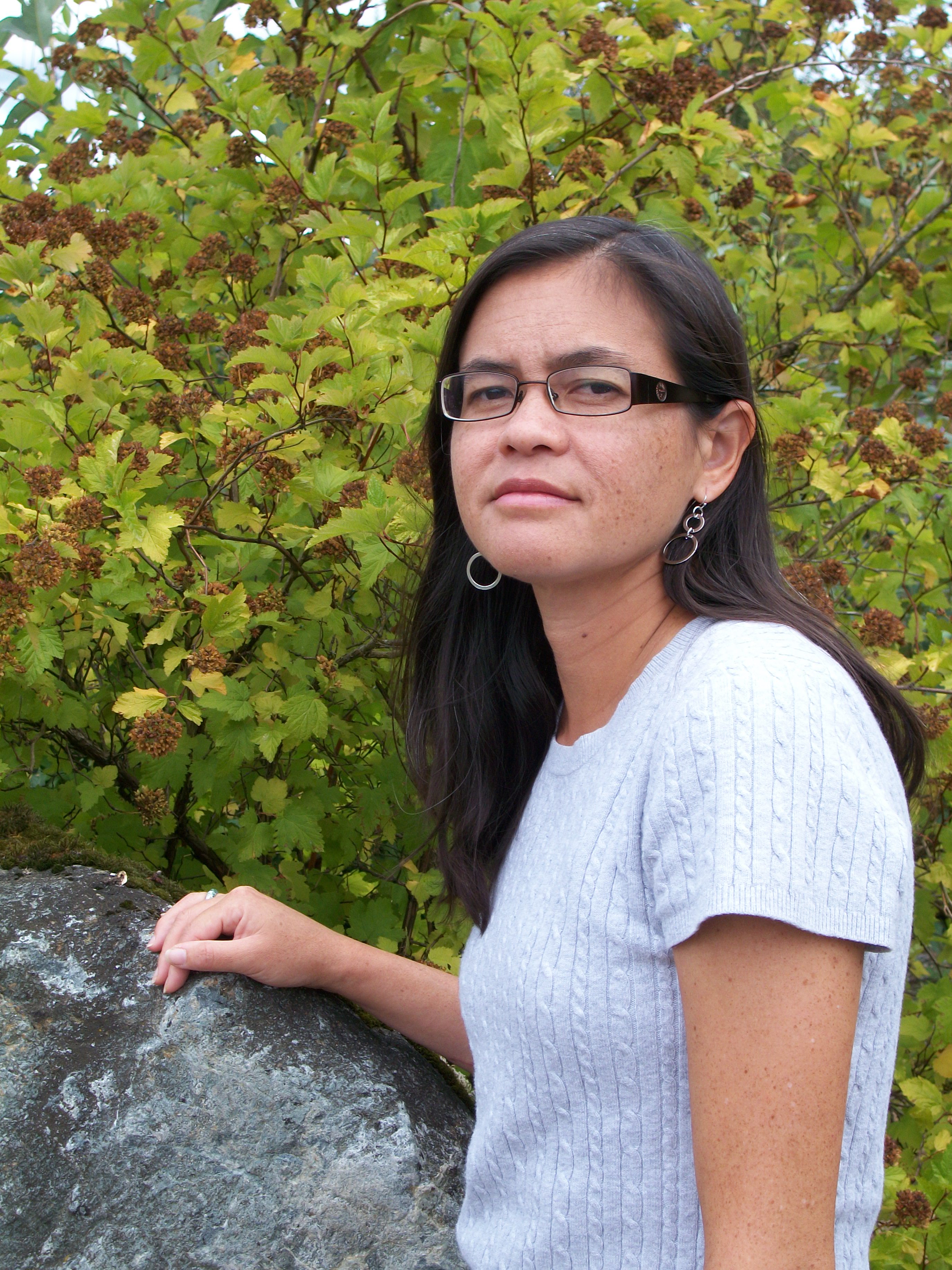
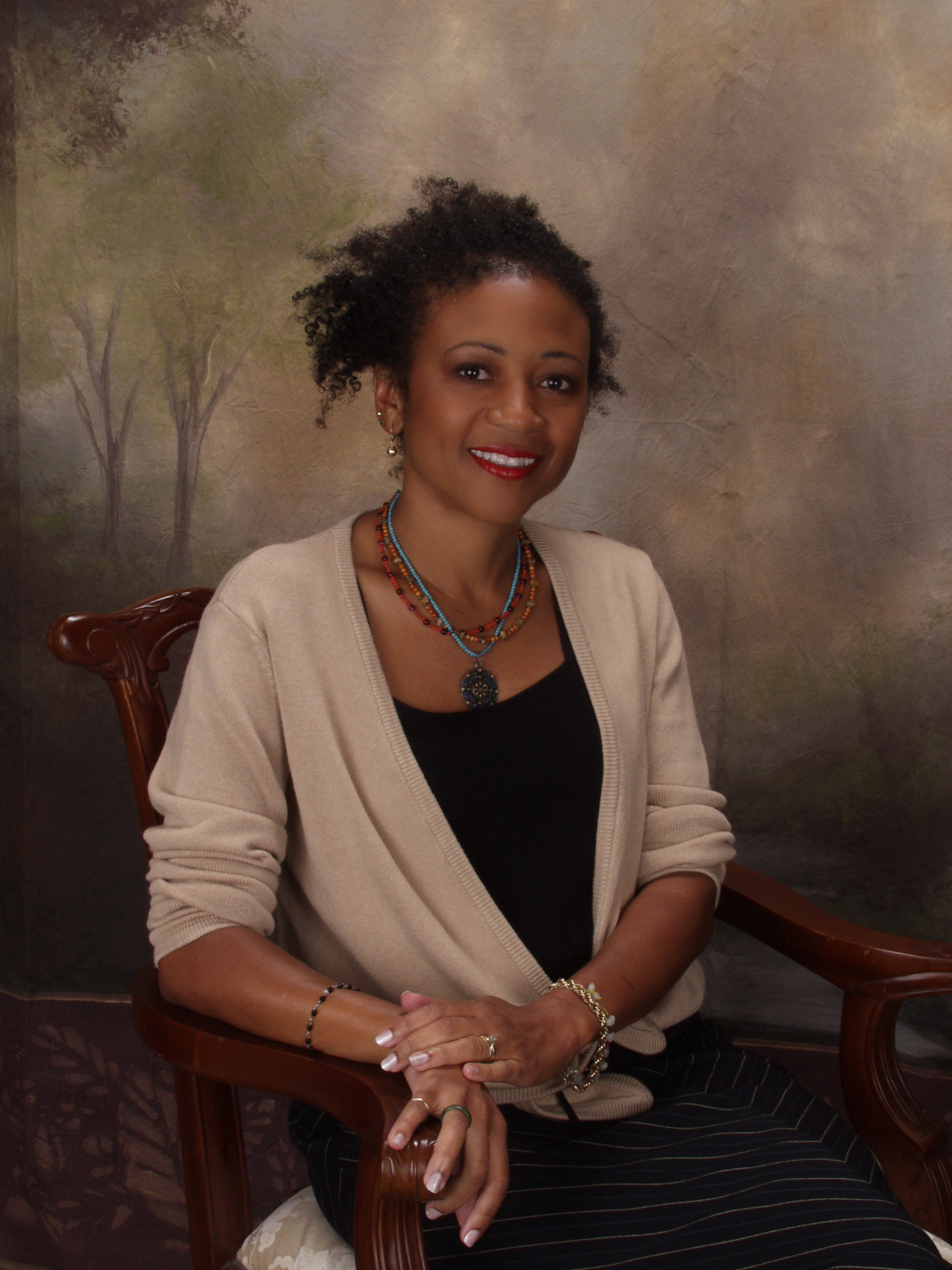
Author Angela Belcher Epps: Telling Your Truth

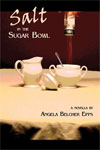
Author Angela Belcher Epps explores what happens when a mother walks out on her children in her compelling novella, Salt in the Sugar Bowl. (Main Street Rag, $10) Epps, an English teacher at an alternative high school, explores the complexities of life— including love, family relationships, loss and abandonment in her work. See her website and her blog to learn more about her writing adventures http://www.thewritingclinic.com/

Please welcome Angela to Write Despite.

NovellaSaltNSugar_Thumb (3)

1) What’s the best writing advice you’ve ever received?

I took workshops with Zelda Lockhart who said I have to be willing to work as hard for my writing job as I do for my supervised job. This was a milestone in my writing life because a part of me was always waiting for some break to happen to give me more time. So I started to push myself harder to have a complete writing career while juggling the job and life I had.

2) Please tell me your favorite three authors.

J. California Cooper, Amy Bloom, and (at this moment) Junot Diaz. But Raymond Carver always comes to mind whenever I’m asked.

3) Briefly describe your journey to publication.

I have written since I was in third grade and wrote for school papers and such. Then I majored in creative writing in undergrad, but I cared nothing about publishing. I only wanted to write. I finally started submitting stories to small literary journals when I attended NYU’s graduate creative writing program and became a more disciplined writer. E. L. Doctorow was my thesis advisor, and he told me he laughed out loud when he read one of my stories, so I gained confidence and submitted to NYU’s literary journal. That was my first real publication. Since then, I generally take a long time writing and revising until a piece feels complete. Salt in the Sugar Bowl, my new novella, features many fictional characters that I have been in relationship with for a long while. An editor heard me read an excerpt about one of these characters at an open mic and invited me to submit my novella; they accepted it. Also from time to time I am inspired to write a nonfiction article, and it usually comes from a deep place that is rather emotional. I usually have successes with such pieces.

4)  Advice for those on the road to publication?

Don’t be self-conscious. That was always my personal demon because it caused me to rethink and censor myself. Write for yourself, and forget about the people who could be looking over your shoulders and chastising you for telling your truth. Get lost in your own voice, and forget about being safe. Your readers aren’t your family, so grow all the way up and be yourself. Then be diligent about rereading and revising your work. Be ruthless in self-editing. Be honest.

5) Do you write every day?

I don’t work on my projects every day, but writing grounds me, so I journal or write something every day—even if it’s a log of what I did, an elaborate “To Do” list, or goals I plan to meet. Tonight I was talking to my husband in a restaurant, and I’d had a glass of wine and was feeling pretty self-righteous and gloating about my sense of integrity. I said that public figures that fall from grace should have to “figure it out or get the fuck out.” I fell in love with the line as it slid through my lips, and I wrote it down when he went to the toilet. Trust me; some character will be expressing that sentiment very soon. Writing is always going on in my head.

6) What are you writing now?

I’m writing a sequel to my Salt in the Sugar Bowl novella because whenever someone has read it, they ALWAYS say, “I need to know what happened to …….” And that is extremely motivating. It is tentatively called Out for a Ride. I don’t know exactly where it’s going, and sometimes that’s a good thing.

OLYMPUS DIGITAL CAMERA