Thematic Elements

Karen and I have both been working on submitting some things for publication lately. ‘Cause what’s the point of writing if no one sees it but your Aunt Audrey who, let’s face it, just doesn’t get your humor?

I’ve been checking out some places to submit a short story I’ve been working on for, uh, about a decade now. What I’ve discovered, or rediscovered since it’s been so long since I’ve done this, is that the right theme can get you everywhere. Case in point, my last published story had been shopped around for about, uh, a decade, when I finally ran across a themed issue that fit it to a sweet little “T.” I sent it there and, what do you know? Print at last!

So I thought I’d share some of the calls for submissions I’ve seen that ask for specific themes from writers. These run the gamut of fiction, nonfiction, and poetry—some are journals, some are contests. And most have deadlines right around the corner. Pick and choose as you like. And please, let us know if your work finds a home in one of them.

Write well, everyone! And give Audrey my love.

—Cathy

COOL THEMED SUBMISSIONS

Sexy story? Macho story?

http://www.hungermtn.org/submit/

Family Matters:

http://www.glimmertrain.com/familymatters.html

shark

Sharks, printers, and other fun stuff:

http://themaliterarysociety.com/submissions.html

The Journey:

http://www.hauntedwaterspress.com/Submissions.html

Women and Nature:

http://fourthriver.chatham.edu/index.php/submit

Memory:

http://www.halfwaydownthestairs.net/index.php?action=submissions

For you radical deviants:

http://zymbolmag.com/submission-guidelines/

For you mermaid poets (no, I’m not kidding–click on “submit”):mermaid

Home

Adirondacks:

bluelinemagadk.com

Southern:

steeltoereview.com/submissions/

Tales from the cubicle:

http://www.workerswritejournal.com/

Spiritual lit:

http://www.lalitamba.com/

Phobia/Philia:

http://fictioninternational.sdsu.edu/submit.html

Race:

http://ravenchronicles.org/raven/rvsubm.html

Progress:

http://www.umt.edu/camas/

Dark & Dirty:

http://www.dirtychaimag.com/2013/08/call-for-submissions.html

Procession, Tandem Bicycle, Ache:tandem bike

http://www.3elementsreview.com/

Welcome Author Patricia Henley

The diverse and accomplished Patricia Henley joins us today to share her thoughts on lucky breaks, practice-practice-practice, and how starting a novel feels like falling in love.

Patricia is the author of two chapbooks of poetry, four short story collections, two novels, a stage play, and numerous essays. Her first book of stories, Friday Night at Silver Star (Graywolf, 1986) was the winner of the Montana First Book Award. Her first novel, Hummingbird House (MacMurray & Beck, 1999) was a finalist for the National Book Award and the New Yorker Fiction Prize. Pantheon published her second novel, In the River Sweet, and it was widely praised in newspapers and magazines. In the River Sweet was a Border’s Original Voices selection and was translated into Polish and published in Poland in 2004. Engine Books published Patricia’s fourth collection of stories – Other Heartbreaks – in 2011.

Here’s what Oprah magazine had to say about Other Heartbreaks:

O Magazine Review

Learn more about Patricia and her work at www.patriciahenley.org or at www.enginebooks.org

Please welcome Patricia to Write Despite.

1. What’s the best writing advice you’ve ever received?

Here are two bits of advice. Pay yourself first — that is, write first thing in the morning. After that, everything feels easy. Pursue wordless recreation. This is even more important now than it was when I first read it thirty years ago because we are bombarded with so many more words now than ever.

2. Please tell us your favorite three authors

Hilary Mantel
Alice Munro
William Trevor

3. Briefly describe your journey to publication. (How were you first published and how has that led to where you are now?)

I first published poetry in journals around Baltimore in the 1970’s. I started writing fiction in 1979 when I was living in the Pacific Northwest. I submitted a short story manuscript to a contest – the Montana First Book Award. I won, and, as a result, Graywolf Press published my first book of stories in 1986. They made sure it was reviewed nationally and that was my lucky break.

4. Advice for those now on the road to publication?

Don’t stop writing. There are plenty of gifted or talented writers who can’t stick with it. They allow themselves to get distracted when it’s not easy. Getting published is about practice, practice, practice.

5. Do you write every day?

When I’m working on a project, yes, I write every day. Once in a while I take some time off. But a week or two without writing and I begin to feel as if I’m living in a black and white movie. I have to write.

6. What are you writing now? (If nothing, what are you reading now?)

I recently finished a memoir – You Will Be Taught To Fly — I do not have a publisher for it yet. I’m writing a YA novel with Elizabeth Stuckey-French. It’s titled Where Wicked Starts. Engine Books will publish it in 2014. I recently started what I hope will be a novel set in Cincinnati. I haven’t made a firm commitment to it yet, but it’s fun. The first 100 pages of a novel feel like falling in love.

Oxford, 2012

A Hundred Visions and Revisions

Prufrock tea

“…time yet for a hundred indecisions,
And for a hundred visions and revisions,
Before the taking of a toast and tea.”

Ah, T.S. You always say it perfectly.

Well, I have a mere 71 pages left in my own revision, and I thought I’d share a few items of interest.

First, I cannot believe I sent this novel out to agents in its previous form. No wonder I haven’t gotten anywhere. Some of these cringe-worthy mistakes were mere fumbles, some were over- or under-written scenes that needed more attention, and some were just plain bad writing that needed to disappear.

And yet—and yet. I did find myself reading through some long segments this time without changing a thing.

Hmm. That was different. And the scenes themselves seem more grounded in reality. These people are interacting in real rooms with their own smells and shadows and noise. They’re tasting real food, driving down streets and pointing out detailed sights along the way. And they are deeper for it. At least I hope. Their backgrounds have been more thoroughly explored and the motives for their actions are more believable.

At least I hope.

The story coming to life on the page has been a long, hard haul. But not long enough, I fear. I once wrote a short story I revised literally hundreds of times and finally published it 10 years later. Ten years! For a short story! I don’t know why I thought getting a 300+ page novel into publishable shape would be any easier.

Here’s a new article on revision from Writers Digest I think is good:

http://www.writersdigest.com/online-editor/how-to-edit-and-polish-your-writing

I hope I’m not still, as this article says, “rearranging deck chairs on the Titanic.” I hope you’re not either.

How goes it out there? Any similar—or wildly dissimilar—experiences to share? Do you find major mistakes or surprising beauty when you revise?

Wishing all of you luck and inspiration. And a lovely toast and tea.

Or coffee, if that’s more your thing.

prufrock coffee

Write well, everyone.

–Cathy

Mistakes We Make

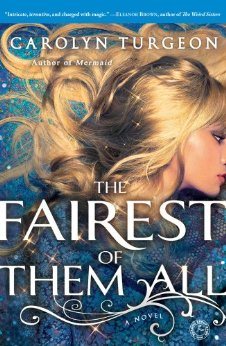
The always informative Women’s Fiction Writers blog recently posted a piece in which author Carolyn Turgeon shared her own novel-writing mistakes. If you haven’t seen it, we highly recommend that you take a look. Turgeon describes some of the attitudes (rational or not) and practices that trip us all up….sometimes repeatedly. Ahem.

Read, learn, and take heart in the fact that you’re not alone!

–Karen & Cathy

the-fairest-of-them-all


Author Angela Belcher Epps: Telling Your Truth

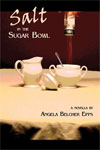
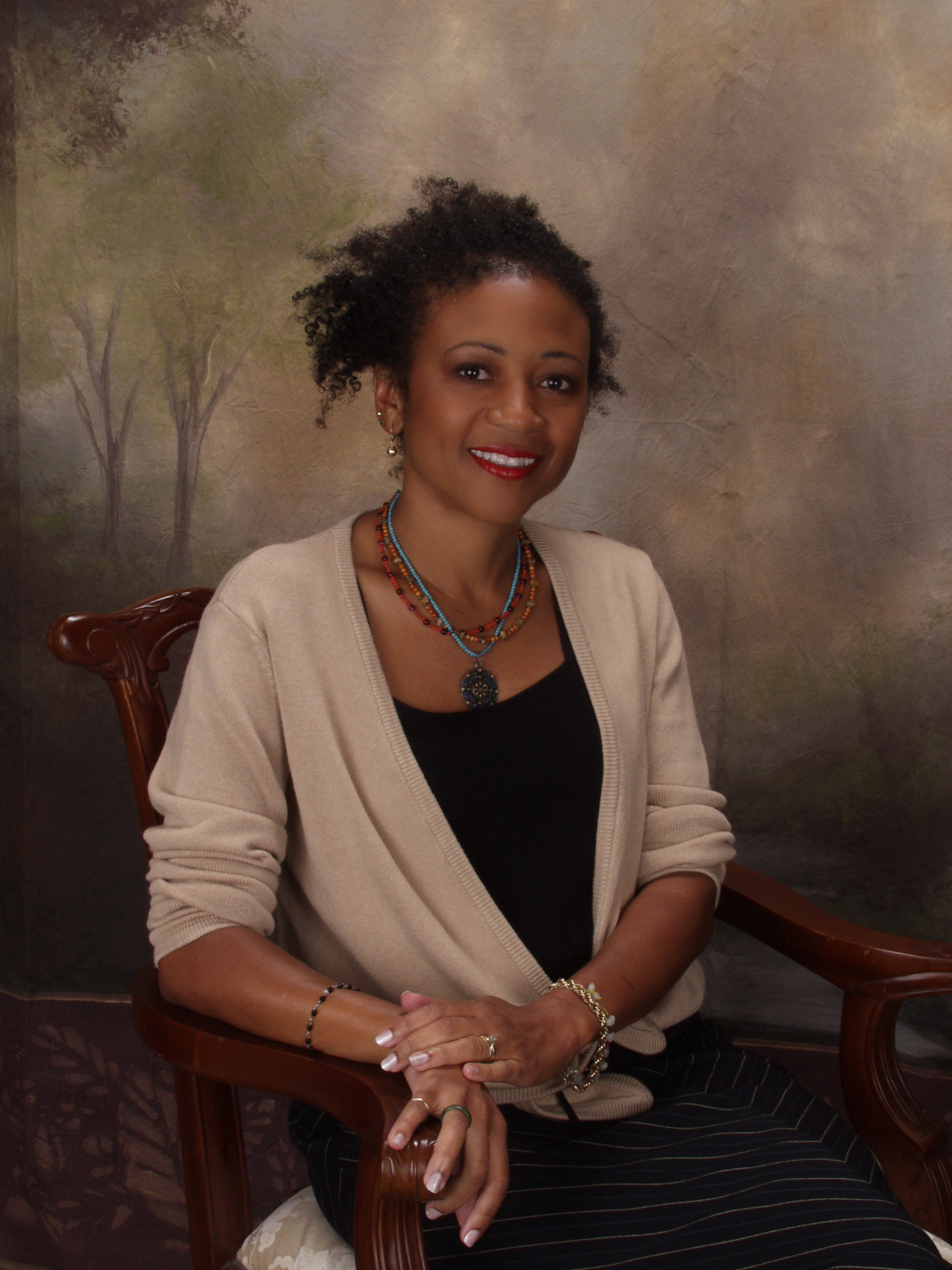
Author Angela Belcher Epps explores what happens when a mother walks out on her children in her compelling novella, Salt in the Sugar Bowl. (Main Street Rag, $10) Epps, an English teacher at an alternative high school, explores the complexities of life— including love, family relationships, loss and abandonment in her work. See her website and her blog to learn more about her writing adventures http://www.thewritingclinic.com/

Please welcome Angela to Write Despite.

NovellaSaltNSugar_Thumb (3)

1) What’s the best writing advice you’ve ever received?

I took workshops with Zelda Lockhart who said I have to be willing to work as hard for my writing job as I do for my supervised job. This was a milestone in my writing life because a part of me was always waiting for some break to happen to give me more time. So I started to push myself harder to have a complete writing career while juggling the job and life I had.

2) Please tell me your favorite three authors.

J. California Cooper, Amy Bloom, and (at this moment) Junot Diaz. But Raymond Carver always comes to mind whenever I’m asked.

3) Briefly describe your journey to publication.

I have written since I was in third grade and wrote for school papers and such. Then I majored in creative writing in undergrad, but I cared nothing about publishing. I only wanted to write. I finally started submitting stories to small literary journals when I attended NYU’s graduate creative writing program and became a more disciplined writer. E. L. Doctorow was my thesis advisor, and he told me he laughed out loud when he read one of my stories, so I gained confidence and submitted to NYU’s literary journal. That was my first real publication. Since then, I generally take a long time writing and revising until a piece feels complete. Salt in the Sugar Bowl, my new novella, features many fictional characters that I have been in relationship with for a long while. An editor heard me read an excerpt about one of these characters at an open mic and invited me to submit my novella; they accepted it. Also from time to time I am inspired to write a nonfiction article, and it usually comes from a deep place that is rather emotional. I usually have successes with such pieces.

4)  Advice for those on the road to publication?

Don’t be self-conscious. That was always my personal demon because it caused me to rethink and censor myself. Write for yourself, and forget about the people who could be looking over your shoulders and chastising you for telling your truth. Get lost in your own voice, and forget about being safe. Your readers aren’t your family, so grow all the way up and be yourself. Then be diligent about rereading and revising your work. Be ruthless in self-editing. Be honest.

5) Do you write every day?

I don’t work on my projects every day, but writing grounds me, so I journal or write something every day—even if it’s a log of what I did, an elaborate “To Do” list, or goals I plan to meet. Tonight I was talking to my husband in a restaurant, and I’d had a glass of wine and was feeling pretty self-righteous and gloating about my sense of integrity. I said that public figures that fall from grace should have to “figure it out or get the fuck out.” I fell in love with the line as it slid through my lips, and I wrote it down when he went to the toilet. Trust me; some character will be expressing that sentiment very soon. Writing is always going on in my head.

6) What are you writing now?

I’m writing a sequel to my Salt in the Sugar Bowl novella because whenever someone has read it, they ALWAYS say, “I need to know what happened to …….” And that is extremely motivating. It is tentatively called Out for a Ride. I don’t know exactly where it’s going, and sometimes that’s a good thing.

OLYMPUS DIGITAL CAMERA

Welcome Journalist Jane E. Dee

Please welcome Connecticut-based journalist Jane E. Dee to Write Despite. Non-fiction, done well, has a special power all its own, which Jane’s writing attests to. Read her latest essay, a touching account of her beloved father’s decline.

More from Jane:

In college I considered myself a “creative writer.” Being a reporter didn’t appeal to me. Then I began writing for a community newspaper in Hartford. My editor at the time was covering local politics. I thought “Good for him,” because I had no interest in writing about politics. Then he sent me to a mayoral nominating convention. I covered politics and local communities for the rest of my career, which was at the Hartford Courant. I’m still with the Courant, where I’ve held a number of positions. And I still consider myself a creative writer, although I approach writing with a journalist’s curiosity, focus and succinctness. Or at least I try.

1. What’s the best writing advice you’ve ever received?

It doesn’t matter how well you write. What matters is what’s inside of you.

2. Please tell us your favorite three authors.

I just finished Meghan O’Rourke’s “The Long Goodbye” and it moved me as a reader, and taught me things as a writer. Ann Patchett and John Updike.

3. Briefly describe your journey to publication.

After writing for a about a year for the community newspaper, Courant editors noticed my work and I began working for them.

4. Advice for those now on the road to publication?

Write and submit. Rewrite and submit. Be professional and responsible in your dealings with editors. It’s a lot like applying for a job.

5.  Do you write every day?

No, but I do make time to write. Deadlines are a great motivator.

6. What are you writing now?

I’m writing a magazine article about a soldier who fought in World War 1.

Zombie Summer

A writer can’t create in a vacuum, as they say. So all of us are avid readers first, writers second.

I suppose. At least I hope.

Otherwise, it would be sort of like someone who’s barely picked up a bat suddenly deciding to be a pitcher for the Yankees, right?

So this summer, thanks to the book club I’ve been in for years—without which I’d never experience the wide range of awesome and sometimes questionable selections that I do—I’ve read Where’d You Go, Bernadette? by Maria Semple, and Gillian Flynn’s Gone Girl. I liked them both. And yes, I realize that’s not much of a summer reading list, but summer’s still in full swing and I’m a slow reader, okay?

Then we read World War Z.

Hole-lee crap.

Let me just say that ever since I had kids, I can’t do books or movies about the apocalypse, torture, prison, or even anything really depressing. I just can’t. It’s too much for my little psyche to bear and it keeps this rabid insomniac up even longer into the night.

And so… this summer. Zombies. And chaos and destruction and people getting their faces eaten off. And children…children!…being attacked and killed and shot and starved and left for dead and…

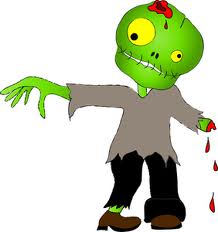
zombie cartoon

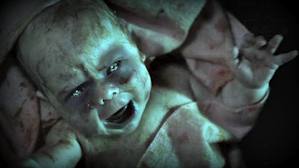
Oh, the humanity. That’s my cutesie zombie picture, BTW, because I didn’t want to show this one that I found from the actual movie (or so I hear–like I would ever see that one):

baby zombie

Sorry. It’s just wrong, isn’t it?

I’m not saying it’s not a good book. It’s very well written, very clever. The descriptions are over-the-top visual and it’s all too realistically rendered.

The thing is, I tend to read at night, when the kiddos are finally in bed and the hubby is on his laptop and I finally have a little time to myself. Now imagine me reading this grisly doomsday tale right at bedtime. No, no, no, I’d told myself from the first page in. This would be a daylight-only selection.

But then I got sucked in, and I kept thinking I’d surely read the worst already and had to be time for the living to kick the undead’s ass at last. And I was behind on my reading. So finally I settled in one night and actually read it.

In bed.

At night.

I was running from zombies all night long.

I finally got up and wrote. Yes, wrote! If you can’t sleep, I figure, you might as well make sure no one else can either. By that, I mean I woke up Spock with my stirrings and so disturbed the doggie by my bed that he had to follow me downstairs and begin snoring under my desk. For 20 minutes, I tried to chase away the demons screaming through my brain and replace them with the much more pedestrian imaginings of my own characters and scenes and dialogue.

Which immediately made me start to nod off.

What are you reading this summer? Anything horrifying? Gratifying? Inspiring? Would love any and all recommendations (romantic comedy, anyone?).

—Cathy

Welcome Author Marjorie Hudson

First, a big thanks to everyone who chimed in on last week’s blog, and congratulations to author Gigi Amateau, winner of our first-ever Write Despite book giveaway! Gigi was randomly selected to win a free copy of Tara Laskowski’s Modern Manners for Your Inner Demons. Gigi has quite a body of work of her own, and has graciously agreed to do an interview and book giveaway on Write Despite as well. Look for her post in the coming weeks.

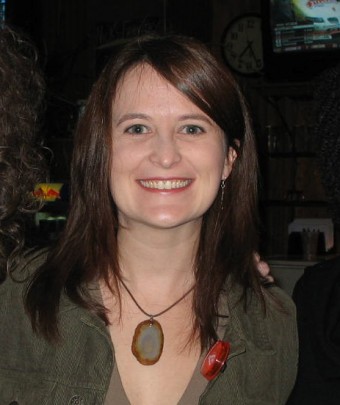
- by Brent Clark (3)
(Photo courtesy of Brent Clark)

Now please welcome author Marjorie Hudson to Write Despite. Marjorie’s fiction and creative nonfiction explore the worlds of outsiders and newcomers, misfits and strangers, in the contemporary and historical South. See her website and her blog about her writing adventures: http://www.marjoriehudson.com

Thanks, Marjorie, for taking the time to chat with us.

   1)    What’s the best writing advice you’ve ever received?

“Do it your way.” – Emily Herring Wilson.  Emily was my editor and mentor for my first book, Searching for Virginia Dare, which was a strange amalgam of history, interview, road trip, memoir, and fiction scene. When I wondered if that kind of strange combination was even allowed, she encouraged me to play. It’s been the best advice, and used it when compiling my story collection too, which includes both contemporary stories and historical fiction.

 2)    Please tell us your favorite three authors.

I read everybody I can get my hands on, and my favorites change from time to time. But some standbys: Henry James, Alice Munro, and Anne Lamott. I know it’s a strange list.

 3)    Briefly describe your journey to publication.

I was a shy writer for many years, hiding behind my job as an editor at National Parks Magazine. One day I got up my courage to ask for an assignment, and after that started writing features. When I moved to North Carolina, it was with the goal of doing more creative writing—it was cheaper to live here and I knew I could experiment more while freelancing. I worked at Algonquin books as a copyeditor for a number of years, soaking in the lessons of fiction writing, then started writing my own stories and sending them out. My first story won a small award. I was overly encouraged by that and started sending everywhere. A lucky break got me my first book contract—Emily Wilson called me out of the blue and asked me to write for her, and it turned into a book, Searching for Virginia Dare, now out in a new edition. Meanwhile, I was writing and publishing short stories. I finally collected some stories on the theme of outsiders in the South, that became Accidental Birds of the Carolinas. It took 20 years for me to refine those stories till they were ready, but it was worth the wait, because the collection got national recognition as a Pen Hemingway Honorable Mention.

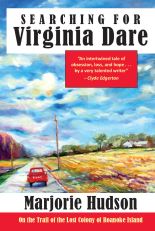
SFVD Cover - 2013 (3) Just this summer my first book came out in a new edition,  Searching for Virginia Dare: On the Trail of the Lost Colony of Roanoke Island, and I got to have a dream come true—keeping a book in print for more than ten years, and adding some exciting new material from my continued adventures. I remain obsessed with the mystery of the Lost Colony, and the legends and stories that continue to emerge from that moment in history, and have sought out new clues while traveling to Rome, London, and the Outer Banks in search of deeper understanding of the story of America’s first English child, part of the Lost Colony of Roanoke Island.

4)    Advice for those now on the road to publication?

Find a writing community, a great teacher, a mentor. Keep the faith. You are the only one who can tell the story your way. You’ll need that writing community while you struggle, and creative work is a struggle, and you’ll want them around too to celebrate with when you publish! No one understands the sweetness of publishing better than another writer.

 5)    Do you write every day?

I schedule writing in. Some weeks I do other things. My favorite method is to take a month or more and write the same time every day. For longer projects, you must fit them around your life, and your job, to sustain them.

6)    What are you writing now?

I’m working on a novel draft. It continues the stories of some of the characters in Accidental Birds.

 7)    What are you reading now?

I read several books at a time. I’m reading Little Raw Souls, a new story collection by my old writing teacher Steven Schwartz. I’m re-reading The Disobedience of Water, by Sena Jeter Naslund, also a story collection. I just finished In the Garden of Beasts, about the American ambassador in Berlin during Hitler’s rise, by Erik Larson. And I’m reading three incredible novel manuscripts by friends, for my writing group.

Q & A—and a Book Giveaway! Welcome Author Tara Laskowski

Tara LaskowskiNeed help navigating the tricky rules of etiquette in some, shall we say, rather delicate circumstances? Tara Laskowski,  author of Modern Manners For Your Inner Demons (Matter Press 2012), has written a profoundly funny and touching guide for properly conducting yourself in situations of adultery, dementia, arson, homicide, and more.

Want a free copy of Tara’s book? Read on.

Tara is senior editor at the online flash fiction literary magazine SmokeLong Quarterly, and was their 2009 Kathy Fish Fellow and writer-in-residence. She earned a BA in English with a minor in writing from Susquehanna University and an MFA in Creative Writing from George Mason University. Her submission of short fiction won the 2010 literary awards series from the Santa Fe Writers Project, and she has work forthcoming or published in several anthologies. Her story, “Dendrochronology” won second prize and publication for the Press 53 Open Awards anthology in 2010. Her story, “Ode to the Double-Crossed Lackey in ‘Thunderball,’” was nominated for Dzanc’s Best of the Web series for 2009, and her short stories “They” and “Like Everyone Else” were recognized by storySouth as notable online stories in 2004 and 2009. Another story, “Hole to China,” was nominated for a Pushcart Prize. A native of Wilkes-Barre, Pennsylvania, Tara currently lives and works in a suburb of Washington, D.C. with her husband Art Taylor, her son Dashiell, and their two cats.

Tara, we’re honored to feature you here on Write Despite. Thanks for answering the following.

1) Best writing advice you’ve ever received?

I’ve got a few, is that ok?

1. Have fun with it. My favorite stories are the ones that I had fun with—whether that was experimenting with form, or inserting some crazy detail or action that made me go somewhere fresh with the plot, or just enjoying my characters and what they say. My time is so limited these days that if I’m dreading returning to a story to work on it, then I should probably just drop it for a while and do something else. Now, all that said, I don’t really find writing very ‘fun’ all the time—it’s hard work, even when you are having fun. But I think just generally, doing something different, not being afraid to play, is good advice.

2. Play to your strengths. Note, this is not the same as, write what you know. By play to your strengths, I’ll give you an example from my writing challenges. For my MFA thesis at George Mason University, I attempted to write a 500-page novel that was a historical love story spanning over several decades. It’s a great story, but it didn’t work, and after more than five years of working on it I realized why—because that kind of story is not my strength. I don’t write long time periods very well. I write short. Short moments, tiny pieces of time. I would’ve done better, perhaps, working on a novel that spanned one day in the life of someone. Or maybe a month. Or a summer. But not 25 years. No, no.

3. This one speaks more to process: You don’t have to write every day. (Sorry, I know that’s the point of your whole blog). But for me, who doesn’t write every day, who cannot write every day, this was a freeing moment. Now, that said, I do try to check in every day, even if that’s just thinking about my characters before bed. I do think it’s extremely important to keep your head in the game, even if you aren’t physically sitting down every day and writing something. So maybe I would just expand that one a little: Write in the schedule that works for you. If it’s every day, amazing. If it’s all weekend, great. Write in the morning? Go for it. Late at night? Sweet. Point is, figure out a schedule that works for you, and to hell with the way everyone else does it. Artists work in different ways, and there is no one formula for success. Just find what works for you and write. Above all, just keep writing.

2) Favorite three authors?

In all of the world? Living or dead? How cruel are you?? I wish I was Jennifer Egan. Does that count? I probably wouldn’t be a writer without J.D. Salinger, F. Scott Fitzgerald, Virginia Woolf, or John Updike. I’m already past my three. I suck at following directions.

3) Briefly describe your journey to publication. (How were you first published and how has that led to where you are now?)
Laskowski-bookI used to write in high school and got a few things published in the literary magazine there. I honestly cannot remember the very first publication I got. I know in college and even grad school there were a few hard-earned publications. In 2009, I won a writing fellowship at SmokeLong Quarterly, and that for me was a huge turning point. I started publishing a lot online and meeting a lot of really amazing and talented people, and after my fellowship was over I became an editor there, and now the senior editor. Being a part of the community in this way has really improved my writing and editing skills, and I am forever grateful for it. Last October, I published my first collection of stories, Modern Manners for Your Inner Demons.

4) Advice for those now on the road to publication?

The same ole, same ole: Read the publications that you are sending to. Please. Why would you want to be published somewhere that you don’t read? Also, every publication has a style, has a vibe about it, and once you start reading it, you kind of get it. It makes your acceptance rate go through the roof if you actually send editors the kind of stuff they like. Sounds crazy, but it’s true!

I think the same holds true for novelists. Researching agents, reading the books they place, is key. Otherwise you’ll never stand out from the slush pile.

5) Do you write every day?

No way. I wish I did. But I do think about writing every day, and I’ve become much more skilled at writing in my head. http://opinionator.blogs.nytimes.com/2012/12/01/the-art-of-being-still/

6) What are you writing now? (If nothing, what are you reading now?)

I’m working on another collection of short stories, tentatively called BYSTANDERS, which is slow going. I’m reading The Magus by John Fowles, which I just started so I can’t tell you if I love it yet. But I’m keeping my fingers crossed.

YOU COULD SNAG A FREE COPY OF TARA’S BOOK, MODERN MANNERS FOR YOUR INNER DEMONS. JUST TELL US WHY YOU’D LIKE TO OWN THIS AMAZING COLLECTION OF STORIES BY POSTING YOUR COMMENT HERE. WE’LL PICK A WINNER BY AUGUST 1!
Welcome Author Leanne Dyck

LeanneJPGLeanne Dyck’s stories are about strong women and the challenges they face. Leanne’s writing has appeared in the Island Writer, Kaleidoscope and Canadian Stories literary journals. In 2011 Decadent Publishing released her dark thriller The Sweater Curse as an ebook. Follow Leanne’s author journey by visiting her blog: http://sweatercursed.blogspot.com

Leanne, welcome to Write Despite and thanks for taking the time to chat with us.

 1)    What’s the best writing advice you’ve ever received?

‘If you keep writing you’ll be published’ –Julia Cameron, The Right to Write
I’ve also benefited from advice gleamed from Steven King’s On Writing and Nancy Lamb’s The Art and Craft of Storytelling.

 2)    Please tell us your favorite three authors.

I have so many. Let’s see, today I’ll choose Will Ferguson, Jane Urquhart and Mary Sharratt.

 3)    Briefly describe your journey to publication.

I’ve always written. When I was in elementary school one of my poems was published in my school’s newspaper. In middle school one of my short stories was published in the community newspaper. All through school and after graduation, I continued to write but mainly for my own enjoyment. After opening a knitwear design business in 2002, I began to write articles for craft magazines. I enjoyed working with editors and was thrilled to see my writing published. Desiring to learn more about the publishing business I decided to self-publish. From 2006 to 2009, I self-published paperbacks, ebooks and an audio book. Self-publishing was fun but I’m a team player so I decided to submit my writing to publishing houses. In 2011, Decadent Publishing released my novella-length thriller—The Sweater Curse—as an ebook.

TheSweaterCurse-BONOReaders wrote:
Stitch by colorful stitch, Leanne Dyck knits a tale of intrigue’ –Laurie Buchanan
‘Leanne Dyck has crafted a tale of exotic and existential as Danish author Isak Dinesen’s’ –Lou Allin

After reading those reviews, I closed my design business and began to write full-time. I’m now seeking a publisher for five manuscripts—this includes The Sweater Curse (which is now novel-length).

4)    Advice for those now on the road to publication?

Believe in the power of your words.
Read, write and submit.
Keep writing fun.

 5)    Do you write every day?

Yes. Some days I work on a new project; other days I work on revisions and some days I just write for fun.

6)    What are you writing now?

As a rule I usually work on at least two projects at a time. Right now I’m working on two book-length manuscripts:  a non-fiction and a general fiction.

 7)    What are you reading now?

In Calamity’s Wake, by Natalee Caple.