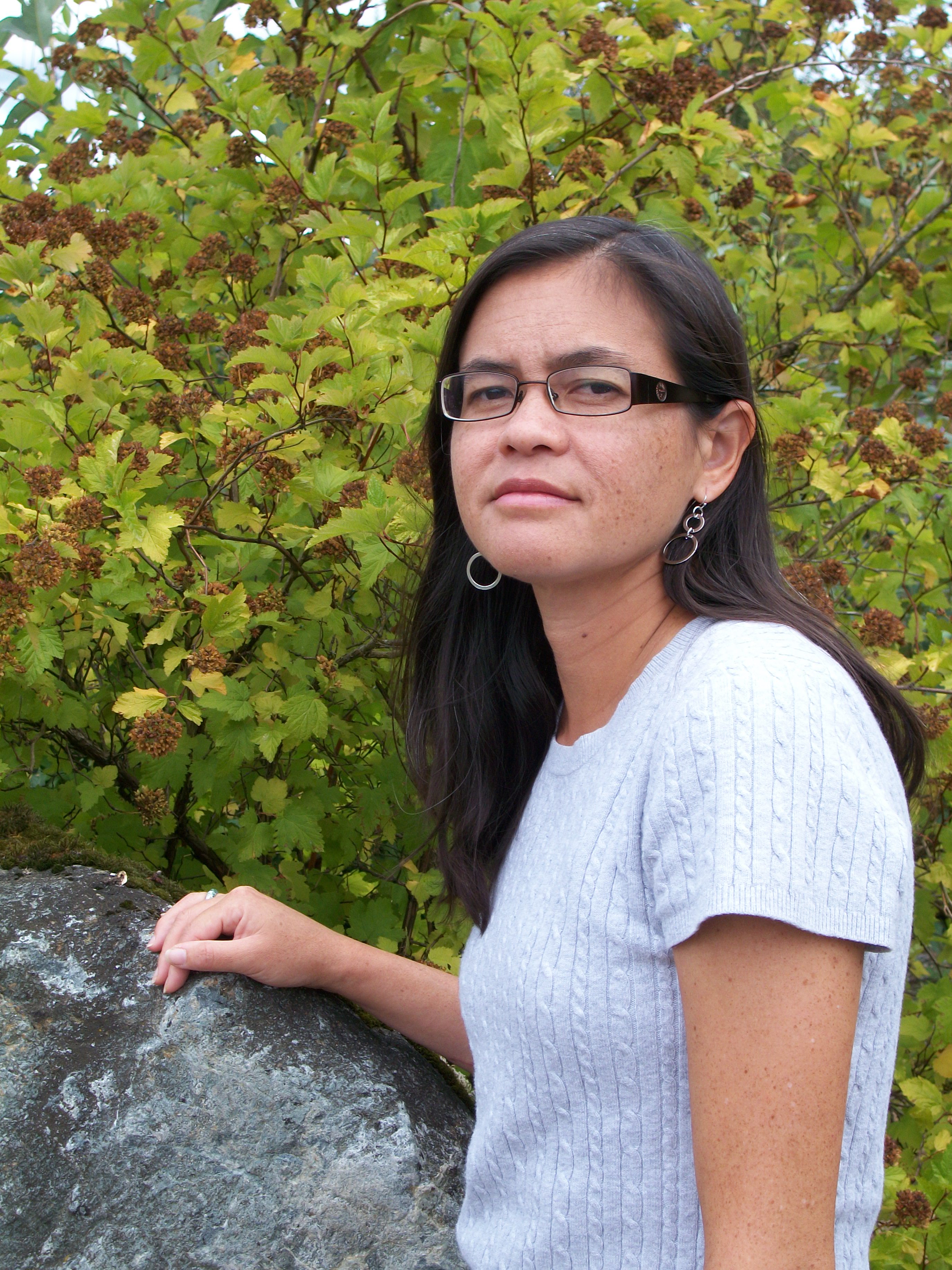
Journalist Jane Dee: WW I Veteran’s Heroic Story Resonates Today

Struggling with her own grief, Connecticut journalist Jane Dee found a sense of healing and connection as she wrote about a young solider from New Haven, who served valiantly in World War I and paid a dear price. Check out Jane’s piece here:

http://www.courant.com/news/connecticut/hc-nhl-soldiers-story-20131111,0,2195034.story

Please contact Jane, if you have–or know about–a veteran’s story to share. And say thanks to any veteran you come across this week, or whenever the spirit moves you. These folks give so much and ask so little in return.

Please welcome Jane Dee to Write Despite.

Screen Shot 2013-11-12 at 9.36.02 AM

My father was a veteran and an Irish lad, as was Timothy Ahearn, the subject of A Soldier’s Story in New Haven Living’s November magazine. A slightly shorter version of the story appeared in the Hartford Courant and on courant.com on Veterans Day.

My father and Timothy also shared the middle name Francis. I found these similarities to be meaningful when I stumbled upon a picture of Timothy’s memorial shortly after my father died this past March. Timothy’s life-like statue stopped me in my tracks and his story soon became a mystery for me to solve, as I tried to piece together how he had died. Immersing myself in his story felt like writing about my father by proxy, and was a way for me to honor my father’s war service. It also put my mind elsewhere, which helped me to cope with my grief, as I had lost my mother to breast cancer 22 months before my father died.

Writing this story took a lot of detective work, as Timothy’s story had never been written before. His descendants had moved away from the area, and the veterans he fought with had died years ago. Although his story was profoundly meaningful to the veterans who raised the memorial to him, his story had been lost to time.

Timothy has been gone a long time, but his story is a story about veterans, for whom I have a much deeper appreciation. In many ways we are becoming a nation of veterans, and Timothy’s story speaks to the struggles veterans still encounter today.

I spent six months researching A Soldier’s Story at the New Haven Public Library, including its local history room, the Connecticut State Library, and the New Haven Museum. I also spoke to veterans and visited the West Haven Veterans Museum & Learning Center, which has a wonderful collection of Yankee Division memorabilia. I obtained copies of Ahearn’s service record from the Connecticut National Guard and corresponded with two members of his family who were very generous with their time and memories. I also read many books on the “Great War.” Two histories written just after the war ended were particularly helpful.

I would be very happy to hear from any of Ahearn’s descendants. I am also very interested in telling other veteran’s stories. I would welcome your suggestions and comments and can be reached at janedee04@gmail.com.

A Matter of Perspective

So we’ve all got different tastes in fiction, but I want to share a new novel that I’ve just finished, The Burgess Boys by Elizabeth Strout. So many aspects of this story are moving, but I was particularly impressed with how skillfully and effectively Strout handles multiple perspectives through a third-person narrator. Take a look, if you’re struggling with the same.

— Karen

burgess

Scary Spaces

Happy Halloween, everyone! I was wondering what would be the scariest picture I could post today—maybe a spider or a blood-covered vampire or Miley Cyrus’ tongue (okay, I can’t help posting that one):

miley cyrus

Yee-ikes. I’ve seen this thing more times lately than I’ve seen my own tongue, and yet it never fails to make me gag.

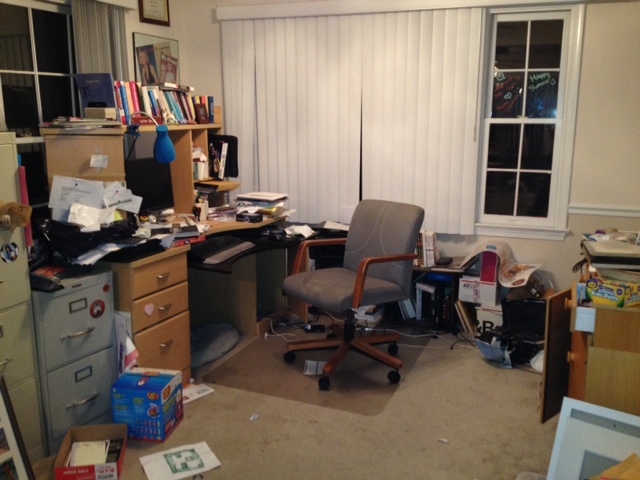
Anyway, here’s the actual scariest picture I could find:

Messy Office

Yep. That’s my office. That’s where I write, think, research, edit, blog, dream. And I think it’s why I’m having such trouble organizing my thoughts lately.

You think????

Can you say Professional Organizer? Life Coach? Get your shit together?

Just looking at this photo makes me want to weep. You too? Hey, try actually sitting here and working in this garbage heap. What kinds of spaces do real writers work in, I wondered. Hmm. Here’s a sampling.

Stephen King’s office:

Stephen King Office

E.B. White’s office:

EB White's Office

(I guess when you have that view you don’t need much else?)

Virginia Woolf’s office:

Virginia Woolf's Office

None of these, though, exactly evoke the kind of space I have in mind. I’ve decided I need only about four things: a desk, a window, a chair, and some walls where I can tack up ideas and inspirational posters, like that cat hanging on a tree branch (Hang in There, Baby—Friday’s Coming!). No, not that one.

Here’s more what I have in mind:

Writing Desk Photo

Sweet, right? I feel this would be very do-able.

Tomorrow is November 1, which means we have only two months left of the Write Despite challenge. I am vowing to not only keep writing for the next two months, but to have an AFTER picture of my office by then too.

Where do you work? Describe, or post a pic for us! I’d love to know, and to get some ideas.

Write well, everyone!

—Cathy

The Freelance Life

It’s almost Halloween, which has me thinking about scary stuff. What could be scarier than trying to convince an underpaid, overworked editor you’ve never met to take you on as a freelance writer? And actually pay you real money?

I know we have some freelance writers who follow Write Despite. This post is for you. If you’ve been freelancing for any length of time, you probably don’t need to read this. You’re living it. Still, it wouldn’t hurt to take a look.

If you’re new to the freelance trenches, click the link below. Forewarned is … as they say.

Freelance_Nation

I’ve been both a staffer and a freelancer for numerous publications. I’m happy to share what little I know if you want to drop me a line.

http://absolutewrite.com/category/the-business-of-writing/

— Karen

Author Letitia Moffitt: “We want success in this thing we do” (And it just don’t come easy)

Letitia Moffitt knows a thing or two about endurance—the physical and the mental kind. Her first novel Sidewalk Dancing is scheduled for publication by Atticus Books in early November. After you read Letitia’s piece below, you’ll want to order a copy. Browse the other great Atticus titles while you’re at it. Small presses are publishing some of today’s best literary fiction, the stuff the big houses are afraid to take a chance on, for fear of angering their corporate overlords.

Right now, read on. Laugh, nod, and get over yourself. We ALL feel this way, at least sometimes. Community can be healing. So join ours and please welcome Letitia to Write Despite.

ATTICUS_SIDEWALK

I write novels and run marathons, and it’s not hard to see the similarities in these endeavors. Both take persistence, both can be agonizing, both will drive you to drink. Gatorade martini anyone? At this point I’m supposed to give you a bit of earnest, heart-felt, inspirational advice: to keep trying, to keep going, never to give up on your dreams or lose sight of your goal because you’ll get there, you’ll succeed, and it will all be worth it, all the frustration, all the setbacks, all the failure.

But I’m not going to tell you that. That’s what Facebook is for. Sooner or later somebody you’ve friended is going to post some motivational aphorism with a pretty picture in the background. A sunrise, perhaps, or some flowy water. Here’s the thing, though: writing and running are the things you do because you don’t need motivation. Success or failure is beside the point. You’re going to keep running until your toenails fall off and your forehead is crusted with salt. You’re going to keep writing until your brain is mush and your liver rots. You do it because, well, you got to do something right? It might as well be this. This is what we do, regardless of the outcome.

But who am I kidding. We still dream. We dream of a big book contract, of qualifying for Boston. We can’t really say success doesn’t matter, because that’s crap. Yes, there are some people who just run around their neighborhoods and never enter a race, writers who just create stories for the fun of it and never bother to check out the litmag scene to see where those stories might go. We don’t want to be like that. We think—we certainly hope—we must aspire to greater things.

I like to think I’ve had moderate success with each of these endeavors. On the running side, nine marathons, two ultramarathons, and any number of halfs, 10Ks, 5Ks, and miscellaneous distances. As for writing, a couple dozen short stories and essays in literary magazines and a novel, appearing next month, from a terrific indie publisher. None of this came easy. I was not a runner in high school—I wasn’t much of any anything in high school, come to think of it—so all this marathonning has only occurred in the most recent years of my life. In those years I’ve managed to injure myself in about sixteen different ways while training for races, and that includes some places you have to scratch your head and wonder how did that happen. When you say running, you usually mean, like, on your legs. How do forearms and teeth fit into that? Trust me, they do. I have the scars and the dental work to prove it.

As for writing, well, if you’re reading this, you’re probably a writer, and I don’t need to tell you about how success in writing doesn’t come easy. Remember the days when rejection came in the form of little slips of paper and not little slips of email, and everyone used to make jokes about wallpapering their room with them? I kind of miss those days.

A running friend of mine told her mother the first time she planned to run a marathon. Her mother’s response: “Why are you doing that? You’re not going to win.” Ouch, Mom. When I was a kid and told my own mother I wanted to be a writer, she said, “Technical writing is very good.” No, Ma, a writer. “They always need people to do technical writing.” Decades, publications, a PhD in English and a book contract later, she still asks me if I’m doing any technical writing. I don’t even think she knows what that means; I suppose she thinks of “technical” as “lucrative” or “practical.” Or maybe just “not a waste of time unless you produce a bestseller that gets turned into a miniseries.”

Oh, I know: the fault lies not in our mothers but in ourselves. We want success in this thing we do, because nobody ever doesn’t want to succeed, and during those times when the effort may kill you, when the setbacks and failures threaten to break you, you have to believe you’re doing it for a reason. It’s too hard otherwise.

Besides, we see those people who really do run just for fun, the bucket-listers, beaming about how they finished their one-and-only marathon in just under 2 days, and we have to fight the urge to get away from them as quickly as possible so other people won’t see you with this loser and think you’re one too. We hear about friends who have “published” a “novel,” and we’re afraid to ask how much they paid the “publisher” to “print” it. Surely we’re the genuine article, not poseurs like those people. Aren’t we?

We run, we write. Sometimes we go into it with our eyes fixed on the prize. The Pulitzer, the National Book, maybe someday the Nobel. Sometimes we go into it absolutely dead certain we will never publish so much as a haiku ever again but we do it anyway, just to keep sane. Sometimes we just go into it. As with running, we just go. We keep on going.

MoffittAuthorPhoto


Interview on Leanne Dyck’s Blog

Hi everyone,

Writer Leanne Dyck was kind enough to feature an interview with yours truly on her blog last week. (Sorry to just be getting the word out, but I’ve been out of town.) Thanks, Leanne, for the chance to answer a few questions and for inviting Karen and I onto your blog. Hope everyone is writing well!

–Cathy

http://sweatercursed.blogspot.com/search?updated-max=2013-10-14T09:00:00-07:00&max-results=1

Author Hardy Jones: Writing is Like Exercise

Hi everyone!

Many thanks to all who commented on Gigi Amateau’s post last week. She has picked a winner for her book giveaway. Congratulations to Kipley Herr!

DSC_0606And now please welcome novelist and teacher Hardy Jones to Write Despite. Hardy joins us today to share his thoughts on the persuasive powers of T. Coraghessan Boyle, the litmus test of revision and the importance of answering the phone when opportunity calls.

If you haven’t read Hardy’s novel “Every Bitter Thing,” please check it out. The writing is powerfully observant, and the story will stay with you long after you finish the last page. Also an essayist and short story writer, Hardy is an associate professor of English and director of creative writing at Cameron University. He also serves as Executive Editor of Cybersoleil Literary Journal.

Please welcome Hardy Jones to Write Despite

FullCover copy

1. What’s the best writing advice you’ve ever received?

I have had many great teachers and mentors, so it is difficult to single out the best writing advice I received. But I want to highlight advice I received from Moira Crone, Thomas Russell, and Randall Kenan. Crone, with whom I studied fiction writing as an undergraduate at Louisiana State University, explained short story form to me and enabled me to write with more control and understanding of the components of fiction—hooks, rising action, climax, falling action, denouement.  While the Aristotelian structure is not the only way to organize a story, learning it was a great help to me as a beginning writer.

My first graduate workshop was with Thomas Russell. It was a Fiction workshop and in it he said: “Many authors write the same story over and over.” We were reading D.H Lawrence, and Thomas Russell explained how Lawrence primarily wrote about the sexual tension between men and women. As a student, Russell’s comment did not make sense, and I did not want to write the same story over and over. As I have matured as a writer, I now understand what he meant. One does not literally write the same story over and over, but an author explores the same themes and tropes in one’s work. For example, I often write about dysfunctional families with an only child and about father/son relationships.

In a Creative Nonfiction workshop at the University of Memphis, Kenan said: “I’ve come to believe that there is enough time to write everything.” This comment stuck with me because I have a bad habit of pressuring myself and often feeling rushed.

2. Please tell us your favorite three authors

Picking only three is difficult. Some authors are my favorites for specific lessons I have learned from reading them. Others are my favorites for that reason plus sheer enjoyment. The Brazilian fiction writer Jorge Amado fits both of those criteria. The first work I read by him was the novel Dona Flor and Her Two Husbands. I am in awe of how his prose blends erudition with humor and bawdiness. Next is the nonfiction author Joseph Mitchell. I appreciate his ability to write about marginalized peoples and not make them into caricature. Third is the Nigerian author Chimamanda Ngozi Adichie. Her writing possesses an emotional intensity that I admire. A fourth author I want to mention is T. Coraghessan Boyle. In a sophomore literature course, I read his story “Greasy Lake,” which I enjoyed and then sought out more of his work. I read his story collections If The River was Whiskey, The Descent of Man, Without a Hero and his novel World’s End.  He is the writer who convinced me to be a writer. His subjects of teen angst and rock-n-roll, writing infused with a few curse words, and the comedic approaches to history and storytelling grabbed me.  By the time I finished World’s End, I had decided to major in English and fling myself into writing.

3. Briefly describe your journey to publication

My first publication was a short story titled “Moving Day,” and it appeared in the LSU undergraduate journal The Delta. I wrote it for an undergraduate fiction workshop I was taking with Moira Crone. She had given us the assignment to begin a story with the words “I remember.” When I sat down to start the story I didn’t know what I was going to write. I sat in front of the computer for a few minutes repeating “I remember” and in what seemed like an unconscious act, I placed my fingers on the keyboard and typed: “I remember when Mama told us we were moving out of the trailer park.” With that sentence, a young boy’s voice took over and led me to write eight pages.

For my novel Every Bitter Thing, I wrote the initial draft between August 2000 and May 2001. The opening scene came out in one sitting. I had been kicking around the opening line, “Dad was always friends with butchers,” in my head for about three years, and one afternoon, frustrated with something else that I was writing, I started a new file and typed out the sentence. The rest of the scene came out in about forty-five minutes in one of the moments that writers live for: the characters, the setting, the actions, even the dialogue simply flowed out. After such an auspicious start, I was unable to write for several weeks, and when I did return to the manuscript, I fluctuated between continuing with it as fiction or making it into a father/son memoir. Once I had written fifty pages, I decided to go the route of fiction. By releasing myself and the characters from what I perceived as the constraint of memoir, I was able, ironically, to be more truthful about the father’s bigotry and the protagonist’s sexual abuse by an older boy.

While the novel’s initial draft took nine months to complete, it took seven years of revising and submitting the manuscript before it was accepted for publication in April 2008 by Black Lawrence Press.  At that time, my wife and I were in the process of buying a house and I was tired of the numerous phone calls from banks and finance companies. I was on the phone with a colleague when a beep let me know I had another call.  Assuming it was probably another loan officer trying to pressure us, I decided I wasn’t going to click over. Luckily my colleague was more level-headed and said I should take it; the call, he said, may be important. He was correct. It was Black Lawrence Press’ then Executive Editor Colleen Ryor saying that they had decided to accept Every Bitter Thing. After all those years of work on the manuscript, I almost did not answer when opportunity called.

4. Advice for those now on the road to publication?

Never submit something that has not been revised numerous times and start small. Don’t start at the top with a prestigious journal that primarily publishes established authors. Doing so sets one up for disappointment, and the writing and publishing life is full of that. Normally, young authors are working in short genres: poetry, short stories, and personal essays. Therefore, journals are a perfect match. With an established track record, an author then has the “credentials” to submit to larger journals, agents, and presses.

5. Do you write every day?

I wish I did. When I was composing Every Bitter Thing, I did write every day for those nine months it took to complete the initial draft. With my teaching schedule, I try to work in a few minutes when I can between classes and meeting with students. In that way, I follow the advice you give on the blog: twenty minutes a day. That is good advice, because writing is like physical exercise: your muscles become stronger as you work regularly, and eventually one is maximizing those twenty minutes. When I feel as if there is not enough time to write, I like to use the image of the poet William Carlos Williams, who wrote in between seeing patients in his medical office. That writing schedule worked out well for him.

 6. What are you writing now?

Currently I am revising a memoir, People of the Good God, which is forthcoming from Mongrel Empire Press. I have a short story collection, Grandmother’s Coconut Tree, for which I am seeking a publisher. The stories are set in Southeast Asia and the American South. The ones set in Southeast Asia are flash fiction and are more experimental. I am also working on a personal essay collection, Resurrection of the Unholy, which is about my childhood and growing up in the South during the 1970s and 1980s with a bigoted sexagenarian father. My father was born in 1917 in east Texas and he never let go of the racist ways he was taught and witnessed growing up. As a child, however, I felt that something was not right with his attitude towards African-Americans, and as I grew I knew that his attitude and words were wrong.
Welcome Author Gigi Amateau–And Win a Copy of Her New Book!

gigi-amateauGigi Amateau’s first book for young adults, Claiming Georgia Tate, was published by Candlewick Press in 2005. That title was selected as a New York Public Library Book for the Teen Age and hailed by author Judy Blume: “It’s rare and exciting to discover a talented new writer like Gigi Amateau.” The Wall Street Journal called the book “an ambitious push into the young adult market.”

She is also the author of A Certain Strain of Peculiar, a Bank Street College Best Children’s Book of the Year, and Chancey of the Maury River, A William Allen White Masters list title for grades 3-5. Come August, Come Freedom, her first work of historical fiction, was selected by the Southern Independent Booksellers Alliance as a Fall 2012 Okra Pick, chosen by Bank Street College as a Best Children’s Book of the Year, and by the Virginia Library Association as a Jefferson Cup Honor book. In 2012, Gigi received a Theresa Pollak Prize for Excellence in the Arts from Richmond magazine.

Her fifth novel, Macadoo of the Maury River, macadoo-coverwas released by Candlewick Press in August 2013. A copy of it can be yours by posting a comment here on Write Despite.

Gigi was raised in Mechanicsville, Virginia, and lives with her husband and daughter in Richmond. Here is a brief Q&A.

1. Best writing advice you’ve ever received?

Judy Blume gave me two great pieces of advice:

1. Read your work aloud when revising.

2. Banish the thought that you will run out of ideas.

2. Favorite three authors?

Issa. And, right now, I’m catching up on all of my Edward P. Jones and am also fairly obsessed with Susann Cokal’s new YA novel, The Kingdom of Little Wounds. I’ve loved everything ever written by Silas House. And, Jacqueline Woodson, Edwidge Danticat, Belle Boggs, Meg Medina. And, see above, I’ve loved Judy Blume for about forty years. Oh, and Eudora Welty. Can’t forget her.

3. Journey to publication? (How were you first published and how has that led to where you are now?)

When I “finished” (or so I thought!) my YA novel, Claiming Georgia Tate, (it was actually called something different) I was pretty content that I had a beginning, middle, and an end and characters that I enjoyed writing. I didn’t really have the constitution to send the manuscript out, but I did share with a close friend. I had ZERO publishing contacts but it turns out my friend did. So, folks started sharing the manuscript, which eventually led to representation by Leigh Feldman and publication by Candlewick Press. Since then, I’ve learned a lot and grown a lot. Best of all, I’ve met many kind and generous people along the way and made some great, lifelong friends!

4. How and why did you decide to write YA books–what do you love about it?

I didn’t know a lot about YA when I started writing Claiming Georgia Tate in 1996. I just wrote the story that was swirling around in there, which is still how I write. I have a bunch of stories that may or may not be for children. I don’t really worry about an age group or market until revision is well underway, and until after I’ve gotten a handle on what I’m trying to say. Of my published books, I’d say two are YA and three are middle grade. What I enjoy about writing for young readers is placing a kid at the center of the story and giving those characters power and voice in their own lives.

5. What’s up with the horses, and how did they make their way into your writing?

I just love horses, that’s all. Everything about them. Their big eyes that reflect a better you. How fuzzy they get in the winter time. The way the smell. How brave they are. How aware they are of every motion and emotion. I don’t know. How does the sky or my grammy or a kiss make it into my writing? How do birds and trees and mountains? Just. Well, there they all are making me feel alive and not alone.

6. Advice for those on the road to publication (i.e., tips on snagging an agent)? 

The advice that I try to follow for myself regarding craft is to give myself intentional periods of pause and reflection to look around inside my mind and my body (yes!) because there are LOTS of stories that remain hidden when I’m so distracted with running around doing things.

My advice for becoming published is to identify one or two writing communities or professional associations that feel welcoming toward you and resonant with your work. Join up. Learn. Meet people. Take advantage of opportunities to connect with publishing professionals. For example, I belong to the Authors Guild, AWP, James River Writers, the Society of Children’s Book Writers & Illustrators, Southern Independent Booksellers Alliance, and WriterHouse.

7.  Do you write every day?

I do. I don’t always work on the same manuscript every day. I hop around to different projects.

8. What are you working on now?

Lots of fun stuff! I just released an app for iPad based on my book, Chancey of the Maury River – a totally a fun project with a brand new horse story and a barn dress-up game. I’m finishing up the third installment of the Horses of the Maury River middle grade series (the second, Macadoo of the Maury River is just out). I’m about seventy pages in to a historical novel. I’m researching two other books and writing little pieces of those. Revising a retelling of a colonial folk tale. And, working on an essay about Atlantic Sturgeons and Milwaukee Bucks’ star Larry Sanders.  I know, right? I don’t quite get that one yet myself. Just going with it for now.

YOU COULD WIN A FREE COPY OF GIGI’S BOOK, MACADOO OF THE MAURY RIVER. JUST TELL  HER WHY YOU’D LIKE TO OWN IT BY POSTING YOUR COMMENT HERE. GIGI WILL PICK A WINNER BY OCTOBER 1!