Hi All,
Just a quick note. I want to share this post from Women’s Fiction Writers.
Author Marybeth Whalen discusses “moving forward in this writing life” and why “some day” is today.
We can all relate, I’m sure.
Write well,
–Karen
Hi All,
Just a quick note. I want to share this post from Women’s Fiction Writers.
Author Marybeth Whalen discusses “moving forward in this writing life” and why “some day” is today.
We can all relate, I’m sure.
Write well,
–Karen
In my continuing quest to rid my manuscript of unnecessary flashbacks, I’ve come across a useful distinction. Most writers who’ve gone the workshop route—never mind an MFA program—have probably heard this already. I’ve probably heard it, too, somewhere along the line. But for whatever reason, I’ve gained a new appreciation.
“Backstory” versus “full blown flashback scene”
There’s nothing new here. We all write this way instinctively, dispensing background material that’s necessary to informing the present story in deft segues between scenes. I think what I’ve realized more fully is that most of the past can—and should—be handled this way, and it should be short and sweet.
Now, I’m not blowing up every flashback in the book, but I am killing any that aren’t absolutely essential to understanding/appreciating in greater depth the storyline and the characters involved. I’ve had to delete a few very nice flashback scenes, touching scenes with good writing. While I liked—in some cases REALLY liked them—they were taking the story off on tangents (albeit pleasant ones) that ultimately just slowed it down.
Slowing down a story is risky business. Readers want to know what’s going to happen, what comes next? Detours, I’ve learned the hard way, are dangerous.

Just a little something to think about on a Monday morning.
–Karen
 Eve Fisher began writing in elementary school, and her mystery stories have appeared regularly in Alfred Hitchcock Mystery Magazine for the last 15 years. She has published a novel through Guideposts’ Christian Fiction Series, Mystery and the Minister’s Wife: The Best Is Yet to Be. Eve is a retired assistant professor of history at South Dakota State University, and still gives the occasional lecture. The two professions, she says, work together quite nicely.
“So many of us historians are also mystery fans/writers, etc.,” she says, “because history is all about solving mysteries, very cold case mysteries, with limited evidence, almost no eye-witnesses, and a whole lot of deduction.”
Eve currently lives in a small town in South Dakota with her husband. She was kind enough to answer a few questions for us about the writing life.
1. Best writing advice you’ve ever received?
Probably what I read of Anne LaMott—Allow yourself to write shitty first drafts, i.e., just keep writing. You can always edit later.
2. Favorite three authors?
Oh, there’s no such thing. I read OBSESSIVELY:
Modern authors: Maeve Binchy, Tim Winton (Australian guy, really good), and Susan Howatch; also Patrick O’Brien
Mysteries: Agatha Christie (no brainer there), Tony Hillerman, Margaret Frazer, Colin Dexter, Donna Leon, M. C. Beaton
Comedy: James Thurber, Dorothy Parker, Robert Benchley (all American, all 1920s); also E. F. Benson, Nancy Mitford, and Angela Thirkell (all Brits)
Non-fiction History: Barbara Tuchman, Jonathan Spence, Shelby Foote, Liza Picard
Non-fiction Other: Michio Kaku, Thoreau, Peter Matthieson
Asian Literature: Lady Murasaki Shikibu (I have three translations of her “Tale of Genji”), and her sisters
Victorian Literature: Charlotte Yonge, Charles Dickens, Mrs. Henry Wood; also Coventry Patmore, John Keble, the Brownings
3. Briefly describe your journey to publication. How were you first published and how has that led to where you are now?
I got published the first time with pay when I wrote, and sent in cold, a story to Alfred Hitchcock Mystery Magazine called “Grown-ups are All Alike.” Amazingly, they picked it up out of the slush pile and published it. Since then, I send them my stories first, and they’ve published 19 so far. If they pass on it (and they do, more often than I care to admit) I send it to other publications. Thanks to AHMM, I also got a “gun for hire” job writing a novel in the “Mystery and the Minister’s Wife” for Guideposts. Thanks to AHMM, other editors look longer at my work. My website is: http://evefishermysteries.wikispaces.com/
4. Advice for those now on the road to publication?
Read, read, read. Write, write, write. Repeat. Remember, you have to have something written in order to get published. (Some people ask me who they can send an idea to – !!!!) Polish a lot, but don’t go crazy about it. Read, read, read. Write, write, write. Repeat.
Also, never send your story/poem/play in to any contest or publication that asks you for money. It’s a scam. They already know who they’re going to publish, and what you’re doing is paying their salary for them. Save your money and buy more books, paper, better software. Go ahead and send your story/poem/play to the magazine/theater you want to see it in. They just might buy it. That’s what I did.
5. Do you write every day?
Yes. Come hell or high water. And I try to always carry a notepad around (especially on vacation) so I can jot down notes.
6. What are you writing now?
Working on (as usual) three stories at the same time. All mysteries, one set on a cruise, one in 1940s Vienna, and one in my fictional small SD town of Laskin. When I get stuck on one, I move on to another. And I participate in a mystery writer’s blog, Sleuthsayers — http://www.sleuthsayers.org/ — every two weeks. It’s a crazy life, but it keeps me off the streets.

As promised, here are some of the best takeaways from the “character motivation” workshop I attended at the Writers in Progress studio last weekend. It was an invaluable experience. Prompted to push beneath the surface when it comes to character goals, I had a break through moment of clarity concerning my major character. At long last, I figured out what this guy is really after. The dots were already there, sprinkled throughout the manuscript. I just needed to connect them and pull the resulting strand to the surface.
I’ve already begun my rewrite. And the difference that truly, deeply understanding this character and what he wants is transforming this story, bringing it to a whole new level, more deeply felt, clearer and with a much more satisfying ending.
I’m counting my blessings right now.
Of course every story is unique and so are our break through moments. So in general here are some broad tips from the workshop that I think will work for anyone writing for fiction:
Okay, enough.
We want to give a shout out here to Elizabeth, the winner of our coveted candy cane pen prize for sharing some of the worst lines we’ve ever had the pleasure of reading.
We’re also gearing up for our 6-month anniversary at Write Despite on July 1. Thanks to all of you who are following us. Please spread the word. Over the next six months, we’d like to feature more guest posts and short Q&A conversations with writers. Let us know if you’d like to take part.
–Karen
I’m attending a writers workshop program on June 1. Check out the host studio tucked away in the lovely hills of western Massachusetts, http://doriostermiller.com/writers_in_progress.cfm
If you’re ever in this neck of the woods (and you’re a writer), check out Dori’s studio. Great writers (who are also super nice people) come together here to help each other. I took a workshop a couple of years back and loved it. Here’s the course I’m taking this time around:
The Psychology of Strong Characters, with Jacqueline Sheehan
The most memorable characters are driven by powerful forces of fear and desire. Jacqueline Sheehan is a New York Times bestselling author and psychologist who applies basic psychology to all her characters. In this One-day workshop, you’ll learn to challenge your characters to take the necessary actions that reveal the white-hot core of your story. It’s a tall order, but that’s what all good stories are essentially about.
This couldn’t come at a better time for me. As I write my way further into the new book, issues of how compelling and sympathetic the main character is have taken center stage. It’s been a while since I sat in a roomful of strangers and discussed my (and their) work. And while not all the points discussed will apply to me, I always leave these things with at least a few priceless nuggets of insight that help me look at my writing in a new way. I’ll post my best takeaways to share with you all next week.
Until then, write well.
–Karen

So Karen and I were talking about bad lines we’ve written, from mere foibles to grand catastrophes. We’ve been swapping short stories since the ‘90s, so we have a wealth of crap to draw from. “Remember that horrible story you wrote about the dead dog?” We howl with laughter. “Remember the one about the girl whose mother was a hooker?”
So here are a couple of our worst. Karen once wrote a story about a guy traveling with his dog. It’s a very somber, low-key, sad piece. Then he walks into a convenience store and thinks:
“And then I spot it behind the cashier: The Slush Puppy Machine!”
And from me, in a story about a kid having a bad day at school:
“He leaned his head against his locker door, barely resisting the urge to bang it.”
These were stories we submitted to workshops, so to know others actually read them is, to say the least, humbling. But, hey, here are some that actually made it into print:
From E.L. James, 50 Shades of Grey:
“Mentally girding my loins, I head into the hotel.”
And:
“The muscles inside the deepest, darkest part of me clench in the most delicious fashion.”
AND:
“My inner goddess is beside herself, hopping from foot to foot.”
From Charlene Harris, Definitely Dead:
“The birds were tweeting and chirping, the bugs were buzzing, and the pollen-heavy air was full of peace as if it were yet another plant emission.”
And:
“Lindsay was able to reduce boys to drooling idiots  and keep them trailing after her like stunned hyenas.”
From David Baldacci, The Whole Truth:
“To say that this hit the earth like a molten-lava tsunami would have been the grossest of understatements.”
From Claire Delacroix, Unicorn Vengeance
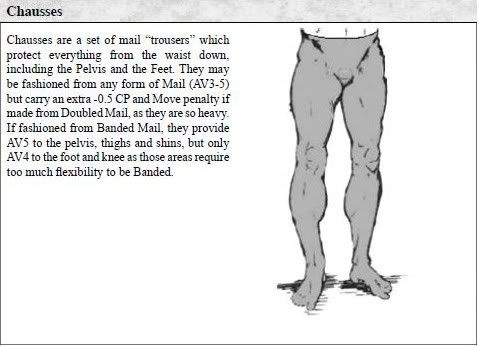
“The feel of her tongue in his ear was enough to send Wolfram bursting from his chausses.”
And a page and a half later:
“The sight of her creamy flesh was enough to make him burst his chausses.”
From Jamaica Layne, Knight Moves (in which a knight is asked by a woman how he knew she’d had multiple orgasms):
“Your lady-softness told me herself when she was wrapped round my codpiece.”
Still want more?
Google “worst lines” and “Dan Brown.”
I’d post more of my own, but I’m too busy sewing my husband’s chausses—like a stunned hyena.
So I’ll ask you. I know we’re not alone in this. Give us the worst line (or lines) you’ve ever written—from a novel, a story, an essay, a lyric—hell, a book report for school. Come on, you know you’re proud of yourself. Post them here. We’ll send the winner a candy cane pen!
–Cathy

So I’m taking a somewhat different approach this time around. Eighty pages into the new tome, I’m rewriting. It’s a departure from the process I used with my first book, when getting that initial draft pumped out took precedence.
I’m taking this as a good sign. I’ve learned from my past errors. This time, I’m mindful of avoiding the sort of mistakes that I made in the first book. I’m keeping a much tighter rein on the narrative and streamlining “backstory” information judiciously into the flow. I haven’t written a single flashback. Not that there’s anything wrong with flashbacks… I think it’s just a matter of pacing and balance.
This early rewrite is just a structural sweep, a way to keep the train on the track. I’m not shooting for “finished draft” or anything crazy like that. Anyone else care to share lessons learned in early projects that benefitted later ones?
–Karen
If I haven’t made this clear yet, novel #2 is requiring more thought and research than I’d planned.
That’s another way of saying the overwhelming problems of this first draft have left me with so many dead-ends that I now have one hell of a case of writer’s block. Also, I’ve gotten yet another rejection of novel #1 that pointed out some problems I think (I desperately hope) I can solve. So I’ve embarked on yet another rewrite of that poor, much-abused piece, which I’m kinda excited about actually. I feel like maybe, just maybe, I can actually FIX it.
Anyway, this led to a discussion with Spock (the hubby), who asked me the other day how the writing was going.
“It’s going,” I told him. “I’m in the throes of a major rewrite.”
He frowned. 
“A new version?”
“Huh?”
“Is it a new version of the book, or are you changing the current version?”
“I have about 20 versions. Of course it’s a new version.”
“Then it’s not a rewrite. It’s a Parallel Path.”
Oh sweet mother. More Spock-Speak.
“And what does that mean?” I asked.
“It’s something we say at work.”
“Of course it is.”
“It’s a business plan where two separate paths diverge from a common starting point. So there’s no one ‘final’ version of a document, but separate ‘current’ versions that can lead off in any direction you like without affecting the original.”
I stared at him. “So basically, you Save As.”
He stared at me. “Well, yeah.”
“So I can change a character from a girl to a guy. I can switch point of view from ‘I’ to ‘she’ on a whim.”
“That’s right.”
And part of me was thinking, well duh. That’s what a rewrite is. But then again, it’s kind of freeing to view it this way. Like the sky’s the limit. The road is full of green lights ahead. And this is all documented in a business plan.
I started to think about my rewrite, and how it’s comforting, even exciting to begin a new version and take it where I want it to go.
“It’s a form of risk reduction,” Spock continued. “Also called variants. They come from a development plan that was started back in…”
“That’s enough, Honey.”
“Okay.”
I did some research on the subject. Turns out Anne Tyler

(oh, how I adore her) loves the revision process and rewrites her novels in longhand. D. H. Lawrence wrote his second drafts without even looking at the first ones. “Books aren’t written,” Michael Crichton says, “they’re rewritten.” Stephen King says you should first tell your story to yourself, and then tell it to a reader: “Write with the door closed, rewrite with the door open.”
Friends groan when I tell them I’m rewriting this book again. But, like Anne, I LOVE rewrites. How often do you get to change the past? To dress someone in a different pair of shoes, send people off to live in a different region, choose a different friend or spouse or co-worker or soulmate for them, to let them say something the way you wished they’d said it the first time, or to take back what they shouldn’t have said at all?
For me, rewrites rock. And the best part is, I’ve already done the hard stuff. The stress of worrying whether a real story is there—the very thing that gives me writer’s block—is over. All I have to do is make that story stronger, more vivid, more nuanced and wise.
Easier said than done, of course. And tomorrow I may be heading back to that first draft of novel #2 again.
But not today. Today, I’m taking the parallel path, reducing risk…uh, embracing my variant…? If it doesn’t work out, I’ll just Save As one more time.

Am I alone in this? Do you rewrite despite? Please–enlighten me with your own business plans.
–Cathy
The flashback is dead. It’s at least on life support. Readers don’t want excursions into the past, complete with scenes and dialogue, to learn about a character. As writers of fiction, we’ve got to stick to the storyline.
I guess this is pretty sound advice. Flashbacks handled poorly just interrupt the narrative train and slow things down. But I have to say that handled well, I think they can be magical, blurring the line between past and present and showing how one leads into the other. Check out Dennis McFarland’s novel, The Music Room, one of my favorites. It’s chockfull of flashbacks, and they’re as memorable as the storyline, if not more so.
But flashbacks do present myriad structural challenges, and that’s why I’m keeping away from them in my new project. A workshop teacher once told me that flashbacks are evidence that the writer isn’t able to “bring the past into the story in a natural, seamless way.” This isn’t always the case, of course, but I think it’s probably dead-on in many instances.
A novel’s structure, this teacher said, includes scenes and summaries, with the latter serving as passages between scenes. Summaries are a way of telling events. They can be used to bring information from the past into the story. But they are NOT flashbacks. Janet Burroway’s Writing Fiction has more to say on summaries. Check it out, if any of this is resonating with you.
–Karen
Oh, the humanity. We haven’t seen this kind of drama at our house since the potty training weeks. Or maybe the newborn, sleep-deprived weeks. Or maybe ever.
Why am I telling you my woes? Not sure. Maybe I’m just tired. And broke! And addled. Writing about it takes me outside the here and now, gives me distance to breathe and to see it all from a new perspective. So here are the events that unfolded of late in our little world.
Saturday: Discover lice on my daughter. Lice! First encounter with these critters. Frantic call to pediatrician, several trips to drug store and many, many loads of laundry ensue.
Sunday morning: Water pours from garage ceiling. Trusty Plumber is called, who traces it to leak in kitchen that’s been dripping for, well, years.
Sunday night: Just as we’re heading to bed, water pours from kitchen ceiling.
Monday morning: Trusty Plumber returns and fixes upstairs toilet leak (yuck). We now owe Trusty Plumber small fortune.
Monday night: Dog begins vomiting uncontrollably. Vet consulted. Dog returns home with instructions to stay away from the good rugs and eat boiled chicken and rice.

Tuesday: Dog appears near death. Returns to vet who admits him to hospital, takes x-rays, runs blood work, and keeps him on IV-fluids all night and all next day.
Wednesday: Dog diagnosed with acute pancreatitis. Sent home with four different medications and total bill that would get me halfway through that European vacation I’ve been dreaming of.
Thursday: Lice still hanging on. Panic prevails.
Friday: Lice spread to other family members. Panic turns to hysteria and, at last, professional is consulted. (Yes, they have such things.) Lice Lady combs all family members, entertains us with stories of professional nitpicking, and leaves us with magic comb, runny mousse, peppermint spray, and bill that would get us through the rest of Europe.
Saturday: Cage housing two parakeets gets much-needed cleaning, when we discover one bird can’t use his claw. Emergency-weekend, exotic-animal-vet consulted. Bird determined to have either terminal tumor or broken leg, which could be treated with x-rays, cast, calcium supplements, pain meds, and many follow-up visits—to the tune of what would get us home from Europe in style. Bird is very regretfully put to rest—for a much smaller fortune.
Skip forward to today, where things have settled to the point that we can laugh about some of it. (A tiny, little bit of it.) And now I can write it all up, give it a sideways spin, skew it toward the hopeful, maybe even the humorous, and move on. How else could I write what sounds like a casual and unintentionally heartless account of losing my little bird? (His name was Gatsby, by the way—Daisy died two years ago. I loved him. I miss him. And his buddy seems sad in the big, empty cage without him.)

But hey, maybe a character I’m writing about will live through these things now. Maybe she’ll decide to become a Lice Lady. Or fall in love with the Trusty Plumber or the (apparently very wealthy) exotic animal vet.
Maybe not. In any case, it’s important to keep perspective. It’s only money, right? Only bugs, only dog mess, and brown, rancid water and dry rot.
This week reminded me of what one of my professors used to say: “Disaster can strike on any street corner.” And certainly the last week or so has been stained in a much larger sense with real disasters. Ricin in the mail, explosions in Texas, and of course, bombs and the shelter-in-place manhunt in Boston. Our lovely guest blogger, Adrienne Kerman, was at the marathon, and then locked inside her home in Brookline for days afterward. We’re so grateful for her and her family’s safekeeping during this time. Our hearts go out to all of Boston. And to West Texas. And to all the others involved in such horrors.
So I’ll comb, and mop, and clean. And write. And be thankful it was the week it was, and not the week that could have been.
Stay safe, people. Write well. Check your kids’ hair.
–Cathy
 Write Despite